
How US Agencies Use Guest Posting to Build Authority for Clients
January 30, 2026




Most local searches begin with a quick online check.
A customer types in a service, looks at Google Maps, scans Justdial, or reads reviews on Zomato. These digital touchpoints, known as citations, decide if your business shows up on top ranks or gets skipped.
Citation building for local SEO has now become a core growth strategy for small and big businesses alike. It is the process of placing your business name, address, and contact details across trusted directories and platforms.
It may sound simple, but it’s more than data entry. Accurate, consistent citations validate your presence on search engines, link reviews to your right profile, and boost rankings in local search results. Even one outdated listing can reduce credibility and cost you valuable leads.
In this guide, we’ll break down how citation building for local SEO works and how to follow it step by step for your business’ growth.
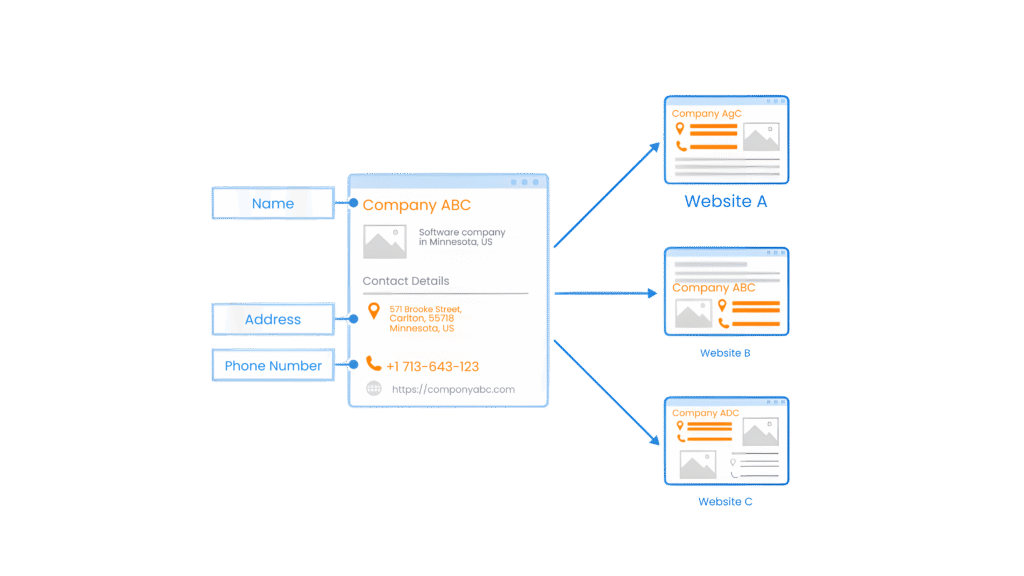
Citation building is the process of listing your business name, address, and phone number consistently across online platforms. These details are collectively also called NAP. Each mention helps search engines verify your business’ existence and trustworthiness.
Local citations appear in many different forms. They can be structured or unstructured.
When it comes to data entry across online sites, consistency matters the most. Even small variations like an extra space, abbreviation, or outdated number can confuse search engines. Listings that match across platforms build trust and improve rankings in local search results. These small details signal reliability and authenticity to your buyers and the algorithm alike.
Adding industry-specific directories adds extra value for your brand. A restaurant on Zomato or a law firm on a professional association directory signals relevance. Together, structured and unstructured citations create a reliable web of business listings for search engines and customers.
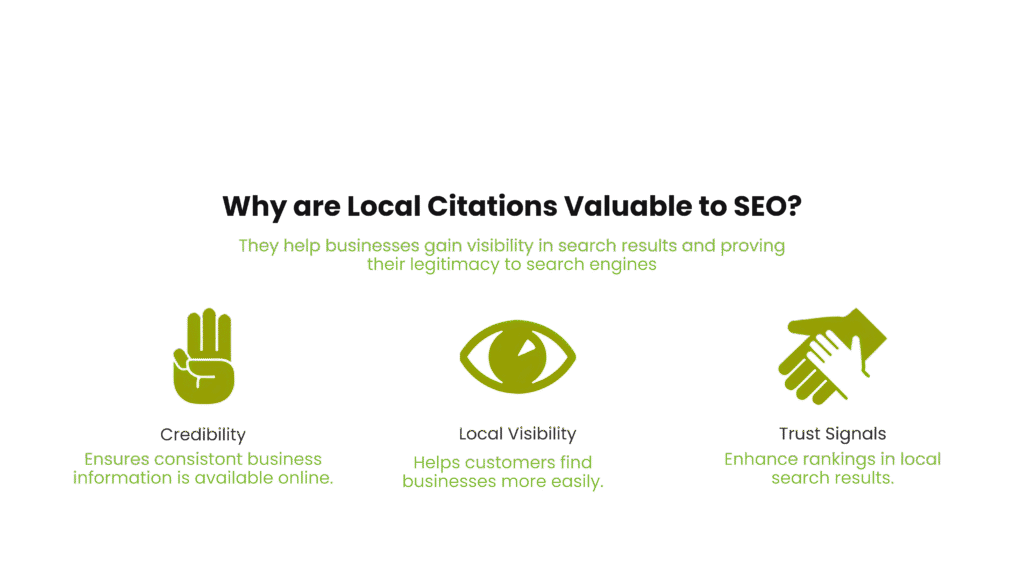
Citation building is not just an SEO task. For many businesses, it is a local SEO growth strategy with various benefits. Let’s look at some ways how citation building has impacted local businesses and SEO.
Local searches begin with a quick search. Customers look at Google Maps, scan directories, or read reviews to decide which businesses to trust. Consistent and accurate citations across these platforms makes your business position higher on SERPs and where it matters. Each verified listing strengthens your discoverability, brings in organic traffic, and supports sustainable growth without extra ad spend.
Local search visibility depends on consistent and accurate listings across platforms like Google Maps, industry directories, and niche portals. Each verified citation signals credibility to search engines and users.
Well-placed citations link reviews to the correct profiles, highlight location and services, and create a network of trust. Strategic placement on reliable and popular platforms makes your business surface where users actively make decisions. They turn simple listings into sustainable channels that drive actionable traffic.
Visibility is only the first step. Citations also influence user action. Accurate listings make it easy for potential customers to reach you. Correct phone numbers, updated opening hours, and consistent details reduce friction and increase the likelihood of a search turning into a call, inquiry, or visit. Each verified citation becomes a small but reliable conversion point.
Citations anchor customer feedback. Platforms like Google Business Profile or Justdial attach reviews directly to your listing. Inconsistent or duplicate entries scatter reviews. This weakens your reputation. Maintaining accurate, uniform citations ensures that all reviews reflect on the correct profile. This consistency reinforces trust and credibility for your brand.
In short, citation building supports discovery, verifies reliability, improves lead quality, and protects your credibility in local search. For small and growing businesses, local SEO growth strategy keeps websites and pages visible, reliable, and competitive.
Building citations systematically secures visibility, organic traffic and leads for your business to find. Let’s walk through a clear, step-by-step process to audit, optimize, and expand your citations for lasting local SEO impact.
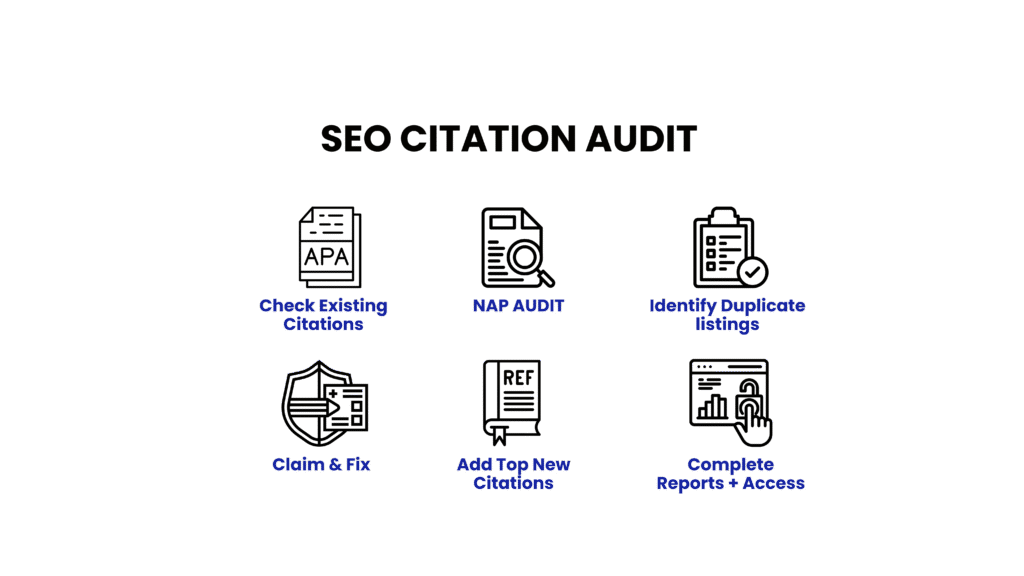
Before adding new listings, the priority of seo guides is to clean up existing directory submissions. Duplicate or inconsistent citations weaken trust signals. Tools like Fastlinko help identify where exactly your business appears online. A thorough audit should focus on:
An audit sets the foundation for all future citation work. A master citation sheet acts as a source of truth. It lets you track updates accurately. Without it, new listings can lose impact if existing citations remain inconsistent or scattered.
Consistency is the backbone of citation building. Search engines don’t “guess” whether two variations of your business are the same. They look for exact matches. This is where a standard NAP, name, address, phone number format becomes essential.
Store alternative fields like business hours, categories, and website URL alongside. This ensures that when you or a third party update a directory, the data matches perfectly everywhere.
Over time, this uniformity compounds into stronger trust signals. Even if you expand to multiple locations, each branch must follow the same discipline to avoid NAP dilution.
Your Google Business Profile (GBP) is the cornerstone of citation building. It powers your visibility in Google Maps, the local pack, and knowledge panels. If this profile is unclaimed or incomplete, your business is practically invisible to local buyers.
The first step is to claim your GBP through Google’s verification process. Once your identity is verified, it can be used to optimise other fields like:
The best practice is to keep your GBP in sync with the NAP sheet. Regular post updates, offers, and review responses boost your business listings. Google uses GBP as an seo guide point to cross-check all other citations. If your GBP is inconsistent, every other listing is weakened.
After creating a Google Business Profile, the next step is to establish presence on core global directories.
Search engines crawl these platforms frequently to verify your business information. Each listing should be optimised, not just created. Directory submissions should add high-quality photos, update opening hours, and include a short description with localised keywords. Special attention should be paid to industries with regulated directories, such as finance or healthcare. In these industries, credibility directly impacts rankings and user trust.
Global key directories include Yelp, Bing Places, Apple Maps, Facebook Business, and Yellow Pages. In the Indian market, some popular high value platforms include Justdial, IndiaMart, Zomato and Swiggy.
Citation building for local SEO shouldn’t chase volume. It should focus on authoritative, well-indexed directories that actually contribute to visibility. Curating a handful of strong, verified listings outweigh dozens of low-quality submissions.
Once your core business entity is ready to go online, it’s time to build authority in niche directories and localised portals. These platforms may not generate heavy traffic, but they show relevance to search engines. These postings also establish credibility within your industry.
Regional portals, like city-specific business directories or chamber of commerce listings, also carry a lot of weight. They strengthen local authority and connect your business with customers in local areas.
When your citations appear in the same directories as other trusted providers, it reinforces your brand for both customers and search engines.
Citation building is not a one-time activity. Businesses move offices, change numbers and expand services. Without regular monitoring, outdated listings resurface and weaken credibility.
Best practices for citation building include:
Maintenance also means engaging with user-generated content. Responding to reviews on Google, Yelp, or industry platforms reflects activity and boosts customer trust. Search engines also view responsiveness as a ranking signal.
Monitoring should also extend to your brand’s competitors. If your rivals gain new citations in high-authority directories, you should evaluate whether your brand should appear there too. Citation building is competitive by nature. The businesses with the most consistent, expansive footprint earn stronger visibility in map packs and organic results.
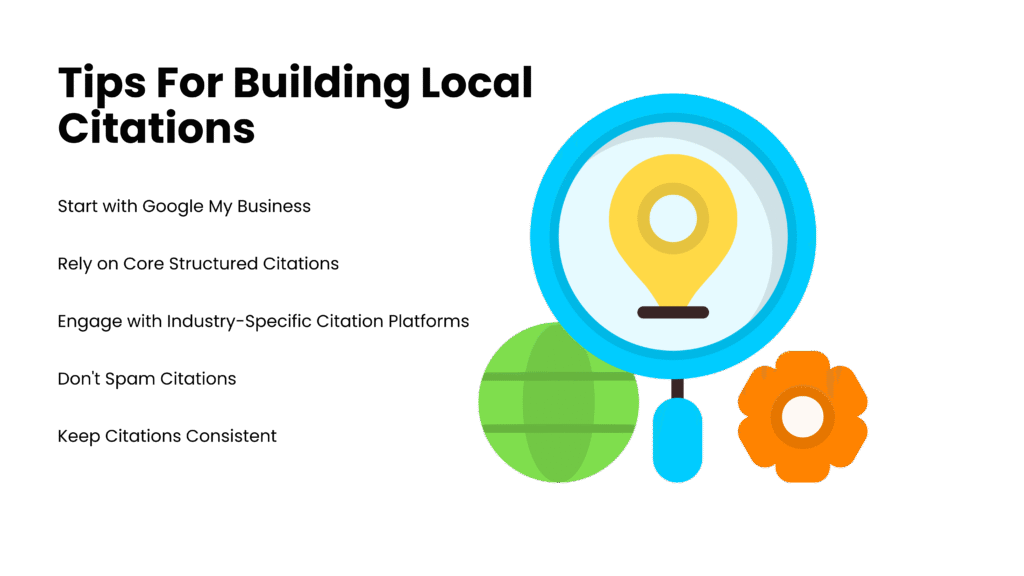
Citation building is the foundation of local SEO.
From auditing and standardising NAP to expanding across niche platforms, every step strengthens your traffic and credibility. Professional execution with experts like Fastlinko assure search engines always see a consistent, trustworthy business profile.
More importantly, it ensures that customers searching for your services find the right information at the right time.
Structured citations appear in directories with fixed fields (like Yelp or Google). Unstructured citations are informal mentions in blogs, news articles, or social media. Both types of citations can help build your brands’ local SEO authority.
Yes. Many directories show reviews alongside your citation. Positive reviews boost credibility, attract search traffic, and improve your business’s local SEO ranking.
Citations with detailed descriptions and real photos make listings more engaging and trustworthy. Search engines value added context and use it to improve click-through rates. This helps users understand your services before visiting your location, making your firm more reliable.
Listing your business in industry-specific directories boosts local relevance. It shows search engines that you’re active in your field. These platforms have specialized audiences and higher authority. Thus, they can help your business appear in targeted searches and improve trust within your niche.
