
How US Agencies Use Guest Posting to Build Authority for Clients
January 30, 2026






Most B2B brands today optimise for what Google tells them to. But there’s a catch.
What Google says is not what its AI actually values. In reality, content that ranks in 2025 isn’t defined by density or frequency. It’s defined by semantic structure, contextual credibility, and the trust signals. All these factors help AI interpret a brand.
The real content marketing best practices are now rooted in depth, not volume. In fact, content marketing SEO services like Fastlinko are all about making narratives that build clarity and topical relevance. They are supported by strong human insight and verifiable expertise.
This blog will help B2B businesses learn how content marketing services evolved. We will study its shift from execution to strategy in motion.
Explore how content marketing consultants and content marketing companies design systems for boosted visibility, trust, and long-term influence in an AI-moderated search environment.
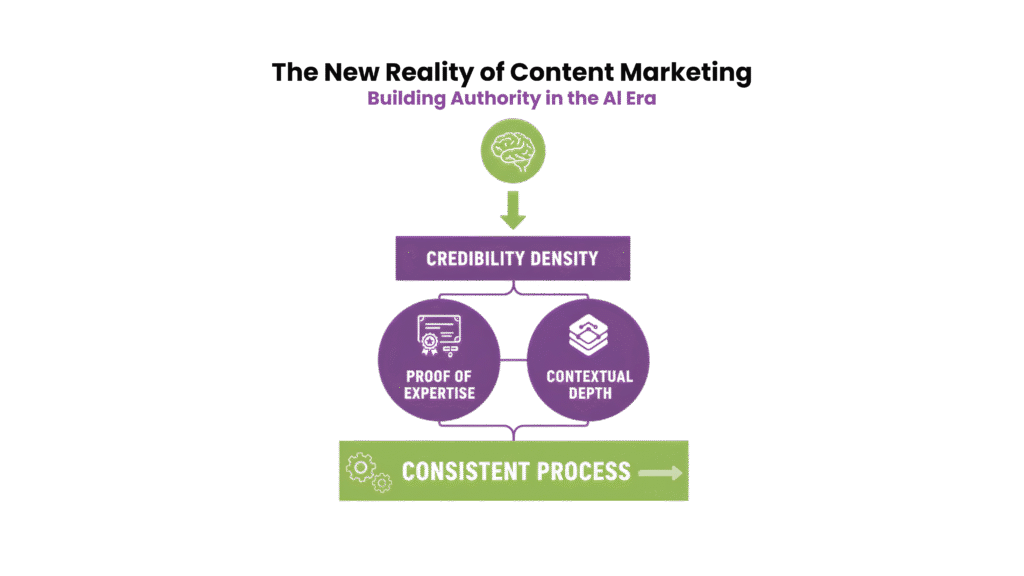
The ground rules of content marketing have changed.
In 2025, AI search systems reward credibility density over keyword density. This means when scanning your content, Google now looks for proof of expertise and not repetition.
For B2B businesses, this shift has turned content marketing into a consistent process rather than a creative exercise.
Targeting traditional keywords no longer guarantees visibility.
AI systems now interpret entities instead of exposure. Google’s AI scans the people, brands, and concepts connected to your content. When a post links contextual ideas like “B2B demand generation” with “CRM integration”, search engines read it as topical fluency, not optimisation.
For brands, this means every article must connect to a knowledge graph. It is made up of authorship signals, brand mentions, and supporting pages that reinforce authority.
Content marketing services that fail to build these semantic links risk invisibility. No matter how well written the copy appears.

Experience, Expertise, Authoritativeness, and Trustworthiness are no longer theoretical guidelines. Today, they’re measurable search signals.
In practice, this means featuring first-hand insights, verified data, and identifiable authors behind every piece will augment your content’s positioning. A content marketing SEO service today is expected to surface real industrial knowledge. They should understand how teams work, what failed, and what the metrics showed.
A generalised “how-to” content no longer performs. Instead, experience-backed narratives like case studies, internal experiments, or client outcomes generate engagement and algorithmic trust simultaneously.
AI has changed the scale equation. Depth now outperforms length.
Short, targeted articles that resolve one specific intent issue largely outperform exhaustive guides that dilute their focus. For B2B content, this accuracy reflects maturity.
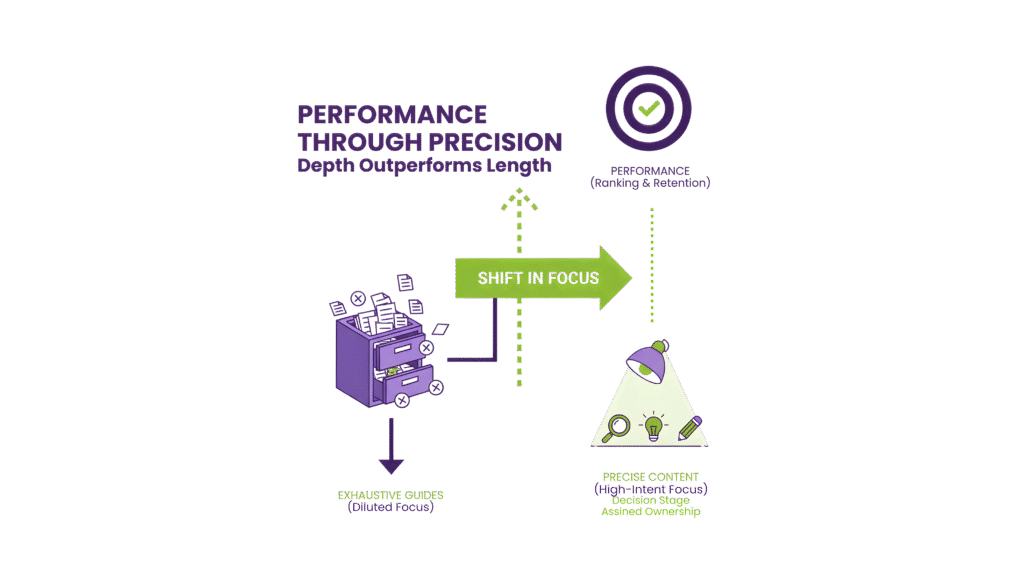
Expert content marketing consultants address high-intent questions like “how to measure content ROI in a six-month sales cycle” rather than generic topics about “content strategy.”
Top content marketing companies now map every asset to a clear decision stage and assign the ownership between SEO analysts, editors, and subject experts. The result is compact but contextually rich material that earns both ranking and retention.
The era of mass-produced SEO content is ending.
AI-generated drafts can support research, but editorial judgment and SME integration make all the difference between credible and forgettable content . The strongest B2B players are now building editorial boards. They harmonize between consultants, data analysts, and internal experts who validate every claim before publication.
This process isn’t about volume, it’s about verification. Each published piece becomes a brand statement, maintaining reliability in both search and stakeholder perception.
B2B brands that internalise these content marketing best practices will lead in the next few years of AI-led search environment.
The next step is learning how to integrate these insights into professional workflows. Let’s learn more about structuring teams, tools, and review loops to deliver credibility at scale.
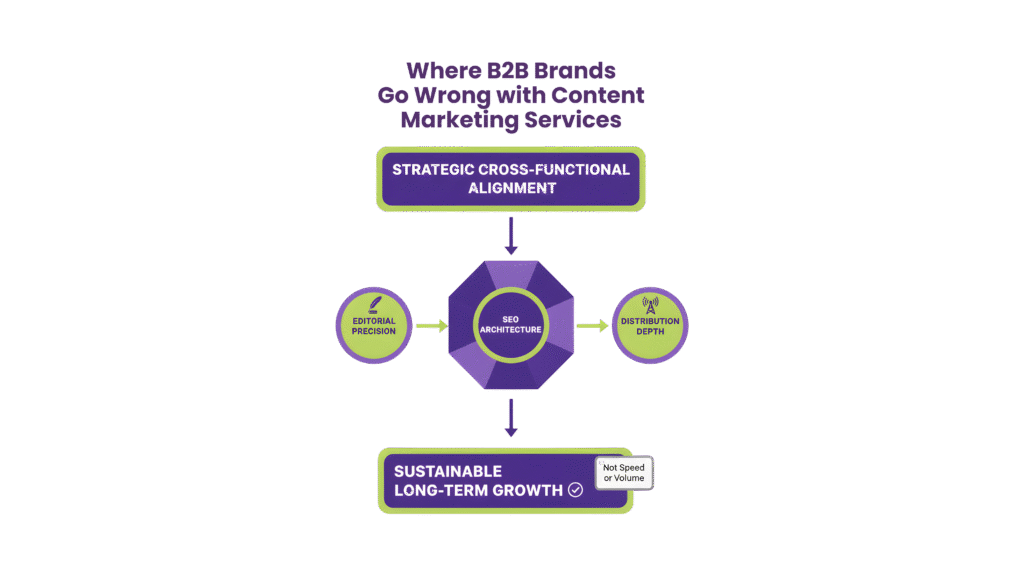
Many B2B brands invest in content marketing services expecting faster visibility. But they keep overlooking what actually drives sustainable growth.
In reality, it’s just effective and strategic cross-functional alignment. Content marketing isn’t a function of delivery speed or output volume. It’s the one link between editorial precision, SEO architecture, and distribution depth that shapes long-term traction.
Here’s a quick look at where B2B brands go wrong with content marketing services
A common pitfall is separating between SEO and content creation.
When strategy and storytelling run in parallel silos, brands lose thematic depth. Blog narratives stop pushing forth keyword clusters and so, campaigns lose authority signals.
The result? Disjointed content that ranks temporarily but fails to build credibility. Leading content marketing companies address this by aligning their keyword research, editorial hierarchy, and distribution layers around a single thematic spine.
This ensures every page strengthens brand positioning, not just search metrics.
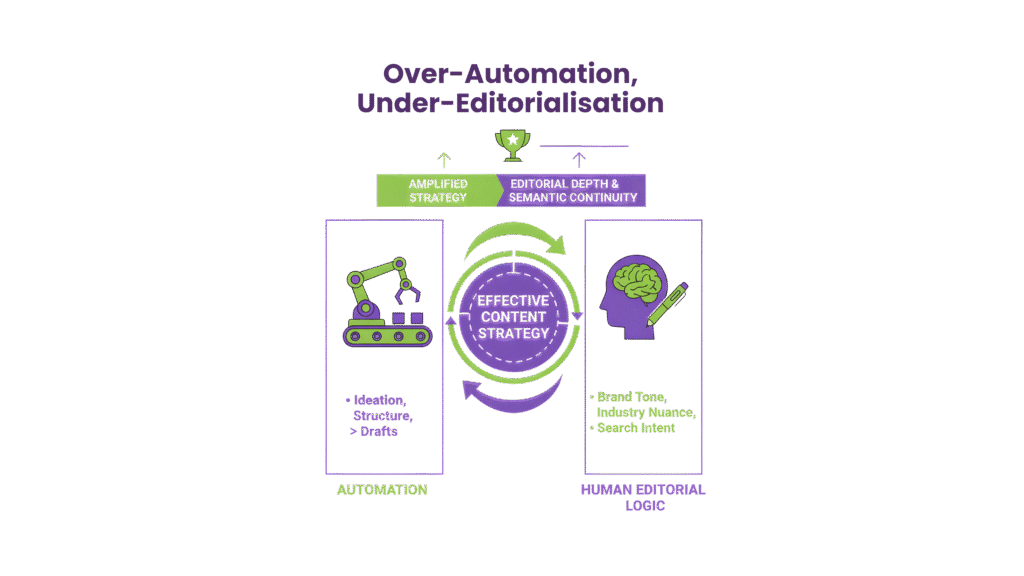
Automation was meant to enhance creativity, not replace it.
Yet many brands now rely on AI tools for ideation, structure, and even final drafts. Instead of making actual content, they end up creating a loop of generic outputs that read well but rank weakly.
Search systems in 2025 now reward editorial depth and semantic continuity, not volume. Effective content marketing SEO services balance automation with human editorial logic.
They train AI systems on brand tone, industry nuance, and search intent so that automation can amplify strategy rather than diluting it.
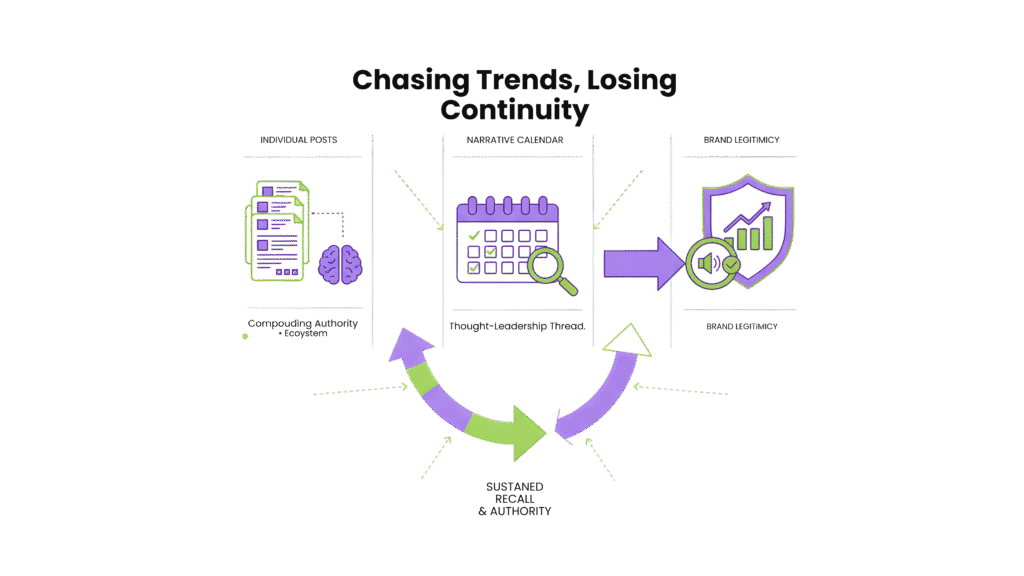
Short-term content cycles often derail long-term brand storytelling.
Chasing keyword trends may yield temporary clicks, but it rarely sustains recall. Strategic content marketing agencies maintain a narrative calendar. This defies that each topic contributes to an ongoing thought-leadership thread.
Thus, it transforms individual posts into compounding assets. These assets end up reinforcing authority within the brand’s ecosystem.
An experienced content marketing consultant operates as an interpreter.
It handles the translations between brand objectives and algorithmic expectations. These consultants identify where storytelling meets search science. They map topics that appeal to both human audiences and contextual algorithms. This balance is the difference between being discoverable and being trusted.
For B2B brands, understanding these misalignments is crucial. The right content marketing best practices don’t just fill editorial calendars.
They build frameworks that scale visibility, trust, and domain influence together.
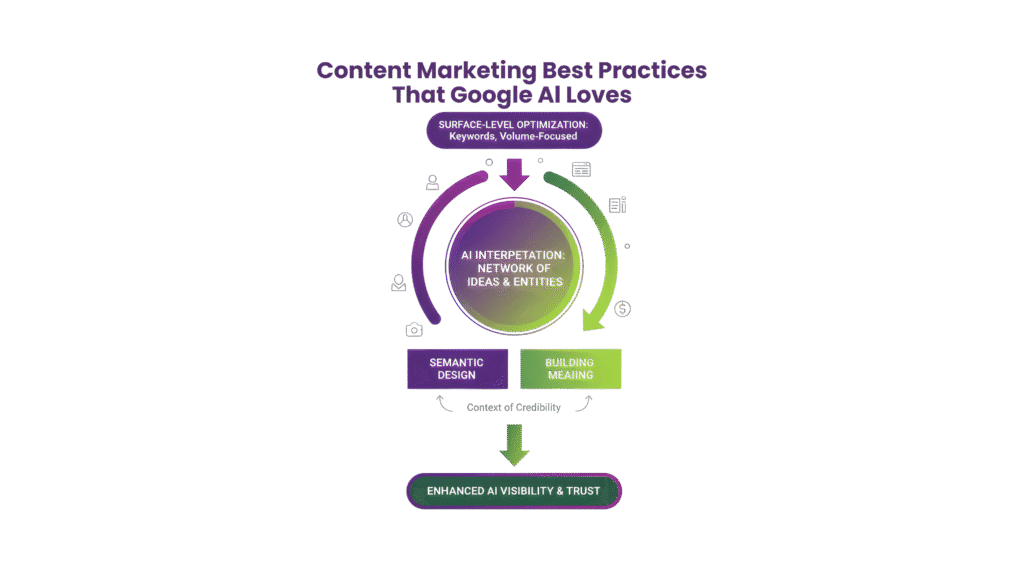
Google’s AI systems no longer “read” content like traditional search engines.
They interpret content assets like a network. This is done by identifying how each idea, entity, and relationship fits into a larger context of credibility. For B2B brands, this shift has turned content marketing best practices into a deeper exercise.
They are now working in semantic design and not surface-level optimisation. The winners today are those who build meaning, not just visibility. Let’s explore content marketing best practices that Google loves with this blog.
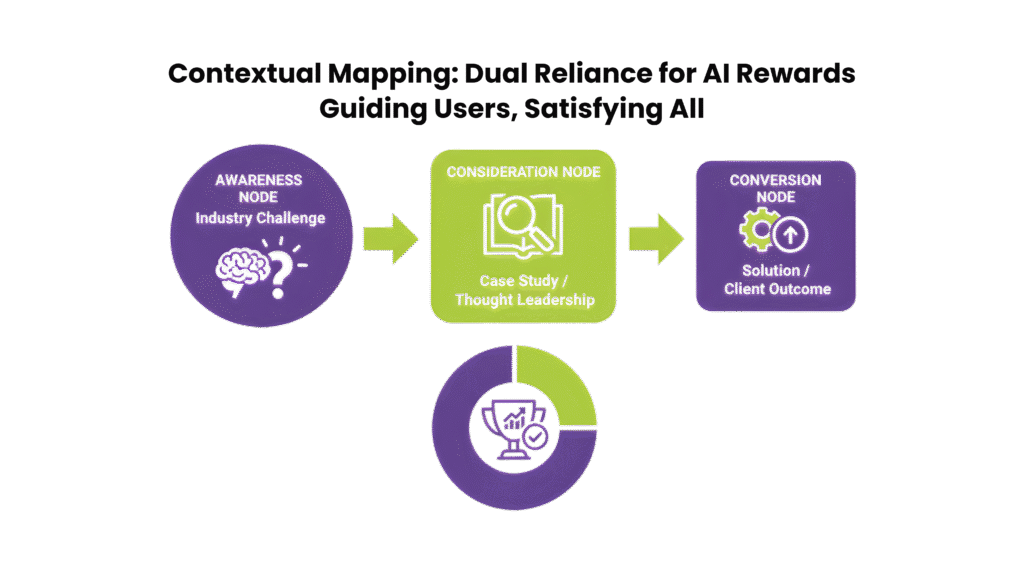
Modern visibility depends on how well content serves both the algorithm and the audience.
Each asset must carry two functions.
Google’s AI Overview doesn’t isolate keywords. It traces topical connections across the site and interprets how your brand’s context builds expertise.
This in turn means a single whitepaper or blog can’t exist in isolation. B2B firms using content marketing companies should design each asset as a point or a node within an intent framework. These nodes should carry a reader from awareness to conversion.
A top-funnel explainer asset that introduces an industry challenge should link naturally to a data-filled case study or a thought-leadership piece that shares its resolutions. This structured flow satisfies entity relationships. Along with that, it also strengthens the narrative depth Google’s AI rewards.
Brands adopting this model show improved content discoverability. This is simply because each piece is now actively contributing to both user clarity and algorithmic understanding.
As we have discovered time and again, content marketing is not about volume — it’s about networked clarity.
The era of isolated blogs is over.
Google’s evolving AI prefers thematic ecosystems. These are interconnected intent clusters that signal long term mastery over the topic. For content marketing companies, this means the real value lies in topic governance, not campaign bursts.
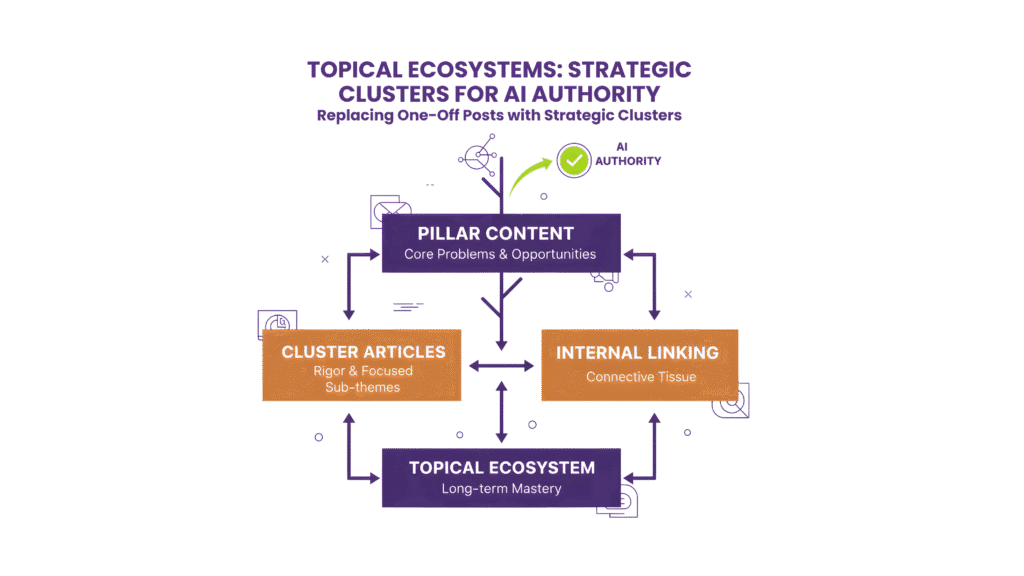
A topical ecosystem behaves like an internal knowledge graph. Here, the pillar content outlines the opportunity and competitive territory. This includes the core problems and opportunities that are fundamental to your industry.
On the other hand, cluster articles explore each sub-theme with rigor and focus. Then, internal linking is used as a connective tissue for these issues. This process gives AI models the relational cues they need to rank a brand as authoritative.
It also improves editorial efficiency. Once the structure is established, updates and new insights can slot seamlessly into existing clusters. This means that brands can keep continually refreshing their authority signals without starting from scratch.
B2B brands using content marketing SEO services this way report stronger compounding results because the strategy compounds rather than resets.
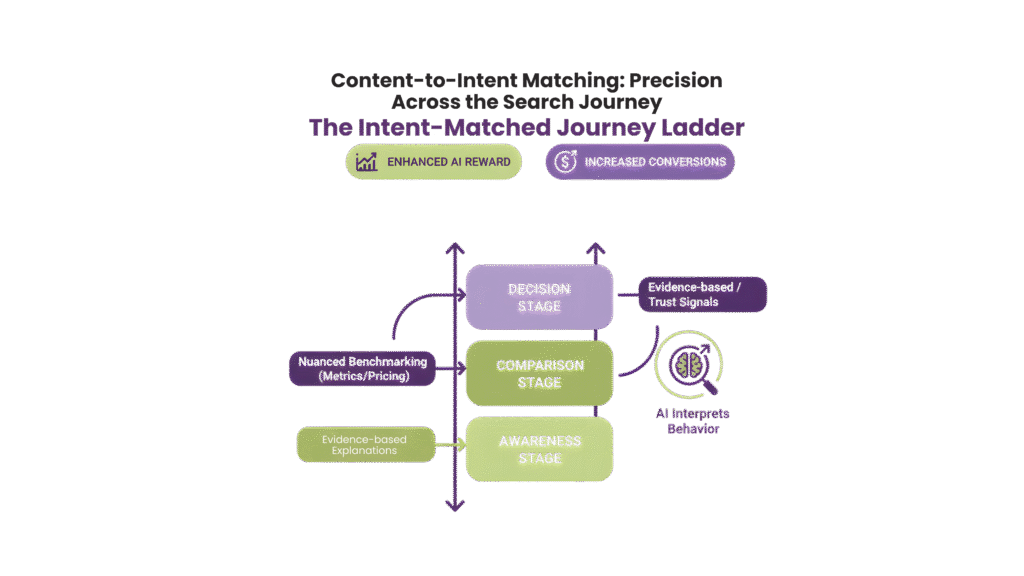
Intent precision is where most strategies break down.
Even today, many teams still optimise for static keywords. They keep ignoring how intent evolves across the buyer journey.
However, in 2025, content marketing best practices are mapping content to intent states like awareness, comparison, and decision. This along with machine-learning tools start reading search context as behaviour, not text.
An awareness-stage query might need an accessible, evidence-based explanation of industry changes. A comparison-stage query demands nuanced benchmarking like metrics, frameworks, or pricing rationales.
Finally, decision-stage queries demand proof of your brand’s activity. It calls for performance data, trust signals, and integration clarity. Each requires different depth, tone, and format, and Google’s AI systems reward those distinctions.
Targeted clientele matching also supports sales coordination efforts. When intent-layered content feeds CRM workflows, it becomes tangible in both visibility and conversion terms.
That’s how leading B2B firms now define best practices. Not as compliance with SEO lists, but as synchronisation between what’s searched, what’s read, and what converts.
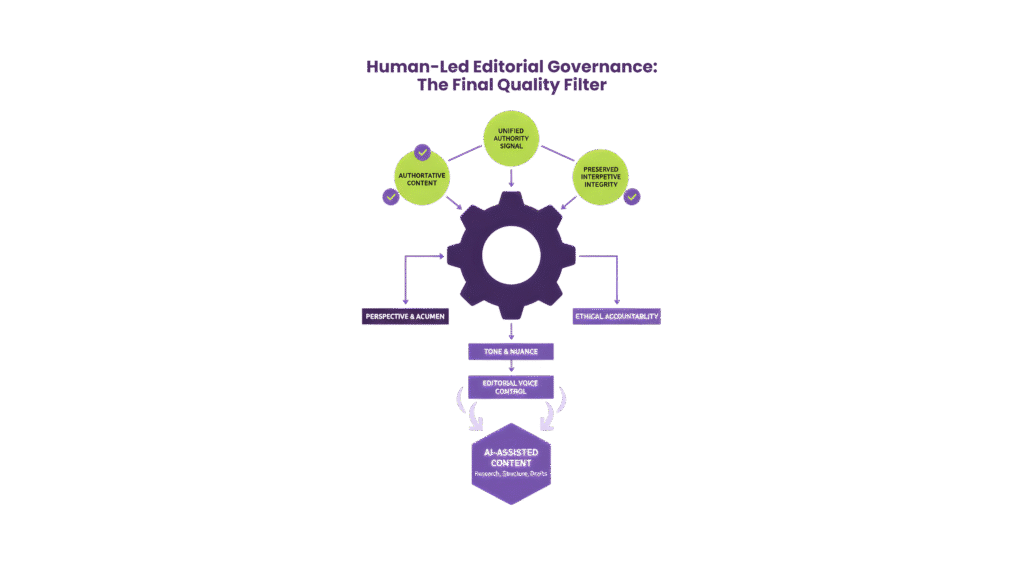
AI tools can identify structural gaps, sentiment shifts, or missed entities easily. But they can’t replicate a perspective or acumen.
Editorial voice control remains the biggest differentiator in the content marketing space. It turns data-generated outlines into authoritative content ecosystems.
Human editors maintain that the shared insights retain an appropriate tone, nuance, and truth. They build and keep designing the brand’s intellectual posture or the consistency that earns trust over time.
In SEO content marketing services, this combination of automation and editorial thoroughness defines maturity. Google’s AI accelerates research and structure while the editorial layer sustains brand credibility and ethical accountability.
A mature brand and content governance model cultivates a voice of discipline across contributors. In B2B environments with hybrid teams and outsourced specialists, maintaining this unity is important.
It ensures that every asset contributes to a unified authority signal. At the end of the day, content marketing best practices are not about restraining creativity. They are about preserving interpretive integrity in an AI search ecosystem.
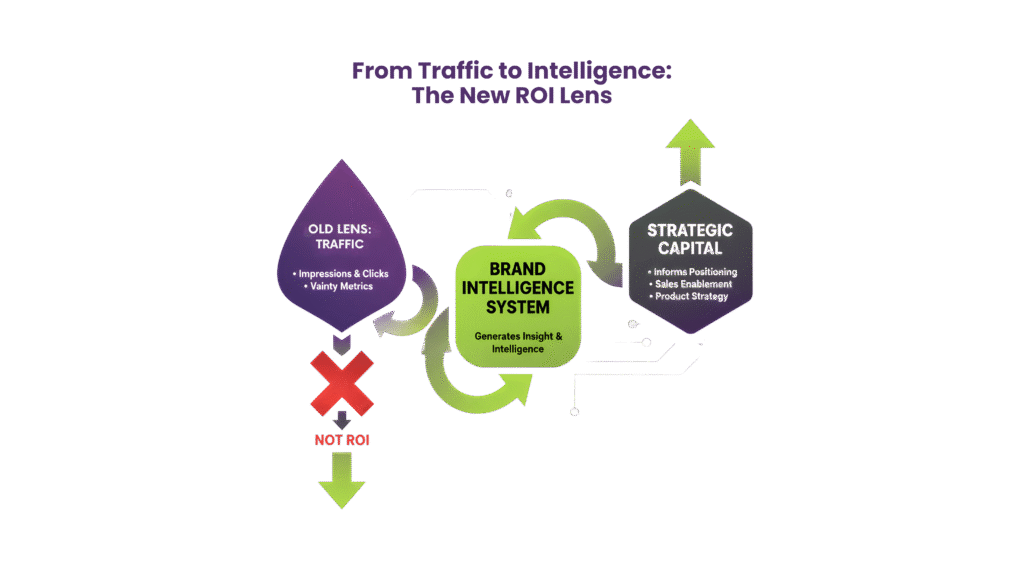
When executed rightly, content marketing SEO services don’t just drive traffic, they generate insight.
Every impression, click, and dwell pattern becomes a [art of the feedback loop. It reveals what audiences truly value. This data transforms the content function into a brand-intelligence system, that measures reach along with resonance.
In high-value B2B sectors, where cycles are long and purchase decisions must be deliberate, this intelligence becomes strategic capital.
It informs positioning, sales enablement, and even product strategy. That’s the direction content marketing is moving toward. It is drifting away from vanity metrics and toward intelligence-driven growth models.
In 2025, content marketing best practices are no longer prescriptive lists of to-do tasks.
They are adaptive systems built on context, coherence, and credibility. Google’s AI rewards brands that think structurally. Expert content marketers like Fastlinko understand this new system thoroughly.
They win rankings by connecting knowledge, not just publishing content aimlessly. For B2B businesses, the question is no longer how often to produce, but how intelligently to connect. The link between what’s already known to what the market is searching for is the key to content marketing success.
That’s how authority compounds. Organically, consistently, and at scale.
Google’s AI Overview rewards context-rich, semantically aligned content that answers layered search intent. Brands must focus on clarity, original insight, and logical structure instead of keyword density or generic topical coverage.
Topic authority signals expertise and reliability. When a brand builds consistent, well-cited, and contextually linked content, it becomes a trusted reference in its category. Then it drives sustained visibility across organic and AI-driven rankings.
These services align keyword mapping, internal architecture, and storytelling frameworks to maintain semantic relevance. They help ensure that search engines and AI models consistently recognize the brand as a credible, topically aligned source.
Storytelling connects analytical insights with brand purpose. It translates expertise into relatable value, improving engagement metrics and brand perception. These are the two key behavioral signals for SEO and AI-driven discovery.
