How US Agencies Use Guest Posting to Build Authority for Clients
January 30, 2026




SaaS buying paths are messy.
Most research for any transaction happens off-site. It takes place across feeds, comparison tabs, SEO guest posts, community threads, and long-tail queries that signal problem awareness rather than product demand.
That’s why SaaS outreach is now a marketing tactic. It has evolved into a way to insert your brand into the conversations prospects already trust. Strong SaaS guest posting services don’t chase DR or volume. Experts like Fastlinko study how technical buyers evaluate risk, what topics influence their shortlist, content placement, and which platforms shape early-stage trust.
This blog explores how B2B SaaS brands should approach SEO guest posts in 2026. Let’s see how to use guest posting for SaaS to choose platforms, which narrative angles matter, and what topics convert technical readers without sounding promotional.
Stay ahead with this guide on Guest Posting for SaaS Companies: Where to Post & What Topics Work Best
SaaS categories are crowded and expensive.
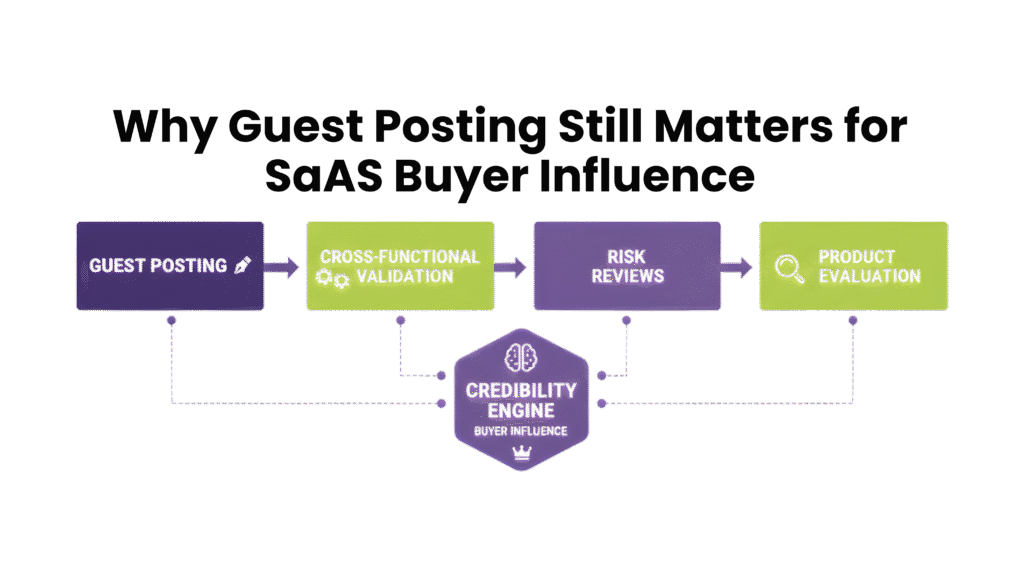
They are also shaped by buyers who move across the sales funnel slowly. The decisions of such users are well-layered across risk reviews, internal debates, and cross-functional validation.
In this environment, guest posting for SaaS has regained strategic importance.
This time, not as a link tactic but as a credibility engine. One where buyers examine their decisions by thinking before they evaluate products. Today, the external world has become the real proving ground for expertise.
That shift has permanently changed how influence works. Let’s take a quick look at why guest posting services still matter for SaaS buyer influence.
Enterprise SaaS buyers rarely adopt a solution without validating it.
These users need to be sure whether the thinking behind it holds up. They compare mental models before they compare feature sets. This is why authoritative content placement accelerates confidence for your brand.
A well-reasoned breakdown on a respected vertical publication helps prospects benchmark your problem-solving approach against competitors.
It acts as a decision stabiliser. It arms the buyer with better language to defend a recommendation internally. It also closes the credibility gap faster than any gated asset or long-form landing page.
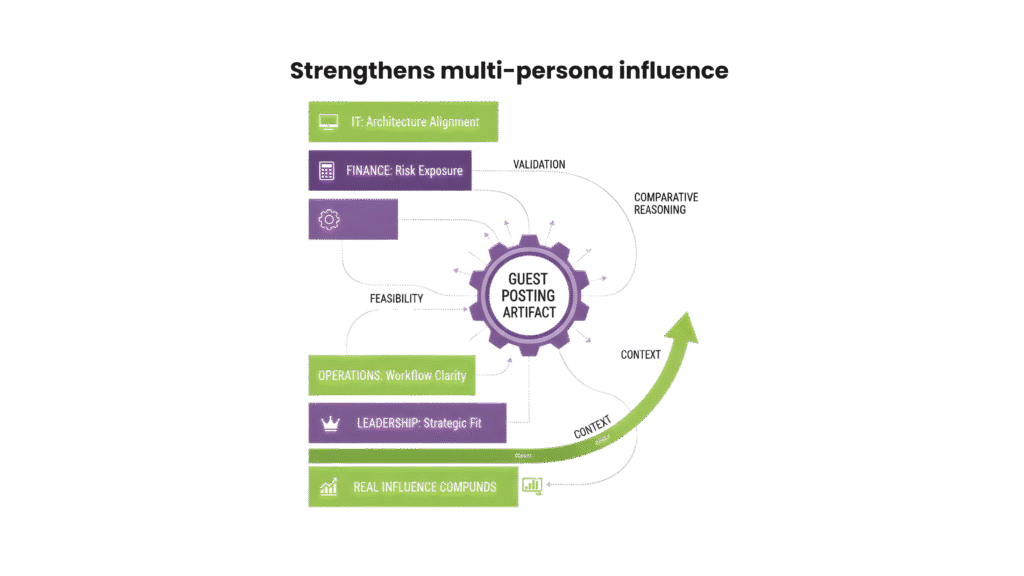
The SaaS buying journey is fragmented across tabs, devices, and stakeholders.
Finance reviews risk exposure. IT looks for architecture alignment. Operators check for workflow clarity. Leadership measures strategic fit.
Guest posting sits at the intersection of these behaviours. It feeds each persona with context that matches their professional priorities. It becomes a subtle but powerful artefact in multi-tab research.
Buyers read one post for validation, another for feasibility, and a third for comparative reasoning. This is why domain relevance matters more than domain rating.
The right niche publication reaches the persona that shapes the internal narrative. Their real influence compounds.
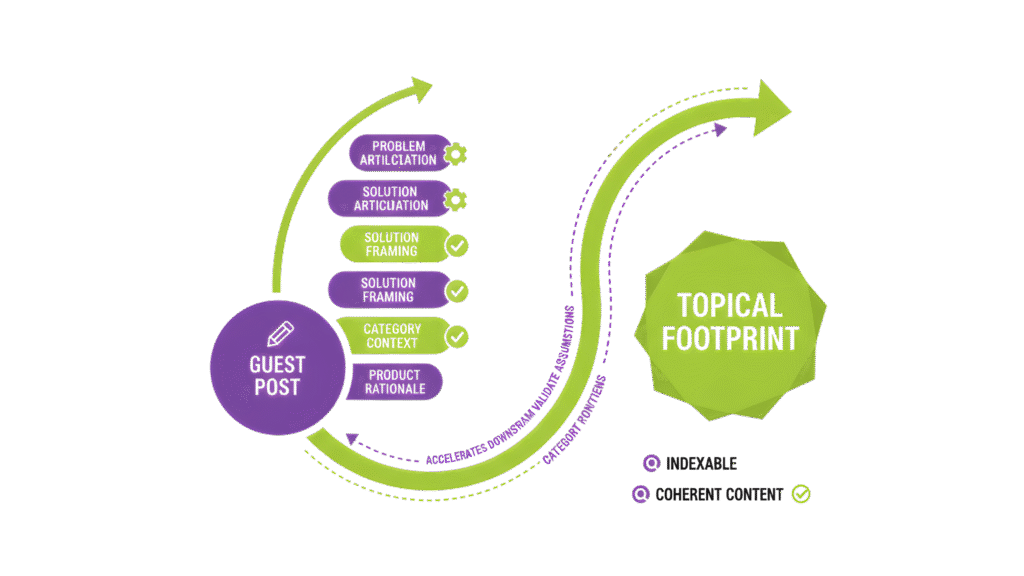
A well-structured seo guest post does more than contribute to discovery. It extends a brand’s topical footprint across:
For SaaS companies operating in dense SERPs, this layered semantic presence is essential.
It strengthens the thematic clusters that search engines use to understand expertise. Thus making your broader content ecosystem more indexable, more coherent, and more eligible for algorithmic visibility.
SaaS teams don’t need more content; they need trusted contexts. In 2026, authority doesn’t form on your website; it forms in the places where buyers test ideas, validate assumptions, and analyse approaches.
That is where SaaS outreach and external publishing build the confidence that accelerates every downstream decision.
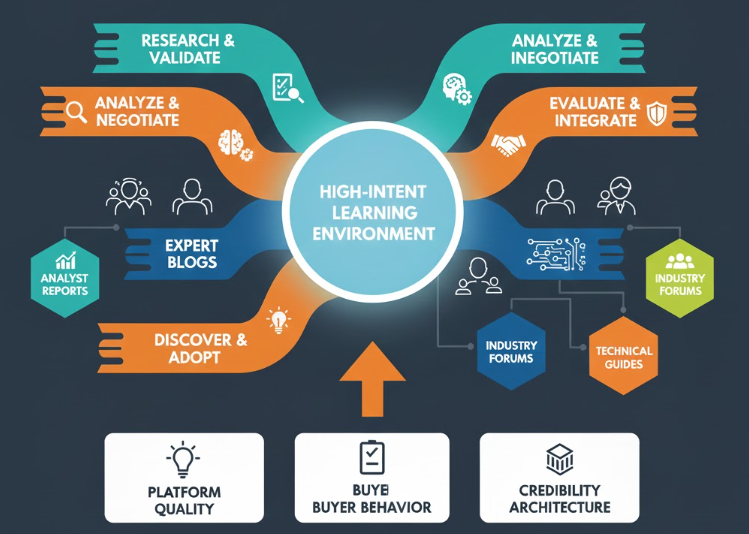
SaaS leaders know that guest posting for SaaS is no longer a volume exercise.
The real advantage comes from selecting platforms that mirror how operators, engineers, finance leaders, and product teams research, validate, and negotiate ideas.
In 2026, the best SaaS outreach strategies focus on platform quality, buyer behaviour, and the credibility architecture behind each content placement. The goal is simple. Identify the environments where high-intent learning actually happens.
High-value SaaS evaluation rarely happens on broad media sites.
Executives use niche spaces that help them test assumptions, compare methodologies, and examine how others operationalise solutions. The strongest guest posting services recognise this shift and prioritise platforms built around:
A placement only works when it appears where real conversations occur, not where vanity metrics look impressive.
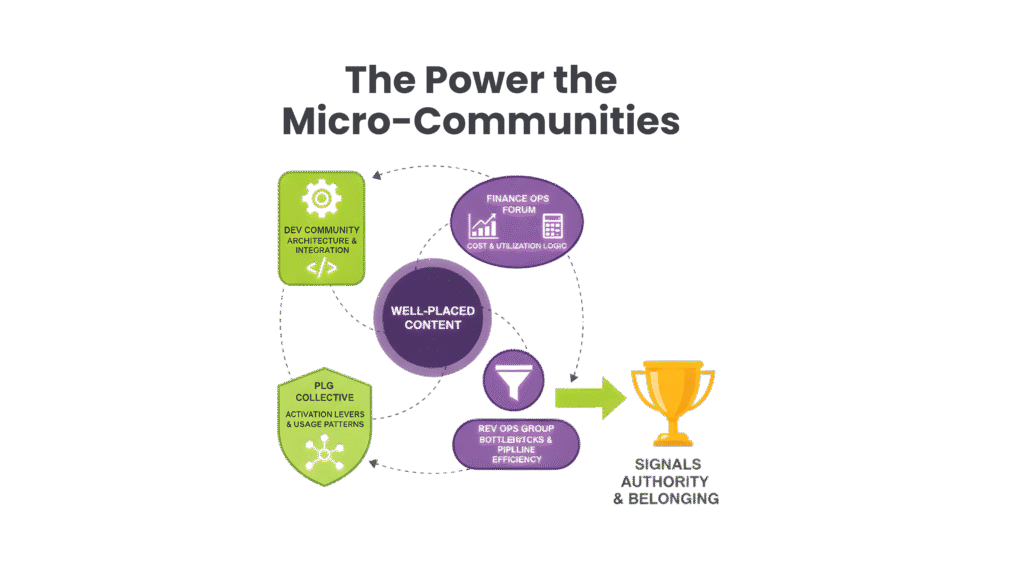
Modern SaaS ecosystems fragment into specialised hubs.
Dev communities evaluate architecture and integration burden. Finance ops forums dissect cost structures and utilisation logic. RevOps groups analyse bottlenecks and pipeline efficiency. PLG collectives examine activation levers and usage patterns.
These micro-communities don’t just consume content; they co-create market logic. A well-placed seo guest post inside these environments signals that your viewpoint belongs to the operators shaping the category. Broad publications cannot replicate this credibility.
Traffic does not influence SaaS buyers; editorial tone does. Leaders gravitate to platforms that reject superficiality and instead offer:
When evaluating guest post sites, these editorial markers act as truth signals. They reveal not only audience sophistication but also whether your content placement will sit in a context that enhances authority or dilutes it.
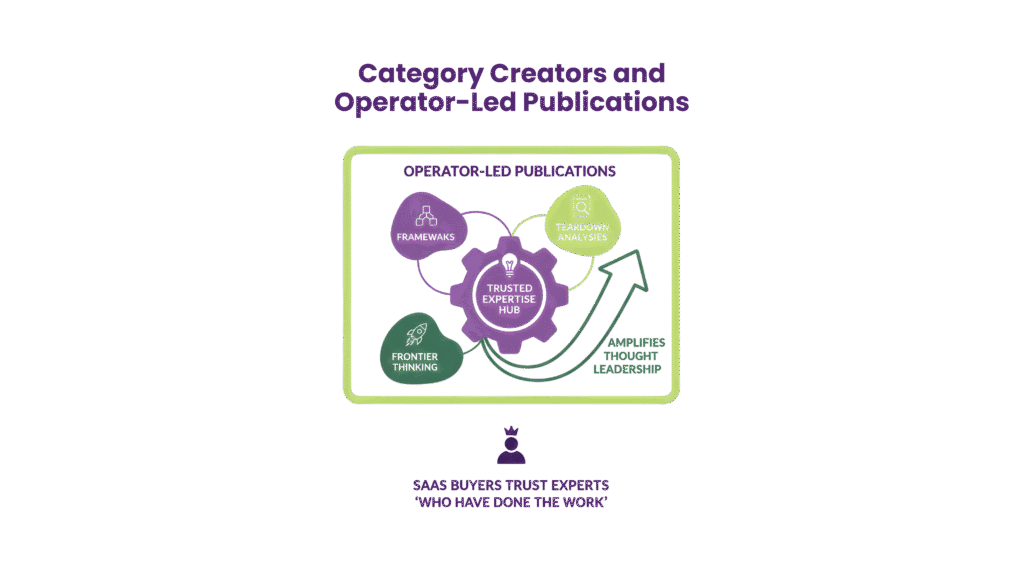
Some platforms act as market shapers rather than content distributors. They are run by ex-founders, vertical specialists, or operators who publish frameworks, teardown analyses, and frontier thinking.
A guest placement here amplifies your thought leadership far more than traditional guest posting services ever could. SaaS buyers trust experts who have “done the work,” not generalist contributors.
In 2026, strong saas outreach blends two worlds:
The best strategies don’t choose between them; they sequence them. Content placement starts in high-signal communities and then scales through SEO-optimized outlets where search demand compounds the narrative.
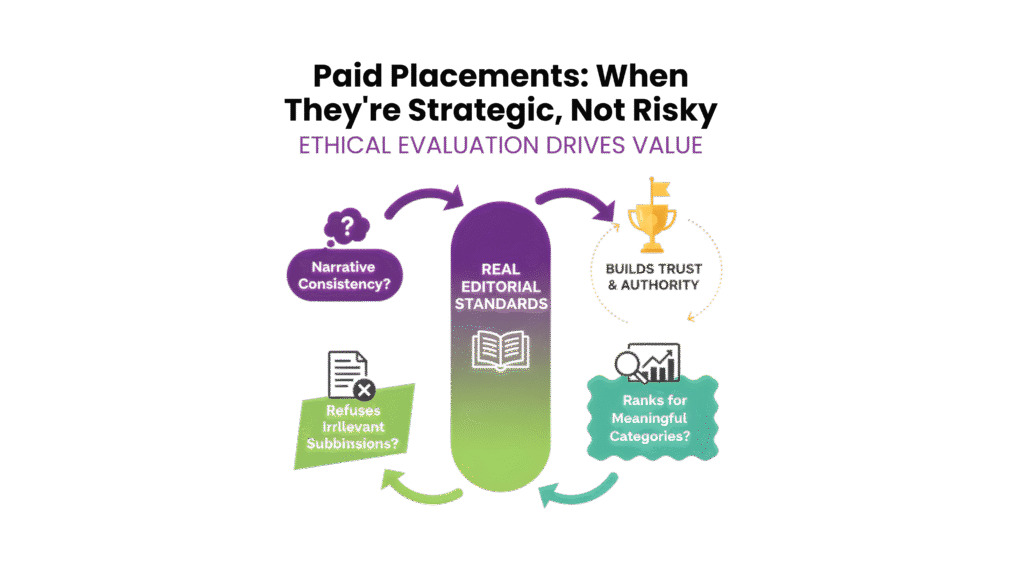
Paid content can work, but only when the publication demonstrates real editorial standards. Ethical evaluation matters:
If not, it is a low-quality content placement disguised as SaaS media.
Choosing the right platforms isn’t about distribution.
It’s about placing your expertise inside contexts that shape SaaS buyer confidence. When each placement serves as a credibility asset, not a backlink, guest posting for SaaS becomes one of the most efficient trust-building levers available in 2026.
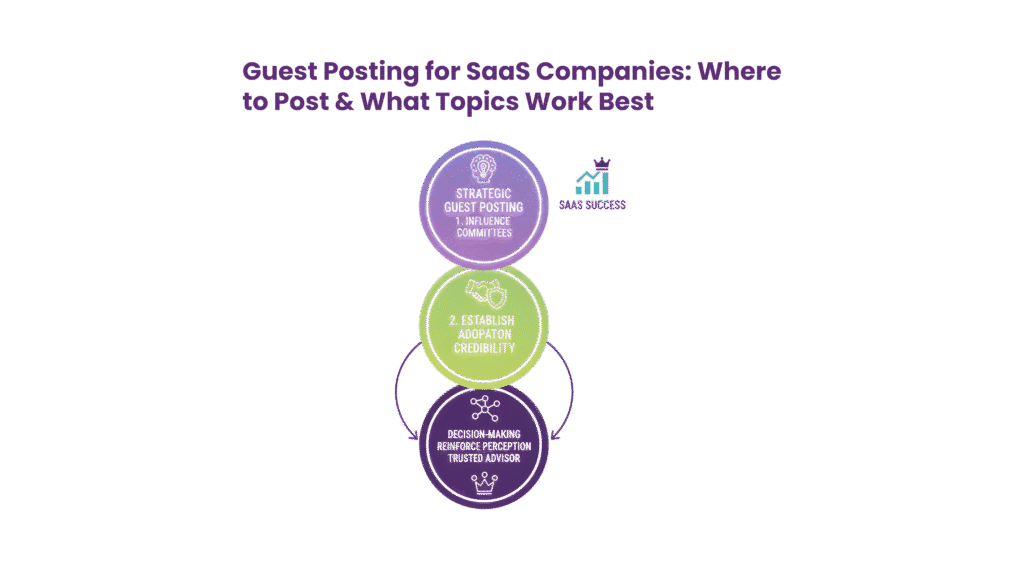
Guest posting for SaaS brands in 2026 is no longer about ticking off link quotas.
Its real value lies in selecting placements and crafting content that genuinely influences buying committees, reduces adoption friction, and establishes credibility. Effective guest posts reinforce perception, provide decision-making frameworks, and position a brand as a trusted advisor in niche SaaS ecosystems.
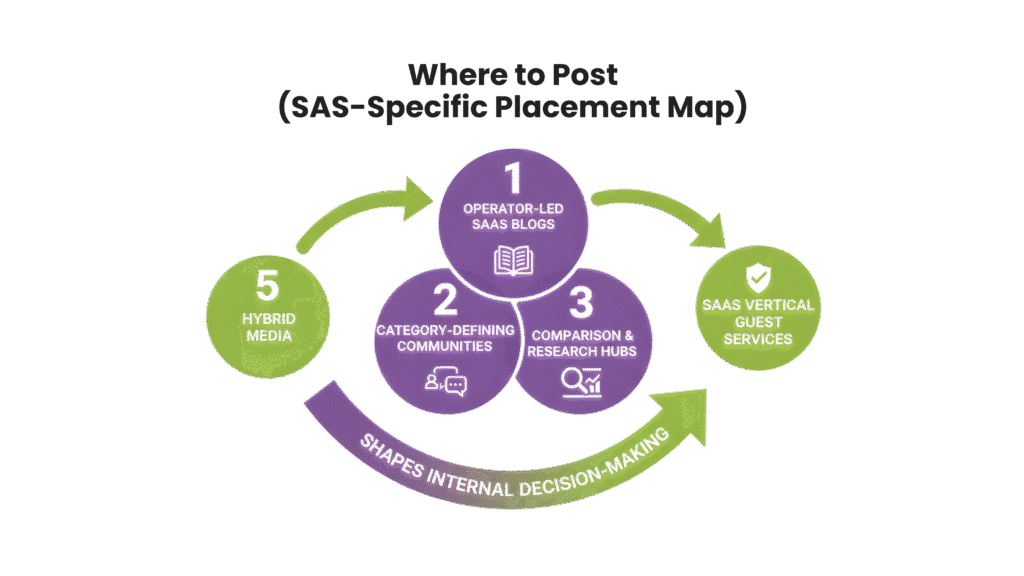
Not all blogs and platforms carry the same weight for SaaS audiences.
Understanding where your target users spend time is crucial. Operator-led SaaS blogs—covering areas like RevOps, DevOps, FinOps, and SalesOps—offer deep contextual alignment. Posts here are read by teams directly evaluating tools and workflows, making every placement a touchpoint in their internal decision-making.
Category-defining communities are another strategic avenue. MarTech, Product-Led Growth, Cloud Security, and Analytics forums attract professionals seeking insight rather than marketing copy. A well-placed post in these communities carries both authority and engagement.
Similarly, comparison and research-driven hubs such as G2, Capterra, thought pieces, and analyst blogs act as natural validation channels. Content here helps prospects interpret competitive landscapes while reinforcing your product’s contextual relevance.
High-authority guest posting services with SaaS vertical focus remain valuable when they understand audience nuance. These platforms offer predictable amplification while preserving editorial integrity.
Lastly, hybrid media like founder newsletters, industry podcasts, and specialist podcasts extend reach to executive-level audiences, allowing technical insights to cascade into strategic decision-making conversations.
SaaS guest posts need to address operator concerns directly.
Pain-point breakdowns are particularly effective when they illustrate functional friction clearly and analytically. These posts don’t sell the product—they provide insight into common bottlenecks teams face.
Integration and workflow optimization stories also perform well. They demonstrate understanding of real-world operations, offering frameworks that buyers can adapt without feeling like they are being pitched to. Data-backed decision guides, including cost comparisons, adoption tradeoffs, and performance benchmarks, further help buyers evaluate solutions methodically.
Hidden cost frameworks, ROI logic, and implementation readiness checklists resonate because they support internal justification processes. Meanwhile, anonymised deployment stories give credibility, demonstrating firsthand experience without compromising customer confidentiality.
Technical simplification pieces like guides that translate complex workflows or engineering concepts into accessible language expand reach beyond engineers to product managers, operations leaders, and finance stakeholders.
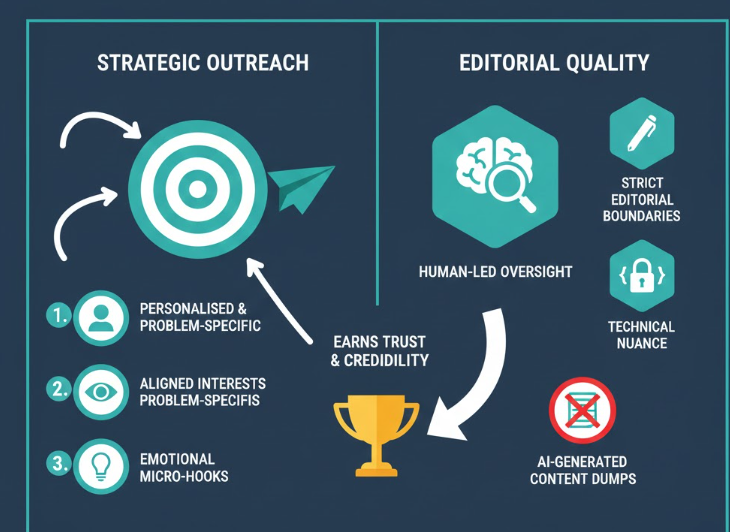
Precision is key when conducting SaaS outreach. Every pitch should be personalised, problem-specific, and aligned to the interests of the target influencer. Emotional micro-hooks—small narrative cues that highlight challenge, success, or innovation—can increase engagement without undermining enterprise professionalism.
SaaS-specific guest posting services can ensure placement accuracy, but human-led editorial oversight remains essential. AI-generated content dumps are easy to spot and fail to earn trust. Successful programs maintain high editorial quality, respecting tone, technical nuance, and the reader’s expertise. Compliance with strict editorial boundaries, particularly in technical or regulated SaaS sectors, ensures posts remain credible and credible sources.
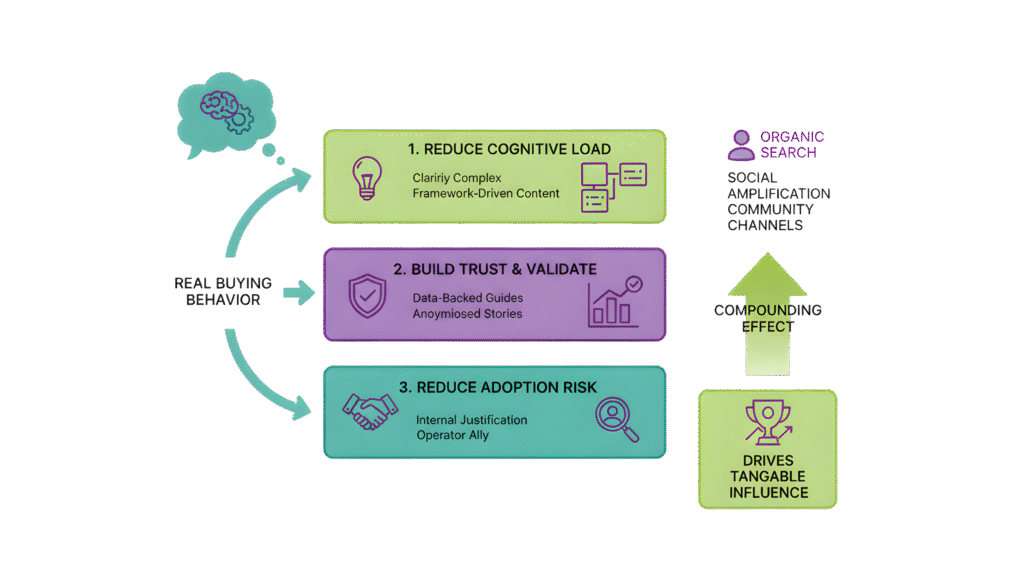
The topics outlined convert because they mirror real buying behaviour. They reduce cognitive load by clarifying complex decisions. Framework-driven content helps teams compare vendors objectively and anticipate internal objections. Data-backed guides and anonymised stories establish credibility while providing material for internal justification, reducing adoption risk.
By building trust at multiple levels—organic search, social amplification, and community channels—these guest posts create compounding effects. Each post acts as a reference point, a conversation starter, and a validation mechanism. Prospects revisit these insights throughout the evaluation process, reinforcing the brand as a reliable operator ally rather than a transactional vendor.
SaaS guest posting succeeds when it aligns with real-world buying behaviour. The highest-performing programs combine precise placement, topic relevance, operator insight, and narrative clarity. They help audiences interpret complexity, validate choices internally, and reduce adoption risk. By doing so, SaaS brands create content that not only earns visibility but also drives tangible, trust-based influence across decision-making hierarchies.
Strong SaaS guest posting isn’t about volume, distribution, or domain metrics. It’s about shaping the conversations that influence buyers when they’re comparing, validating, or defending decisions internally.
In 2026, the SaaS brands that win are the ones that publish with intent, choose platforms thoughtfully, and craft narratives that reduce friction. Experts like Fastlinko help brands and businesses achieve that.
Their goal is not backlinks, it’s authority, relevance, and clarity. With the right placements and topic intelligence, SaaS companies can turn external content into a durable pipeline asset. One that grows trust long before buyers reach your website.
The best platforms sit close to your buyer’s workflow, not generic publishing sites. Industry blogs, vertical SaaS communities, niche review hubs, and product-led growth platforms tend to convert well. These spaces carry intent, and your perspective lands where users already search for solutions.
Search engines now reward clarity and intent more than surface keywords. Strong SaaS guest posts explain real problems, show practical steps, and anchor your expertise in context. This relevance sends consistent signals across your ecosystem, improving search trust in a natural way.
Writing for algorithms instead of humans. SaaS buyers resist content that feels manufactured. They respond to honesty, clarity, and practical thinking. When you speak from direct experience, be it wins, losses, or uncertainties, the content carries weight and survives platform updates.
Look for partners who understand your product, the category, and the buyer pain cycle. Avoid anyone selling volume or quick links. The right partner asks better questions, pushes for sharper angles, and ensures every placement contributes to long-term authority, not just short-term spikes.
