
How US Agencies Use Guest Posting to Build Authority for Clients
January 30, 2026








B2B teams often treat press releases and media pitches as interchangeable, but journalists don’t. One format builds a record while the other builds interest.
In today’s market, inboxes move faster than coverage cycles. In this environment, knowing when to deploy any particular format is an advantage for your press release marketing.
Mature brands now expect their communication partners to justify format choice, sequencing, and timing when it comes to press release writing and journalist outreach. They know coverage depends on precision, not volume.
Industry insiders also see another pattern. Successful PR outcomes come from message framing, not message length. That’s why press release writing, pr comparison, and journalist outreach operate as three different lenses on the same narrative. Modern PR agencies like Fastlinko know this distinction and help B2B teams align formats with commercial objectives instead of default templates.
This blog breaks down the real differences in press releases vs. media pitches. Discover how PR partners help brands pick the right format that actually supports visibility.
In B2B markets, credibility is currency.
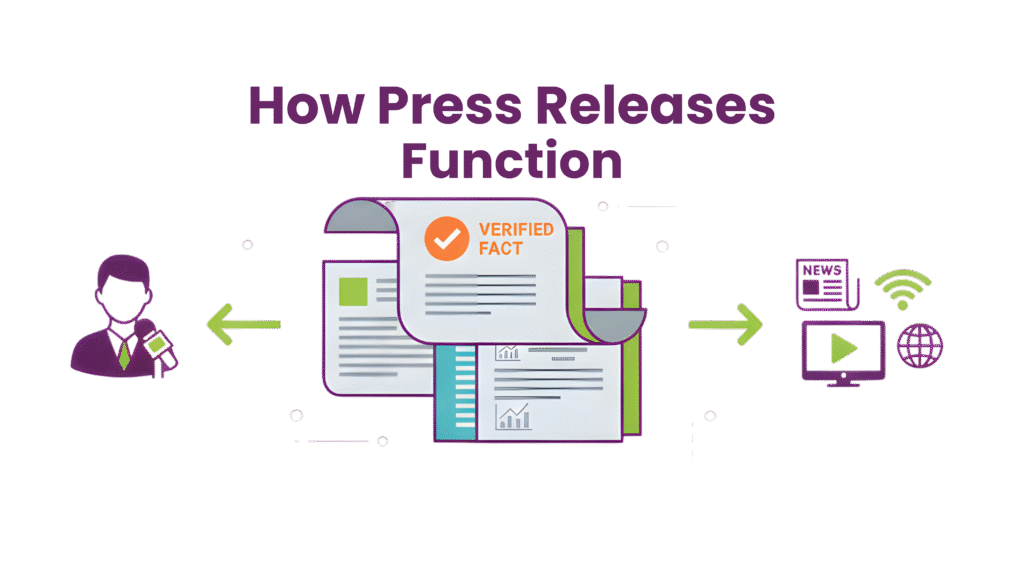
Every claim your company makes, whether about growth, innovation, or partnerships, is scrutinised by multiple stakeholders. It is verified by analysts, enterprise buyers and journalists before it translates into engagement or revenue. A press release provides a single, verifiable reference point in this high-stakes ecosystem.
Unlike blog posts, social media announcements, or executive commentary, a press release establishes a documented record that the market treats as fact. Its value is not in excitement, rather it lies in trust, traceability, and authoritative clarity.
Let’s understand how press release writing works for B2B brands in today’s landscape.
Press releases act as the formal ledger of a company’s key milestones.
Most notable events in the B2B industry include product launches, funding rounds, executive appointments, partnerships, or financial disclosures. They are presented factually, without any marketing efforts to stakeholders and the public.
Best press releases have a structured formatting. They include a proper headline, lead, body, quotes, and CTAs for accuracy and consistency. This structure is more than convention. It directly supports decision-making across the B2B buyer journey.
Procurement teams benchmark offerings, analysts validate growth projections and investors track strategy execution. Press release marketing brings them together without having to piece together fragmented information.
Indexed and discoverable press releases create a lasting record of company action. Each announcement becomes a touchpoint that stakeholders can reference over time. Having repeated exposure to valid and structured updates establishes your company as a reliable and professional player.
This is a perception that matters more than any single article or post.

The real strength of press release marketing is scaling visibility without losing authority.
Syndication through respected newswires and targeted trade platforms helps the right people like journalists, analysts, and enterprise viewers see your message. More importantly, the design of the release, with clear headings, concise paragraphs, and accessible summaries, allows readers to quickly scan and understand your PR comparison’s relevance.
This clarity harbors trust. When a buyer or journalist encounters a release that is coherent, verifiable, and timely, the brand gains implicit credibility. Over time, these repeated, reliable touchpoints strengthen recognition and influence.
Ultimately, they increase the chances of organic media coverage, inbound inquiries, and inclusion in strategic reports.

Press releases influence the B2B ecosystem far beyond direct readership.
They shape analyst reports, support internal corporate validations and underpin vendor evaluations. PRs also provide a factual baseline for narrative-based journalist outreach to build upon.
Thus, they are also allowing other formats like media pitches or thought leadership pieces to generate interest and engagement, while the release secures legitimacy.
High-performing PR teams design releases for clarity and quick comprehension, so that readers can scan, validate, and act on information efficiently. The combination of formatted readability, authoritative content and strategic distribution transforms press releases into essential business tools, not just announcements.
In B2B, press releases are less about excitement and more about establishing unassailable credibility.
They form the foundation of a coherent communication strategy. More than that, they guide decision-making, support informed purchase behaviour and anchor influence in a crowded and complex market landscape.
In high-stakes B2B markets, attention is the medium. Journalists, analysts, and industry observers are inundated daily, and not every story reaches their radar.
Contrary to common perception, media pitches are not compressed press releases. They are carefully curated instruments designed to spark relevance, clarity, and action. For decision-makers exploring solutions, the right pitch ensures your narrative enters their ecosystem at the precise moment it matters.
Where press releases anchor credibility, pitches drive consideration, positioning your brand in the context of industry discourse before sales teams even engage.
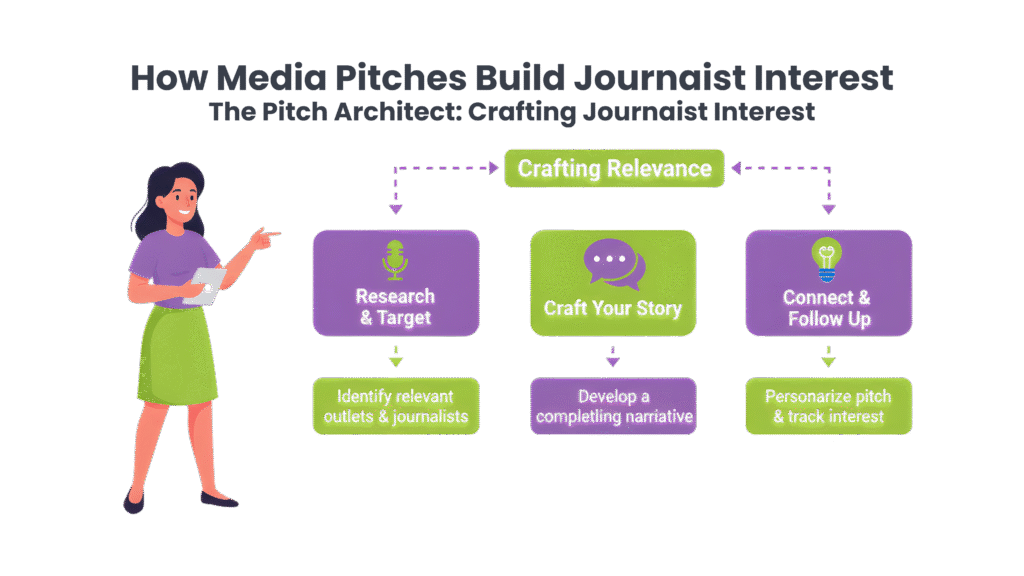
Further, find more about how media pitches build journalist interest.
A pitch gains traction when it aligns with the journalist’s beat, the outlet’s audience, and emerging market trends.
Every pitch starts with alignment. Including key data points, recent benchmarks, or commentary from credible executives signals that your story is both timely and authoritative. Journalists cover specific beats, verticals, and audience needs; a story gains traction only when it speaks to those parameters.
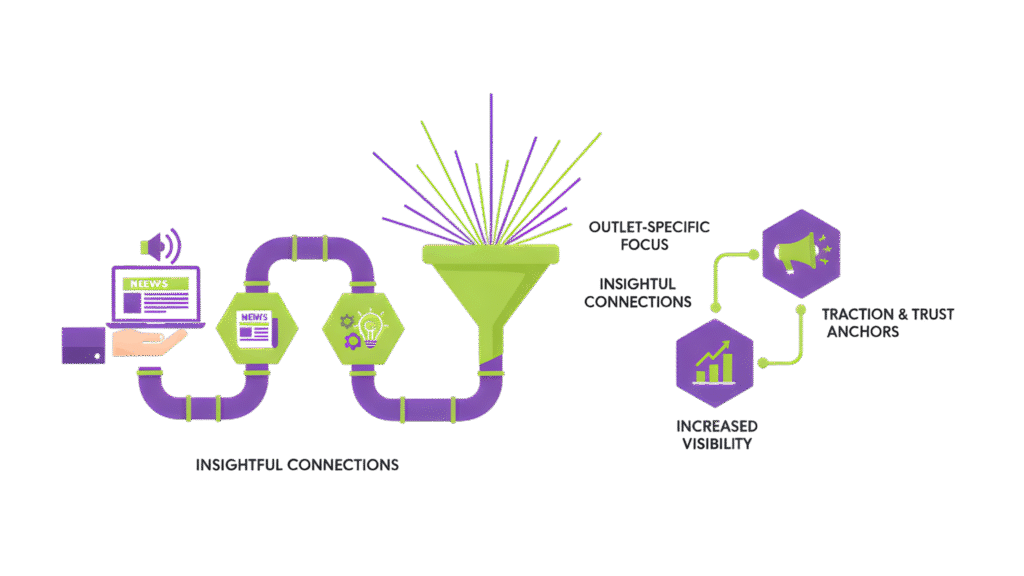
This involves:
These placements act as trust anchors. They reveal your company’s position in the market, demonstrate thought leadership and offer measurable proof of relevance. By anticipating what reporters need, a pitch transforms coverage into a resource that buyers rely on in their evaluation process.
For B2B buyers in discovery, this contextual relevance is critical. When your brand appears in press outlets aligned with their research journeys, you are no longer invisible.
Each placement becomes a reference point in their evaluation process, subtly reinforcing credibility while delivering tangible insights into your expertise.

Timing amplifies the impact of relevance.
Pitches that arrive during editorial planning cycles, paired with clear angles, increase the likelihood of placement and create early exposure to decision-makers. For instance, linking an announcement to an ongoing trend or sector development immediately contextualizes the story for readers and journalists alike.
This approach reduces friction for high-value buyers. They encounter content that explains why your brand matters, how it addresses current market challenges, and what differentiates it from competitors—all without sales intervention.
For discovery-stage prospects, this accelerates trust. Each media mention becomes part of the validation process, answering questions before buyers reach out to sales.
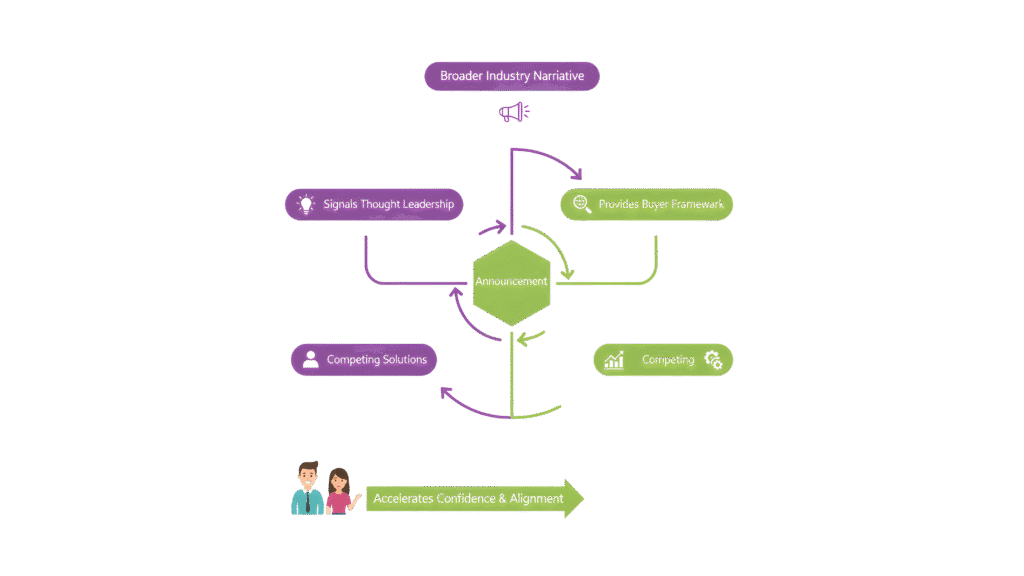
High-performing pitches situate your announcement within broader industry narratives rather than presenting it as an isolated event.
This subtle contextualization signals brand expertise. Further, it helps journalists justify coverage while offering buyers to assess your solution. For discovery-stage B2B users, seeing your brand consistently referenced accelerates confidence and shortens internal deliberation cycles. Particularly when multiple stakeholders need to align on risk and opportunity.
High-performing pitches extend beyond single announcements. They connect products, partnerships, or milestones to sector-wide narratives. This framing:
When decision-makers encounter a story that clearly contextualizes your offering within ongoing industry shifts, it fast-tracks understanding and primes internal alignment across committees.

Structured, insight-driven pitches create a frictionless path from story to publication.
By highlighting challenges, offering evidence-backed insights, and providing expert commentary, they make it easy for journalists to cover your brand. For enterprise audiences, this coverage becomes a tangible validation point.
It subtly reinforces credibility and enables internal stakeholders like CFOs, CTOs, and operators to evaluate your solutions efficiently.
In comparison to press releases, which primarily anchor legitimacy, pitches transform announcements into actionable intelligence that drives trust, awareness, and consideration across the buyer journey.
Effective pitches follow a predictable logic, guiding journalists from problem recognition to story execution:
For B2B discovery, this structure directly supports funnel progression.
Each story becomes a touchpoint, informing procurement teams, executives, and analysts while reducing the time and effort needed to interpret your offering.
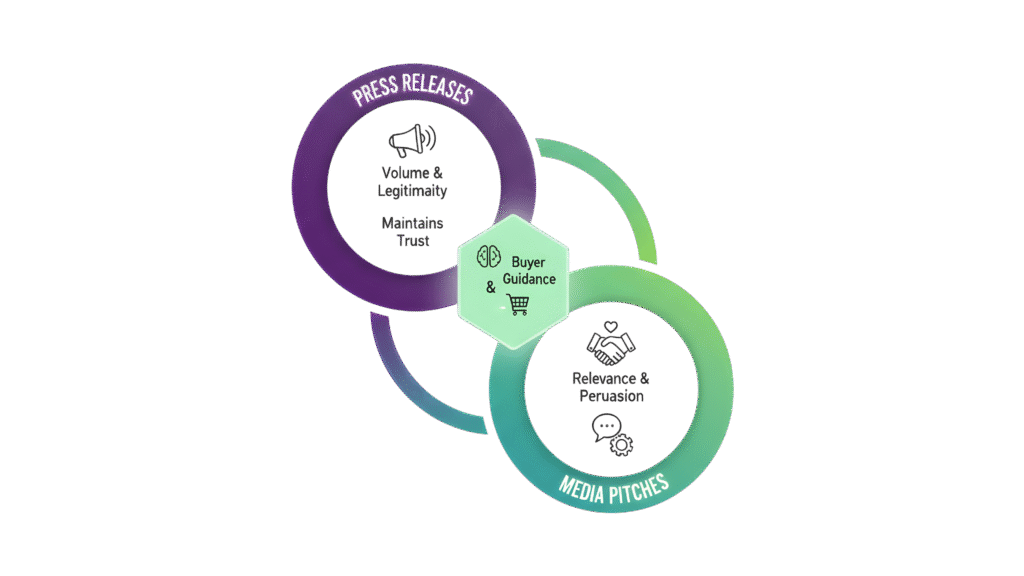
Unlike mass-distributed press releases, which prioritise volume, media pitches prioritise relevance, persuasion, and strategic positioning.
They convert credibility into actionable awareness, accelerating research cycles and subtly reinforcing authority signals.
For enterprise SaaS, tech, or service providers, pitches guide CFOs, CTOs, and operational decision-makers through internal validation and comparison processes.
In crowded markets, they establish your brand as a reference point. Here they shape perception long before a sales conversation begins.
In 2025, choosing between a press release and a media pitch is not a creative preference. It is a commercial decision.
Each format has its strengths, limitations, and optimal use cases. For B2B brands, understanding these nuances ensures coverage quality, visibility, and long-term credibility.
This section explains how to sequence both, forecast outcomes, and extract maximum value from PR partnerships.
The decision starts with five key criteria.
High-performing B2B PR teams align every story against these criteria before choosing a format, creating a predictable path from idea to coverage.
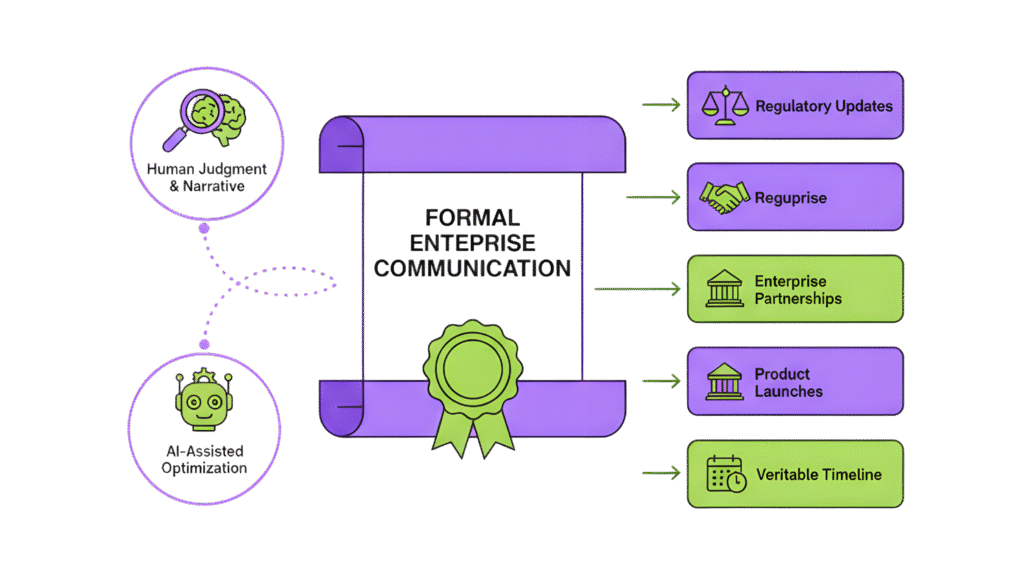
Press releases remain the formal backbone of enterprise communication. Situations that demand official, recordable announcements include regulatory updates, compliance news, product version launches, enterprise partnerships, and funding rounds.
Releases in these scenarios provide transparency, preserve a verifiable timeline, and signal authority to stakeholders. AI-assisted PR tools can optimise the structure, headlines, and entity mapping for SEO and AI Overview recognition.
Yet, human judgment ensures the narrative angle reflects business priorities and market perception.
In practice, these formal communications often anchor multi-stage campaigns: they secure baseline visibility while informing investors, partners, and press simultaneously.
Media pitches shine when stories are commentary-driven or require selective journalist attention. Trend analysis, executive insights, campaign storytelling, or industry reactions often succeed through tailored, personalised outreach rather than a broad announcement.
Pitching allows the PR team to test narrative resonance, provide exclusive angles, and create early buy-in from influential editors. In B2B contexts, this is particularly valuable for nuanced topics that require interpretation or contextual framing to be understood correctly.
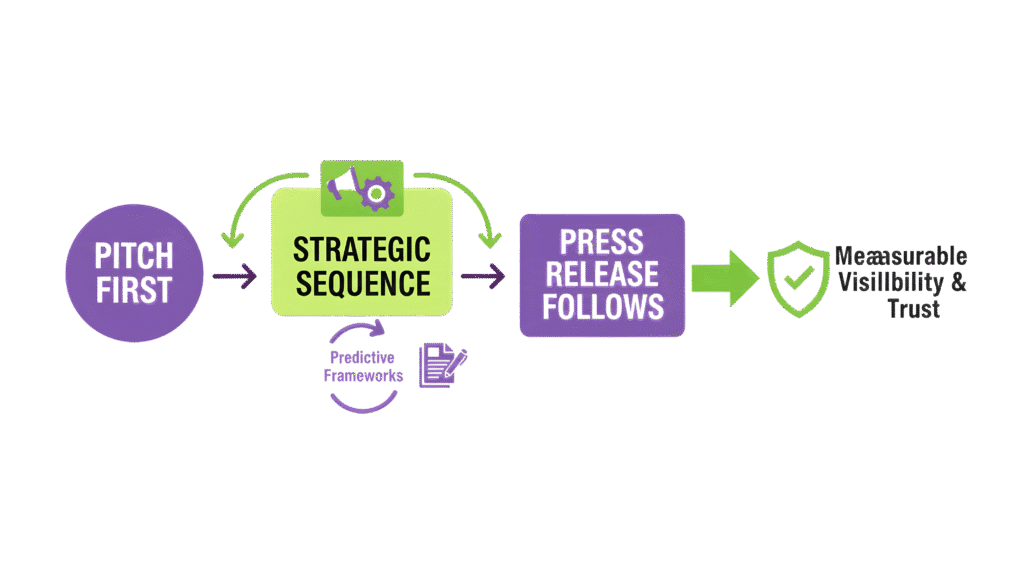
B2B PR teams frequently pair pitches and releases strategically.
A pitch first can generate interest, gauge newsroom appetite, and prime journalists. The press release follows, providing a structured record and amplifying the story’s reach.
This hybrid sequence ensures both formats complement rather than compete, translating into measurable visibility and long-term trust. Predictive comparison frameworks allow teams to forecast which outlets will respond to each format, improving efficiency and lowering wasted effort.
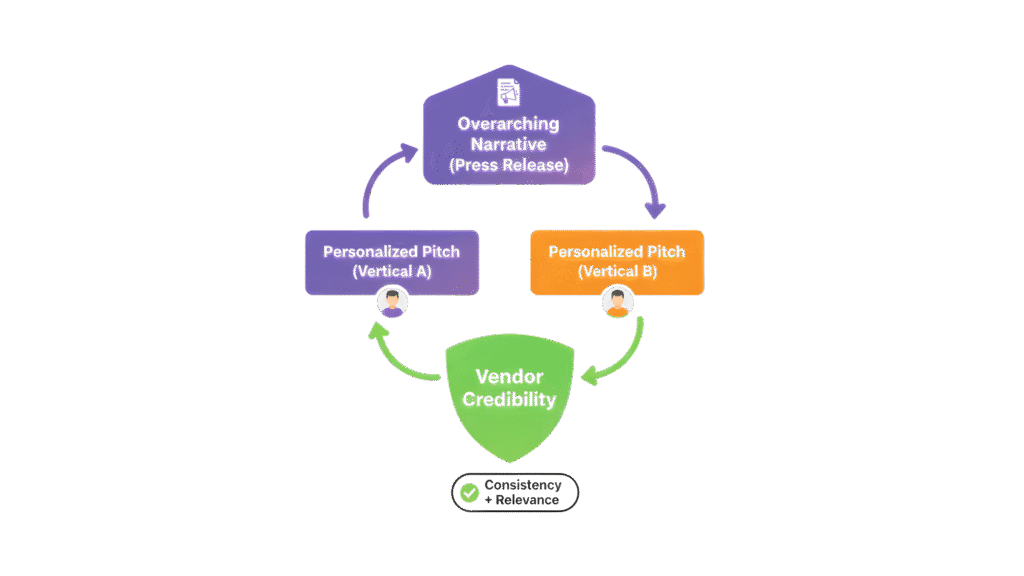
The hybrid approach extends to vertical-specific narratives.
Media pitches can personalise the story for niche sectors, while the press release maintains the overarching corporate narrative. For example, a SaaS company may pitch product adoption insights to DevOps-focused outlets while releasing the same story formally through corporate channels for broader exposure.
This alignment preserves consistency without sacrificing relevance, a key differentiator for high-intent audiences evaluating vendor credibility.
Even with advanced AI-driven PR writing, human oversight remains critical.
AI can enhance efficiency by suggesting headlines, semantic clusters, and draft text. However, editorial judgment ensures the story fits newsroom realities, respects context, and maintains the brand’s voice.
High-intent B2B audiences can detect when narratives feel mechanised, impacting trust.
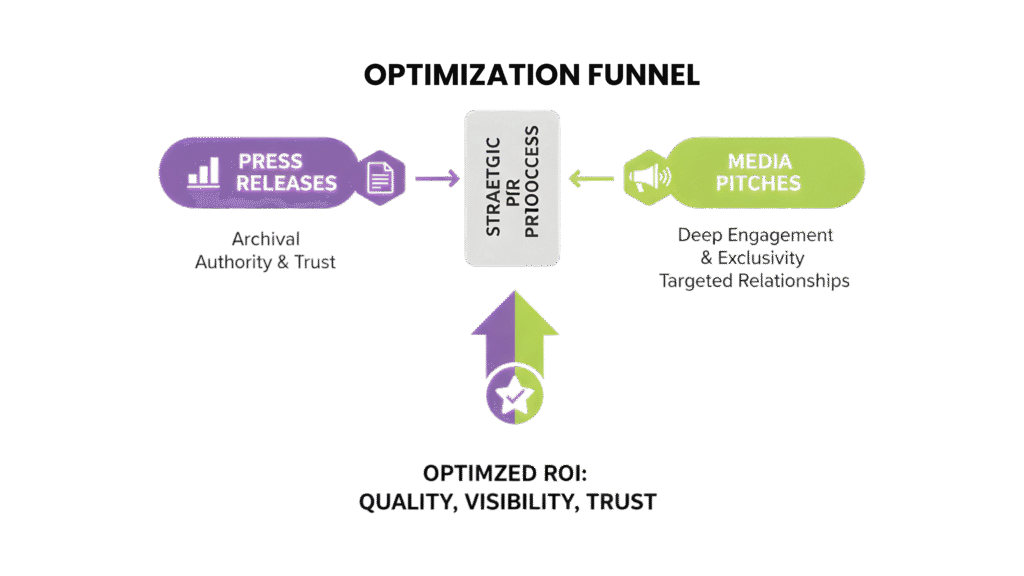
Ultimately, PR format choice should be assessed through an ROI lens.
Press releases drive formal visibility, SEO authority, and archival consistency. Media pitches often generate deeper engagement, exclusive coverage, and targeted journalist relationships.
By pairing formats, brands can optimise both immediate visibility and long-term credibility, positioning PR partners as strategic navigators rather than document producers.
B2B brands that understand when to release and when to pitch elevate PR from a tactical activity to a strategic asset. Choosing the right format, guided by newsworthiness, timing, narrative strength, and market stakes creates coverage quality, maximises visibility, and nurtures trust across high-intent audiences.
Press releases and media pitches serve different purposes. B2B brands win when they respect that distinction.
Expert guest posting leaders like Fastlinko know that a smart PR strategy comes from sequencing, context, and journalist alignment, not template repetition. It ends by positioning expert PR/content partners as the ones who help brands determine format fit, narrative timing, and angle strength for reliable outcomes.
PR partners who master this orchestration are essential for scaling impact in a complex, AI-influenced media landscape.
Yes, and often they should. A release lays down the full story for credibility. A pitch adapts that story for relevance. Good PR teams treat them as two layers of the same move. One builds official narrative, the other shapes journalist-ready entry points. This dual approach increases coverage depth across outlets.
Response shifts with timing and clarity. A well-crafted pitch feels personal and reduces thinking friction. A well-structured release reduces research friction. Journalists respond faster when the message respects their time. The format matters less than the signal that you understand what they already cover and why.
Preferences vary by beat and deadline pressure. Business reporters lean on releases for accuracy. Consumer and trend writers lean on pitches for sharper angles. Understanding that split is what shapes coverage quality — not blindly using one format because it’s familiar.
Both, when used with intent. Releases support credibility and search visibility. Pitches support relationship-building and momentum. Long-term visibility comes from balancing both — using releases to anchor the brand’s milestones and pitches to keep the story alive between those milestones.
