
How US Agencies Use Guest Posting to Build Authority for Clients
January 30, 2026





High-value brands don’t fear guest posting, they fear bad placement.
The modern web is full of fake guest post sites dressed like publishers but built like link farms. Their metrics look healthy, their pitch emails feel polished, and their price points seem industry standard.
Yet they silently sabotage your digital presence with SEO risks, authority leaks, triggering spam signals and diluting trust across your entire funnel.
In 2026, editorial credibility is shaped by behavioural signals and backlink safety, not inflated DA. Algorithms read patterns in reader engagement, topical consistency, historical authorship, and link context. Fake guest post sites fail at these micro-checks, but only if you know how to inspect them.
This skeleton unpacks how experienced B2B teams evaluate paid guest posting sites, how to identify fabricated metrics, and what a safe placement strategy with experts like Fastlinko looks like when budgets and brand reputation are on the line
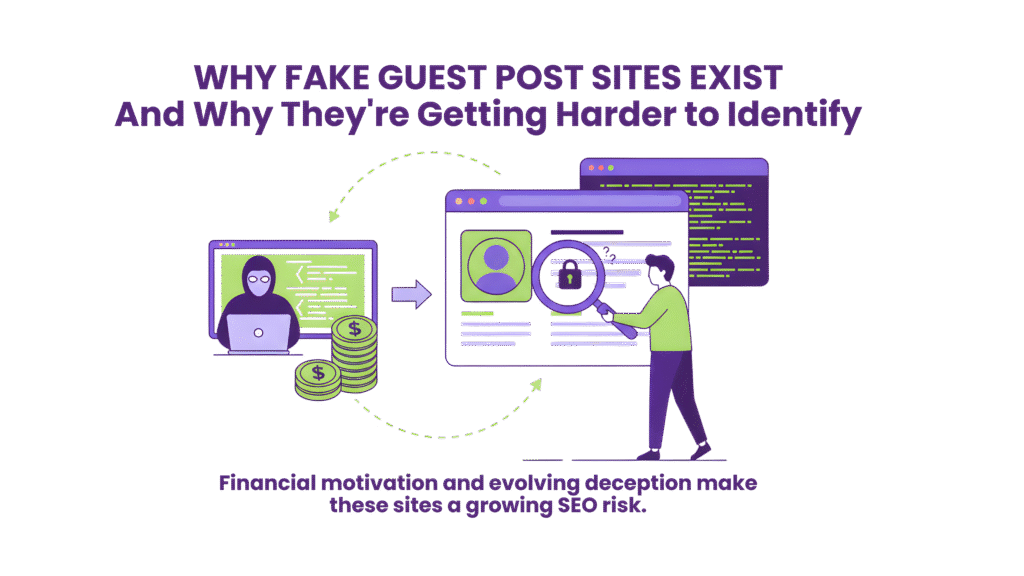
Fake guest post sites exist for one reason: they make money faster than real publishing models ever can.
They package themselves as credible industry blogs. Yet, everything from their traffic patterns to their content output is built for monetising paid posts at large scale. They also evolve faster than most B2B teams realize, simply because they are financially motivated, not editorially motivated.
This section breaks down how their economics work, why they now look more convincing than legitimate publishers and why high-stakes brands face the highest SEO risks when engaging with them.
Here’s a look at some of the reasons why:
The business model of fake guest post sites is simple:
They follow,
“Fabricated Authority + Automated Content + Paid Placement Volume = High-Margin Income.”
These sites rarely invest in real reporting, contributor management, or audience development. Instead, they rely on rented domains, recycled authority signals and templated category structures. The lower their operational cost, the higher the profit on each paid guest posting site placement.
This easy way out might even create a structural tension. Where real publishers earn through readership, fake guest post sites earn through link sales.
At the first stage, understanding this difference is the starting point for backlink safety.

Modern fake sites are not sloppy. They mirror genuine media behaviours with surprising accuracy. This is because believable façades increase placement value.
When you come across a fake guest posting site you’ll see:
This illusion works because most teams still do surface-level checks. Fake sites only need to look authentic long enough to sell placements.
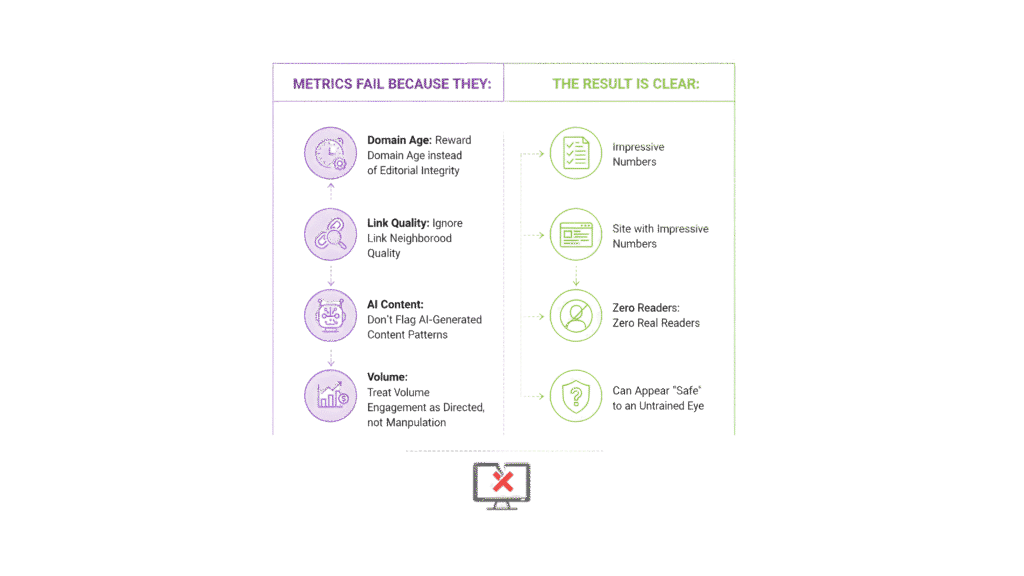
Most common website legacy metrics are outdated today. DA, DR, TF were built for a whole different era.
These metrics hardly matter in today’s landscape. B2B brands have moved to new and evolved measurements for their guest posting. But fake publishers know exactly how these metrics work and game them deliberately. This can cause SEO risks for brands.
Metrics fail because they:
The result is clear. It is a site with impressive numbers and zero real readers can appear “safe” to an untrained eye.

Google doesn’t rely on visible metrics, it tracks behaviour.
It measures the reliability of a website and its content asset based on a new set of metrics. When posting frequency is unnaturally high, authorship signals seem synthetic, outbound links cluster around commercial anchors and category structures drag no real user activity.
The search systems map these patterns quickly. Once flagged, every link associated with that domain becomes structurally risky. If you are a high-net-worth B2B brand, that SEO risk compounds. Even one toxic link can distort an entire link graph and undermine years of authority building.
The solution to this search engine problem isn’t more metrics, its deeper editorial diligence. Teams must evaluate a site’s purpose, not just its numbers. Real publishers invest in audience behaviour, while fake guest post sites invest in cosmetic credibility.
Understanding that distinction is the foundation of safe, ROI-driven link acquisition in 2026.
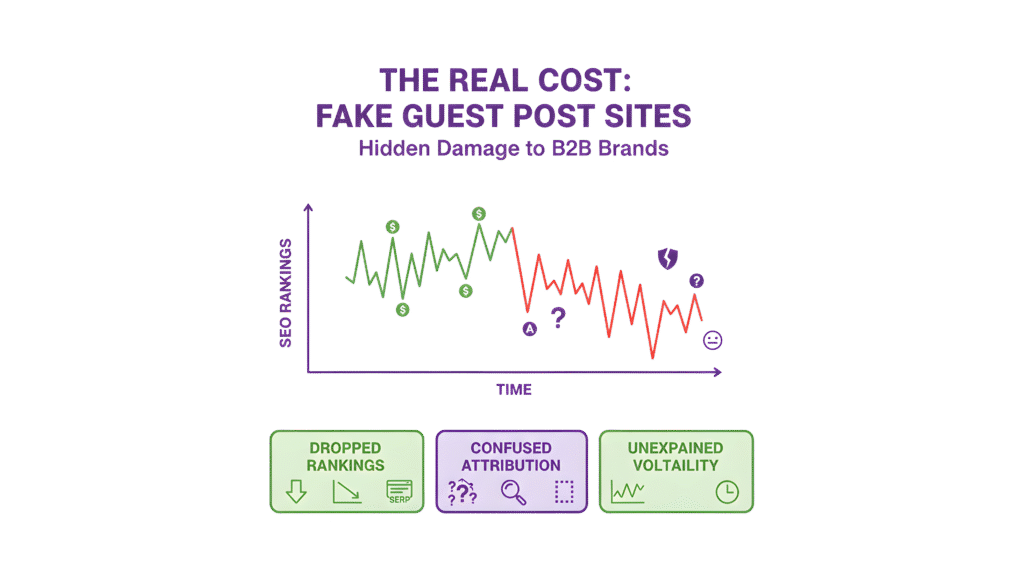
The real damage of fake guest post sites isn’t visible upfront.
It shows up slowly in the form of dropped rankings, confused attribution, and unexplained volatility. These signs start popping randomly across pages that once performed smoothly.
In the B2B sector, where trust compounds deal velocity, these placements don’t just waste budget. They alter how search engines and buyers read your entire digital footprint.
Fake guest post sites operate inside dense, recycled link networks.
Every placement sits next to unrelated industries, expired domains, and auto-generated pages built purely to sell links. Over time, this proximity shapes how your brand is categorised.
Search systems read the neighbourhood first, your message second. When using fake guest post sites, the link may look clean, but the environment weakens the authority flowing into your site.
That’s where the erosion starts, not as a penalty, but as dilution. Rankings and backlink safety soften, competitive pages lose edge and your strongest content begins reacting to algorithmic shifts it should have been immune to.
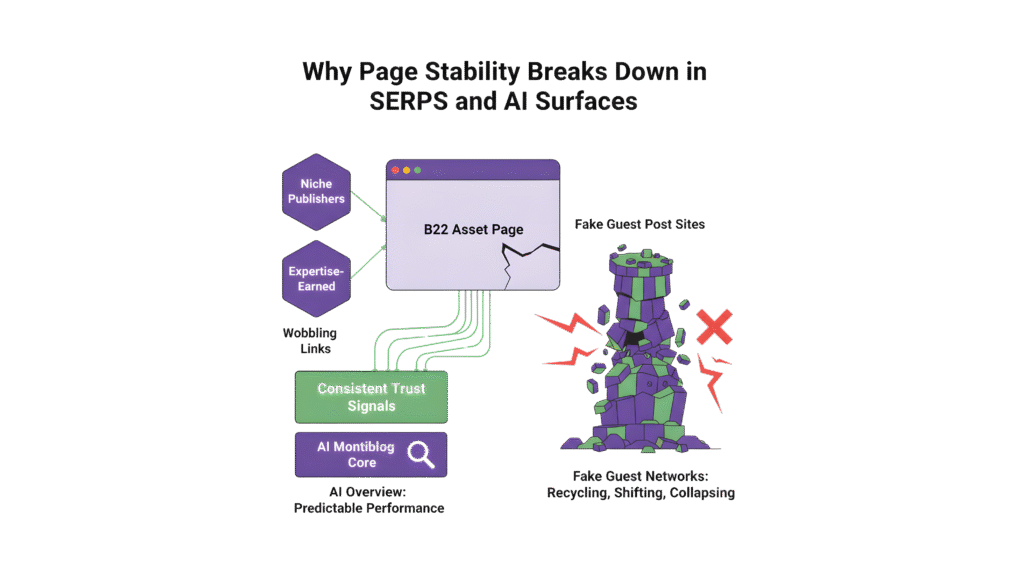
B2B pages need consistent trust signals to stay visible in AI Overview and organic search.
When a site receives signals from fake guest post sites, that stability drops. These networks recycle domains fast, shift hosting patterns, and collapse link equity out of nowhere. Your best asset pages start wobbling because they’re anchored to publishers that don’t hold still long enough to support them.
AI models filter unreliable sources earlier than traditional algorithms. So, volatility shows up sooner in intent-heavy queries. Exactly where B2B brands need predictable performance.

Fake guest post sites don’t have real readers.
Time-on-page, scroll depth, and referral engagement are artificially low. That behaviour follows the user back to your content. Prospects land, skim, and exit because the source felt untrustworthy before they even saw your brand.
These micro-behaviours accumulate into negative session patterns. Over months, search engines treat your page as less helpful than competitors with genuine referral ecosystems.
The irony is, even strong content loses credibility simply because the doorway leading to it was suspicious.

B2B buyers Google everything before raising a hand.
When a paid guest posting site looks unprofessional, thin, or opportunistic, the association sticks to the brand linked inside it. This is the quiet reputational drag leaders notice during long, complex sales cycles.
A single low-quality placement can shadow every future touchpoint like case studies, product pages, analyst reports. This is because digital ecosystems collapse credibility into simple impressions.
You don’t get to isolate a bad link from the rest of your story. Buyers read it as part of the same narrative.
Google rarely penalises outright anymore, but it filters.
Links from fake networks are simply not counted. The problem is the opportunity cost: while your competitors build authority with trusted publishers, your budget circulates inside link farms that add nothing and sometimes close doors.
Reputable industry publications track who buys from low-grade networks. When they see a pattern, they decline future collaborations, shrinking your long-term acquisition lanes.
The quality of where you’re mentioned quietly determines how the market, buyers, and algorithms decide whether your brand deserves authority in the first place.

For B2B brands, every link is a trust signal.
Identifying fake guest post sites before investing resources safeguards your website’s domain authority, topical relevance and prevents SEO risk of compounding to go unnoticed.
Experienced link evaluators focus on editorial integrity, ownership transparency, and audience authenticity. They reveal whether a site supports real authority growth or is merely a shortcut with hidden costs.
Editorial health is the first line of evaluation.
Real authorship is critical for backlink safety and avoiding SEO risk. Credible platforms feature named contributors with verified expertise. Fake guest post sites often rely on anonymous or AI-generated silhouettes.
Archive patterns provide another insight. Consistent post dates, logical updates, and structured category organization indicate editorial discipline, whereas scattered or random publishing suggests low-quality management.
Topical depth is equally important. Sites claiming to cover finance, SaaS, healthcare, and travel altogether, without depth are almost always part of generic link networks.
In contrast, platforms with coverage in a focused vertical show clear signs of expertise and relevance. Thus confirming that any placement is capable of supporting your semantic SEO and content authority.
Ownership patterns reveal hidden risks.
Sites with overlapping IP addresses, repeated registrant information, or shared hosting often indicate the presence of private blog networks (PBNs). Evaluating these signals helps avoid artificial backlink schemes that can undermine high authority link building efforts. Legitimate guest post sites have transparent ownership and align with the broader editorial ecosystem.
Overlapping themes across multiple domains are another indicator of manipulation. When the same content structure, anchor strategies, or topics appear across unrelated domains, it’s rarely coincidental.
B2B brands focusing on white hat link building should prioritise sites with clear editorial independence.

Raw traffic metrics can be misleading.
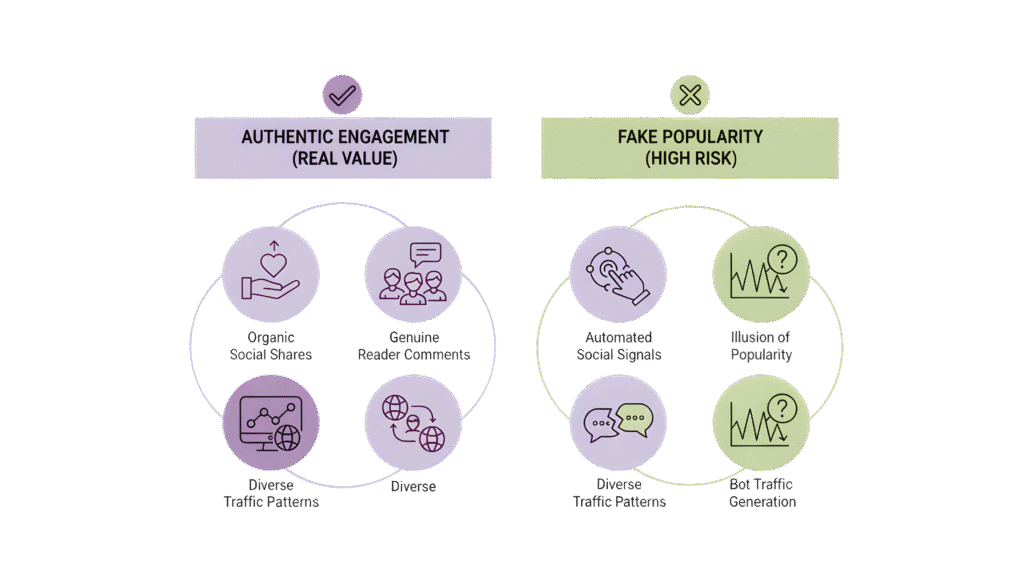
Google Analytics screenshots or vanity metrics are easily manipulated. Experienced evaluators instead focus on behavioural signals: average session duration, pages per visit, and returning visitor patterns.
Natural engagement, reflected through consistent time-on-page and scroll depth, signals a real audience. Unusual spikes in traffic, especially from identical referral sources or countries outside the target market, suggest bought traffic or bot-driven visits.
By assessing real behaviour, brands ensure link equity isn’t wasted on sites that look valuable on paper but offer no long-term visibility.
Transparency is essential.
Legitimate sites clearly disclose sponsored content and maintain reasonable publishing cadences. Platforms publishing dozens of guest posts per day without context or differentiation typically prioritise volume over value.
Observing velocity alongside sponsored labeling helps identify networks operating with manipulative intent, protecting your brand from SEO risks.
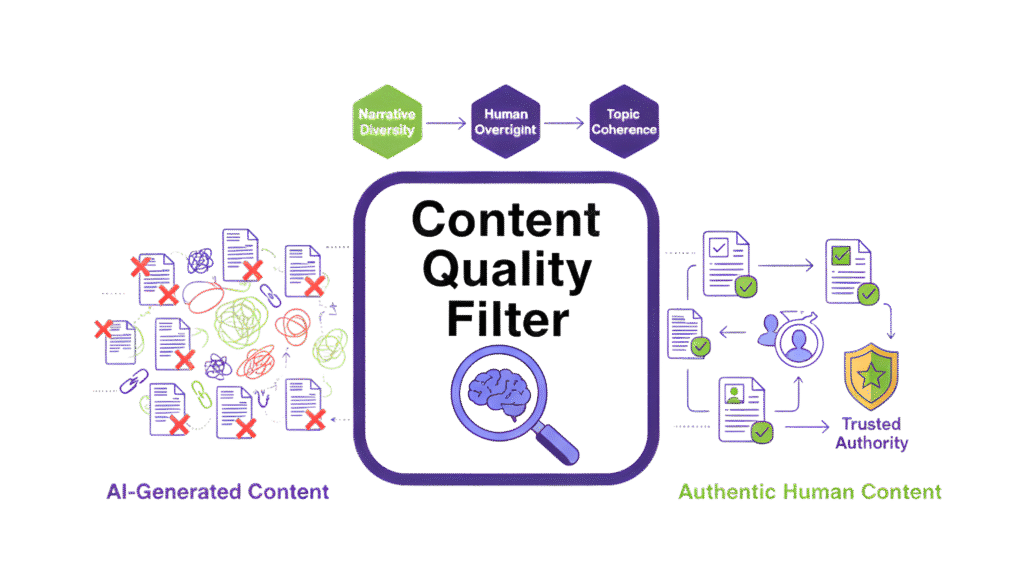
AI content is increasingly prevalent and can evade superficial checks.
Evaluate multiple pages across categories for repetitive sentence structures, generic phrasing, or unnatural keyword stuffing. Authentic sites demonstrate narrative diversity, human oversight, and topic coherence.
Testing several pages reduces the risk of mistaking isolated AI experiments for site-wide manipulation.
Not every anomaly is a fatal flaw.
Minor errors or small inconsistencies can exist on otherwise credible platforms. The distinction lies in systemic patterns. Consistently observing poor editorial practices, fake traffic signals, manipulative anchors, or obscure ownership identifies sites that pose serious SEO threats.
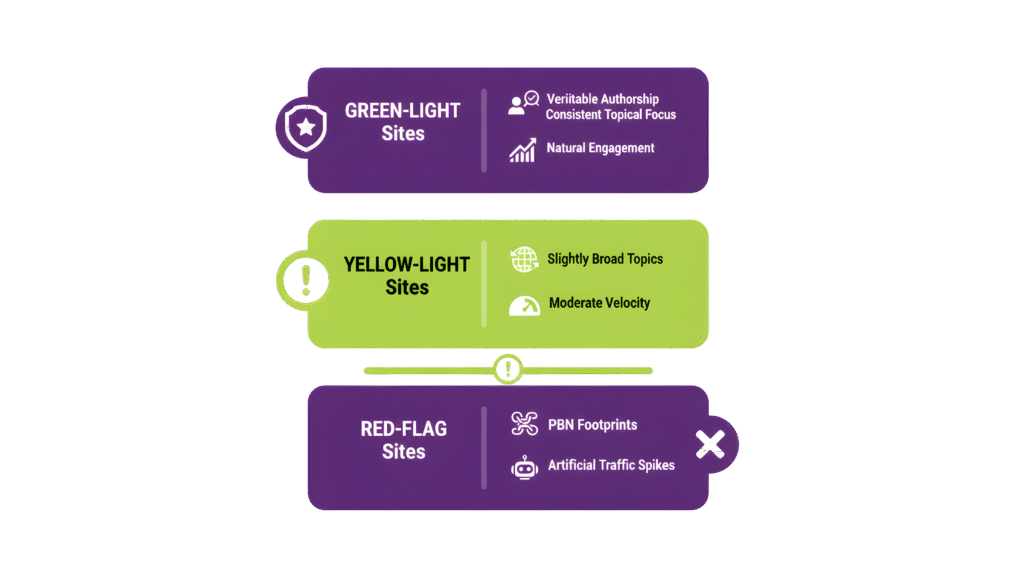
Experienced link evaluators often classify sites into three tiers:
The evaluation process is about combining multiple signals rather than relying on any single metric. Editorial integrity, ownership verification, traffic authenticity, link patterns, and content quality must all align to qualify a site.
Mapping risk also supports strategic decision-making. Green-light sites become long-term partners for predictable, compounding SEO gains. Yellow-light sites may supplement campaigns but require supervision. Red-flag sites are avoided to preserve trust signals and protect search equity.
Spotting fake guest post sites isn’t simply a precaution, it’s a foundational element of sustainable link building.
In 2026, partnering with leaders like Fastlinko is essential for any organization serious about scaling through white label link building, high authority link building, or guest post site partnerships.
This ensures that paid guest posts or outsourced link building investments translate into results. Gain measurable topical authority, improved visibility, and high-quality referral traffic with guest posting sites.
Not always, but paid sites require scrutiny. Legitimate paid platforms maintain editorial standards and attract genuine readers. Sites that push volume over quality can trigger SEO penalties. Paid does not equal fake, but blind purchases often do more harm than good.
Yes, they can. Google may devalue links from low-quality placements, reducing domain authority. In worst cases, repeated poor placements trigger manual or algorithmic penalties. The risk grows when links appear unnatural or irrelevant, especially for high-intent keywords.
Red flags include repetitive templates, thin content, irrelevant categories, and excessive outbound links. Minimal traffic or engagement, lack of editorial guidelines, and hidden outbound link policies are also signs. Real sites balance placements with meaningful content and authentic audience reach.
Yes. Target sites with relevant authority, active readership, and clear editorial standards. Vetting through content, traffic, and prior partnerships reduces exposure to low-quality placements. Thoughtful outreach ensures links earn authority instead of risking penalties.
