
How US Agencies Use Guest Posting to Build Authority for Clients
January 30, 2026





Local citations were once foundational ranking signals. They were simple listings that confirmed a business existed, served in a certain area, and could be trusted with local intent queries. But in 2026, Google’s updates shifted the metrics. The ranking factors for citation value now include data stability, NAP integrity, and trust alignment across platforms. B2B businesses now face a different question entirely. Their pain point is not “How many citations do we have?” but “Does Google understand who we are, where we operate, and whether our identity is consistent across SEO updates?” This is where local citation building still matters, but in a more controlled and precise way. Modern local citation building services like Fastlinko focus on eliminating contradictions, resolving legacy errors, and strengthening entity clarity. Clean citations influence Maps visibility, AI Overviews and regional query confidence. But, only when executed with quality. This blog answers the question: Do local citations matter after Google’s updates (2026 truth)? Explore why their role has changed and how B2B brands will use them to stay competitive in 2026.
Citations don’t rely on volume for impact anymore.
They now strengthen identity signals that guide local search logic. Google reads these signals to confirm business location, service areas, and credibility. This section shows why citations still matter and how they shape stability after recent SEO updates.
Google now prioritises entity clarity within local search.
It maps each business using consistent NAP information. This consistency confirms a brand’s identity across platforms. Further, confusion is also reduced between similar or competing listings.
Entity clarity stabilises ranking outcomes. It helps search engines trust the business’s digital footprint and marketing. SEO updates also improve visibility across competitive local terms. Ultimately, a clear and coherent entity protects relevance through long-term relationship building with the client.
This shift makes local citation building essential. They validate identity signals across networks and reinforce brand presence within structured data.
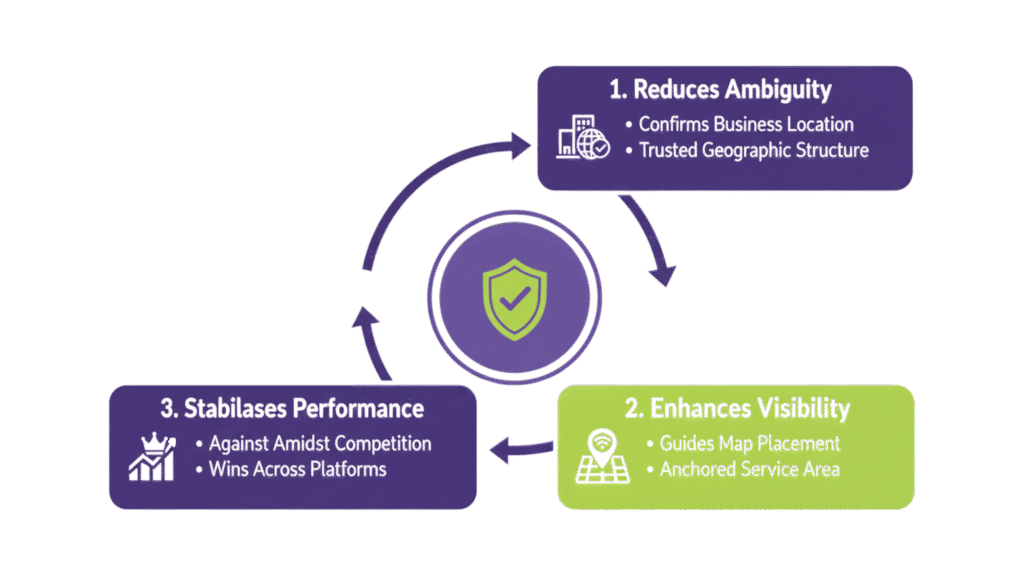
Local ranking strength depends on clear geographic signals.
Citations help Google confirm where a business operates. They reduce ambiguity in dense or overlapping service areas. They also give search engines a reliable geographic structure.
Strong citations anchor visibility across nearby locations. They confirm each service zone with precision and guide map placement within crowded regions. One of their key roles is to stabilise performance amid heavy competition.
Local results now prioritise precise location data. Citations feed that clarity at every level are the ones winning across platforms globally.
AI-guided search relies on structured information.
Clean citations provide that structure. They feed entity graphs with accurate location cues. These cues improve how AI interprets local service relevance.
They also influence AI Overviews heavily by strengthening the brand-based context for query-specific recommendations. They help AI map businesses to intent-heavy needs. Gradually, placements improve across evolving search surfaces.
Structured data now drives the local authority. Citations remain the core of that foundation. They supply clarity that AI systems depend on.
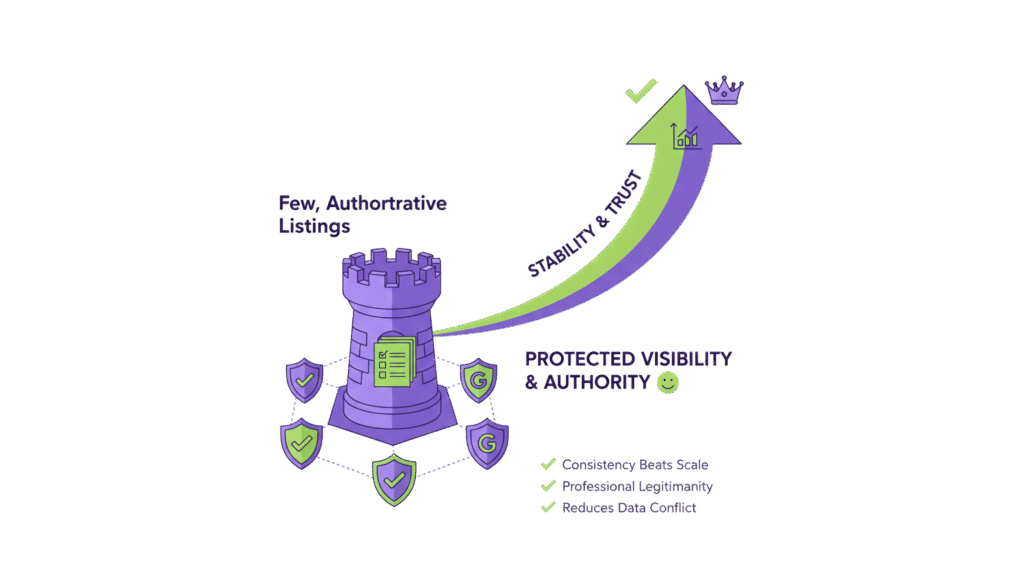
Google no longer rewards citation volume. It rewards stability and trustworthiness.
It is commonly known that a few authoritative listings easily outperform mass submissions. Consistency beats scale across ranking factors.
Trust signals are an important part of this atmosphere. They confirm your business’s professional legitimacy and show a stable business presence. Their main task is to reduce conflict between directory records.
High-quality citations drive better local outcomes. They protect visibility during algorithm shifts. This builds trust that search engines recognise quickly and distribute effortlessly.
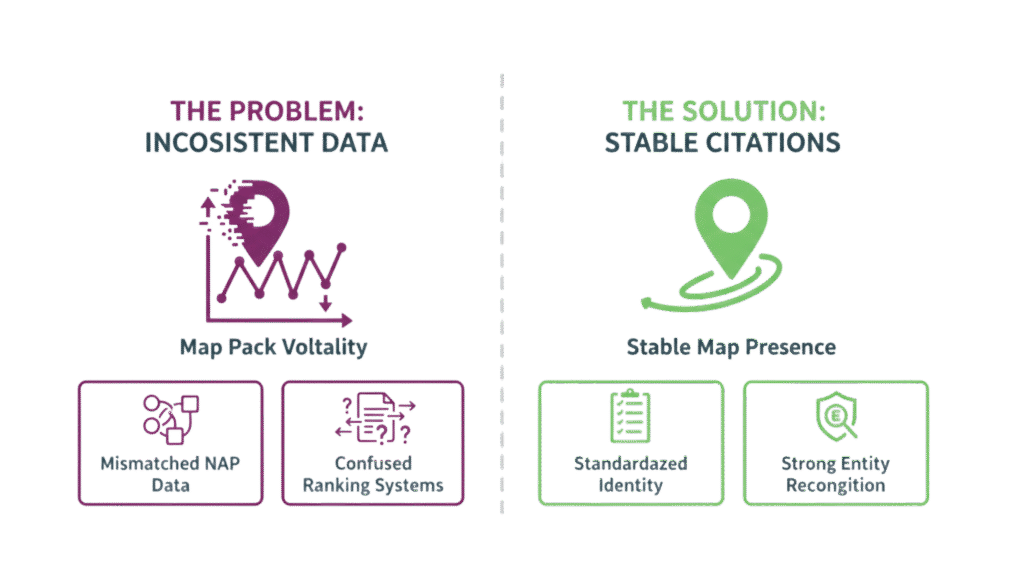
Map pack volatility often comes from inconsistent data. Mismatched NAP details confuse ranking systems. This confusion weakens placement stability and causes unpredictable performance swings.
Citations fix this issue by standardising identity signals. They align information across directories and support strong entity recognition. Thus, reducing ranking turbulence in dynamic markets.
Stable citations lead to stable map presence. This stability influences lead flow and foot traffic. It protects hard-earned visibility over time.
Citations matter because they confirm your brand’s identity. They stabilise entity signals across networks and guide local ranking logic after major updates. Beyond that, they support stronger visibility through clean, reliable data.
Now that we know the importance of local citations, let’s learn how citation quality impacts local SEO.
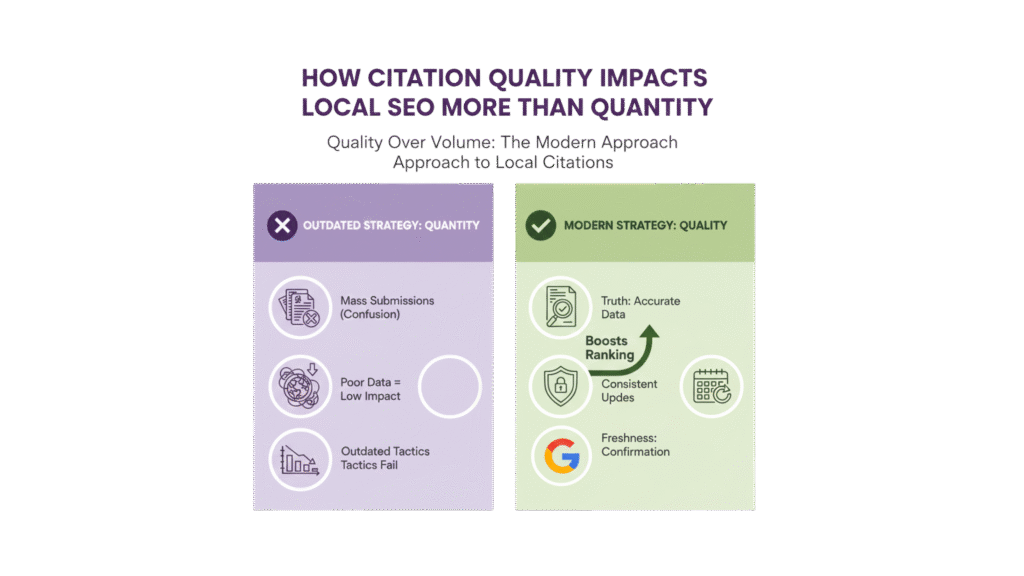
Local SEO has evolved past the era of mass submissions.
Google now evaluates the truth, stability, and freshness of business data. Quality citations strengthen identity signals while poor ones create confusion.
This section explains why outdated strategies fail and how modern local citation-building services win rankings online.
Local rankings collapse when core details conflict.
A wrong digit, outdated address, or old business name breaks Google’s understanding of what the business is. Data inconsistency creates confusion and forces the algorithm to mistreat the listing. So, visibility drops because the system cannot trust the data.
Conflict signals slow every other SEO effort. Even strong landing pages lose momentum when brand identity is unstable. Search engines need coherence before they reward authority. Poor citations disrupt that foundation.
Contrarily, clean data restores confidence. Stable signals support a stronger ranking. Modern strategies focus on eliminating conflict, not adding volume.
Older citation strategies relied on scale.
Thousands of listings offered surface-level reach but little substance. Google no longer values these mass submissions. Engines discount directories with weak metrics and poor editorial oversight.
Low-authority networks also fail to influence identity. They contribute noise instead of clarity. These sites add records that signal unreliability. Their presence even slows entity recognition in crowded categories.
Modern SEO no longer rewards inflated quantities. Now, search engines seek structured relevance and verified authority.
Old citations linger in forgotten directories.
Those records still influence algorithms even when they become outdated. Stale data drags new optimization efforts backward. Conflicting information forces Google to re-evaluate its identity repeatedly.
This drag affects ranking stability. It delays visibility gains from new site updates and reduces confidence in revised service areas. It also weakens map placement during critical discovery moments.
To manage this, cleanups are essential. Removal or correction of data restores brand alignment. Fresh data gains power only when legacy noise disappears.
Citations demand maintenance, not abandonment.
Google relies on trusted aggregators to verify business identity.
These directories supply structured, reliable, and consistently updated data to readers. Their authority carries weight inside the search engine ranking system. Good citations on these platforms clarify the business faster.
They guide Google toward stable interpretation and help confirm real-world presence. Their main job is to reduce doubt in competitive categories.
But not all directories offer this value. Only well-governed sources influence identity at scale. Quality citation building prioritises these platforms first.
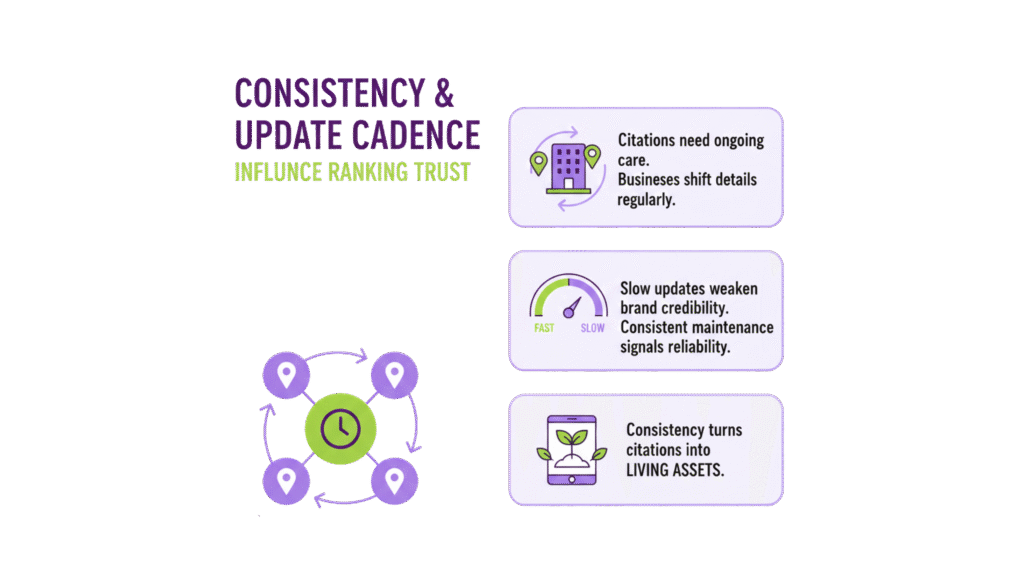
Citations need ongoing care.
Businesses shift addresses, hours, and contact details regularly. Search engines expect these changes to appear everywhere promptly without any confusion. If you have slow updates, your brand weakens credibility across networks.
Update cadence also signals reliability. Consistent maintenance tells Google the business is active and trustworthy. In contrast, outdated listings hint at poor management. That impression hurts visibility across local surfaces.
Consistency turns citations into living assets. They evolve with the business.
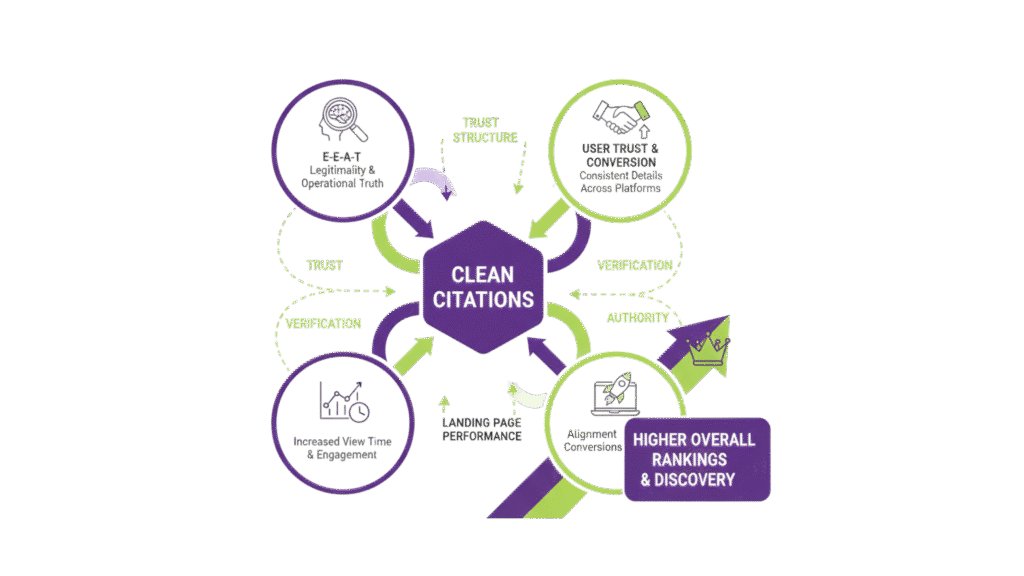
Identity clarity influences more than map results.
Clean citations support E-E-A-T by proving legitimacy and operational truth. Landing pages convert better when foundational signals align. User trust strengthens when details remain consistent across platforms.
This alignment boosts behavioural metrics. Users stay on the page longer when the experience feels coherent. Google interprets high view time as stronger relevance. In the bigger picture, rankings rise because the system sees a stable identity with strong engagement.
This sets us up for the next section 3, where we finally answer the question. Do local citations still matter after Google’s latest update? (2026 truth) Find out next.
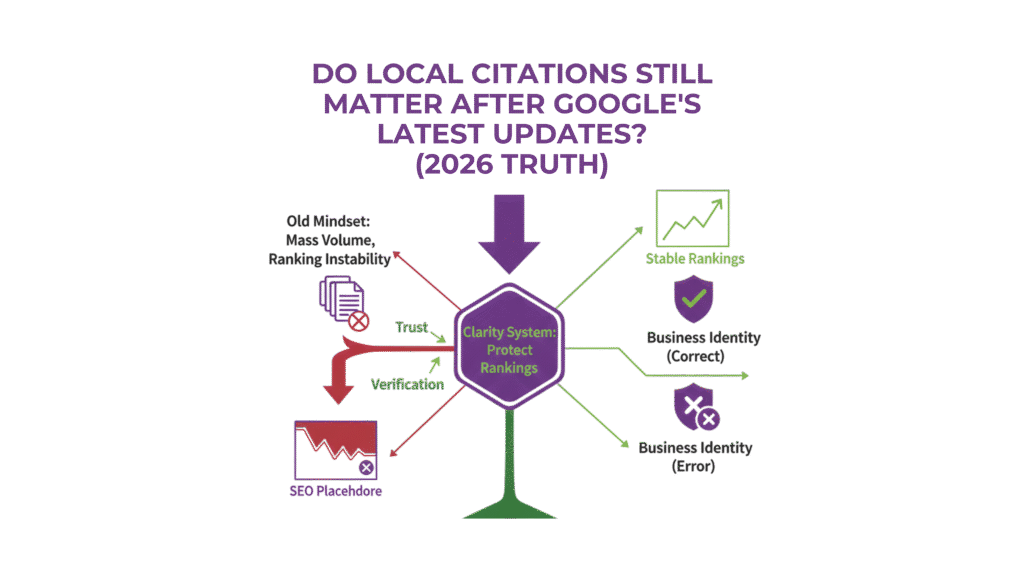
For the longest time, local citations were treated as SEO placeholders.
In 2026, that mindset creates ranking instability. Citations still matter, but only when they function as a clarity system. When handled strategically, citations don’t boost rankings; they protect them.
Local SEO experts know that Google’s latest updates reward consistency, not aggressiveness. In crowded local categories, visibility swings happen because the identity signals of two businesses match.
The one that maintains clean, validated citations wins the traffic and becomes a reliable entity. The other introduces doubt, even if its content and reviews are stronger.
In the current algorithm economy, citation power is built on trust, structure, and verification. Let’s find out more about citations in 2026:
Not every directory qualifies as a recognition source.
The platforms Google trusts are the ones that users already rely on to discover businesses. A single high-confidence listing on a major aggregator can reinforce your service geography far more than twenty submissions on forgotten websites.
High-intent listings make your brand exist where it claims to. They also make sure that Google sees continuity between your identity and your footprint.
When citations live in real consumer environments, not SEO dumps, visibility accelerates naturally.
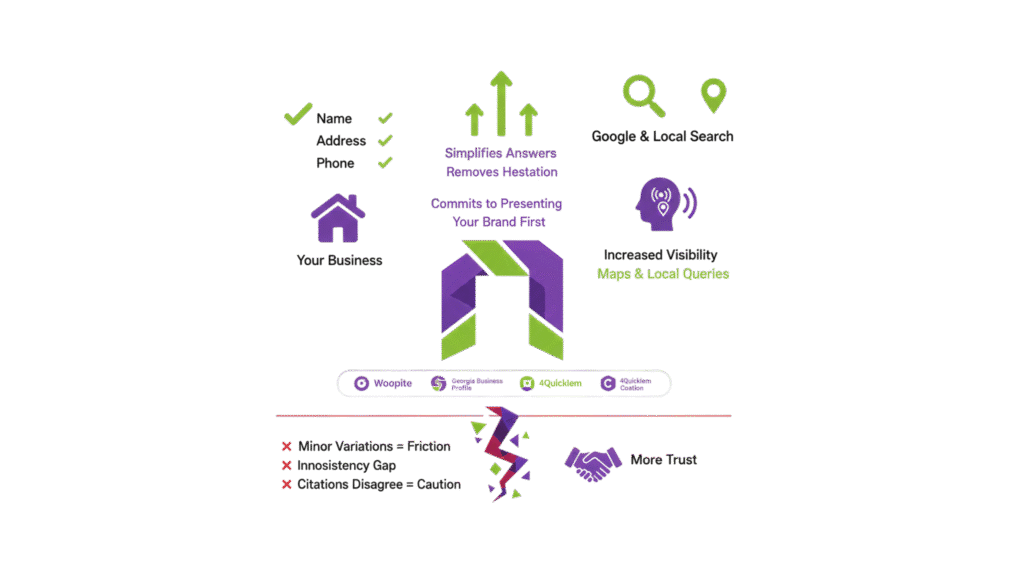
NAP accuracy is now a ranking boundary.
That’s because citations exist with the objective of simplifying answers. Even minor variations in address structure or phone formatting introduce friction for search engines.
Consistency, on the other hand, gives Google the confidence to remove hesitation from your visibility decisions. If citations disagree with your Google Business Profile, the algorithm defaults to caution and limits your discovery across Maps and local queries.
When every listing tells the same story, search engines commit to presenting your brand first, because they trust it more.

Citations age like milk.
Legacy listings left behind after moves, rebrands, new phone numbers, or discontinued services become silent blockers of performance. One outdated listing is enough to split identity signals and create uncertainty.
Removing duplicates, shutting down old business pages, and refreshing stale data isn’t maintenance work. It is risk removal. The sooner brands eliminate historical residue, the sooner their real identity becomes singular and undeniable online.
Cleanup is what prevents one mistake from erasing months of optimisation.
Scaling citations multiplies risk if the structure is weak.
That’s why brands rely on specialists who focus on identity clarity, not directory count. Their work aligns categories, addresses, service descriptions, and verification proofs so Google sees one accurate truth.
Instead of placing you on random platforms, they choose directories that index well and map correctly to your business model. The right local citation building service prevents contradictions that confuse search engines.
When data is consistent everywhere, trust compounds. Visibility then stops fluctuating.
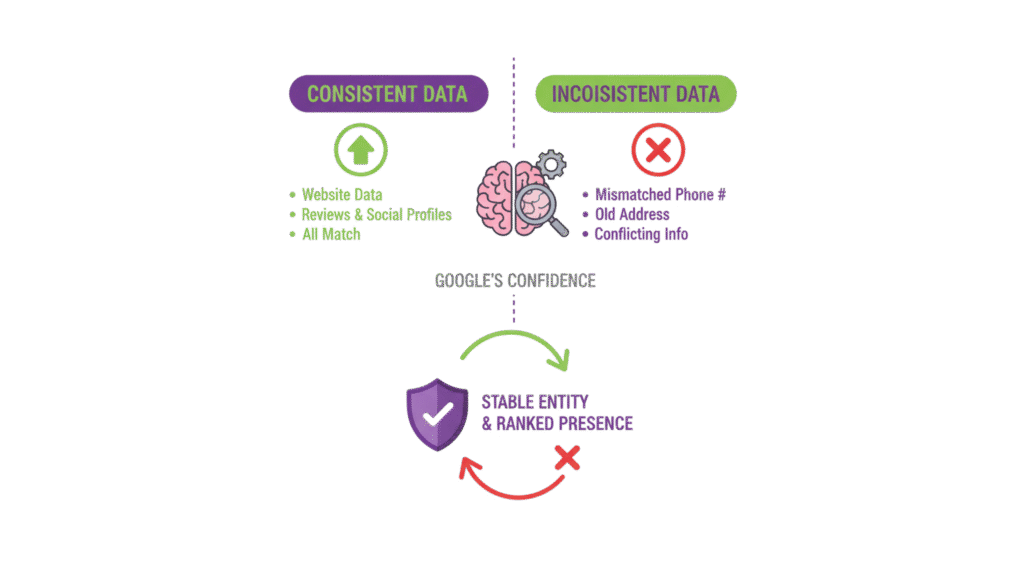
Citations are not authority hacks anymore.
They help Google confirm where you operate, who you serve, and whether you’re legitimate. Search engines compare citation data against your website, reviews, and social profiles to decide how confidently you should rank.
Every small inconsistency weakens that confidence. When citations reinforce the same story everywhere, Google recognises your business as a stable entity in the region.
That’s why accuracy matters more than volume; clarity builds ranked presence for algorithms to depend on.
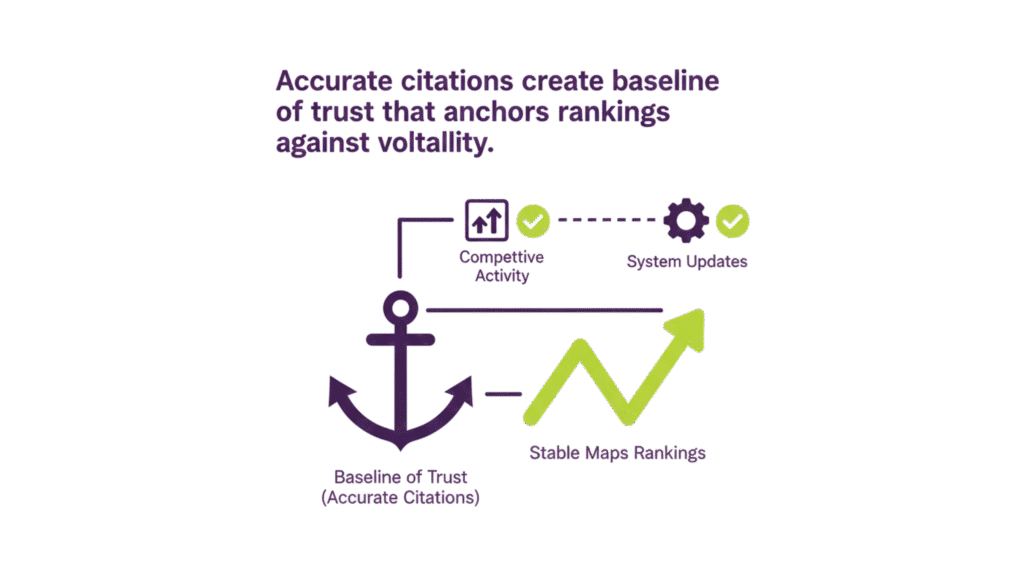
Stability is now the clearest indicator that citations are working.
Accurate listings reduce volatility. Your map position stabilises, branded queries stop surfacing competitors and seasonal dips become less dramatic. Stability is now the clearest indicator that citations are working.
They create a baseline of trust that protects rankings even as competitive activity rises or search systems update. So instead of chasing citation counts, track consistency in Maps rankings and local impressions.
When identity is locked in, performance stays anchored.
Local citations still matter, but only when they strengthen your business identity across the ecosystem. Brands should treat them as ongoing entity management, not a one-time link job.
The more consistent your signals, the more confidently Google positions you in local search, even when algorithms evolve.
Local citation building services like Fastlinko are expert citation builders. They understand a businesses’ true needs and create citations that reflect their brand, audience and digital footprint accurately.
Citations matter more for accuracy than presence. In 2026, Google now looks at data consistency, update frequency and alignment across major aggregators as citation ranking factors. The volume of listings matters far less.
Inconsistency slows indexation and weakens trust signals. When Google sees conflicting NAP data, it struggles to match your business to a query’s location intent. This uncertainty lowers both map-pack and organic visibility. Consistency protects authority more than ever.
Yes, as a preventive measure. Rankings change when data starts drifting, often from platform updates or unmonitored listings. Maintaining citation accuracy keeps your authority stable so other ranking factors continue performing without interruption.
Yes, especially for SABs. Hidden addresses increase the burden on Google to verify legitimacy. Citations help fill that gap. When your NAP is clean across trusted directories, Google understands your service radius more clearly and ranks you with more confidence.
