
How US Agencies Use Guest Posting to Build Authority for Clients
January 30, 2026






For multi-location brands, local SEO is no longer about simply “being listed.” It is about accuracy at scale. When a brand operates across dozens, hundreds, or even thousands of locations, citation consistency becomes one of the strongest signals influencing visibility, trust, and local rankings.
Multi-location citations are the backbone of franchise SEO and enterprise-level local search performance. When business data is inconsistent across directories, platforms, and aggregators, search engines receive mixed signals. That confusion weakens authority, limits map visibility, and reduces local conversion opportunities.
This guide breaks down how multi-location brands can manage citations with precision, why data consistency directly impacts rankings, and how structured citation building services help brands maintain control as they scale.
A citation is any online mention of your business’s core information, typically name, address, phone number (NAP), and sometimes additional attributes like hours, categories, or services. These mentions appear across business directories, review platforms, data aggregators, apps, and mapping services.
For single-location businesses, citation management is fairly straightforward. For multi-location brands, the complexity increases exponentially. Each location introduces new variables, and one inconsistency can cascade across dozens of platforms.
Search engines rely on citations to validate business legitimacy. When the same location appears consistently across trusted sources, confidence increases. When data conflicts, confidence drops. That loss of confidence affects how often and where your locations appear in local search results.
Multi-location brands face higher scrutiny because scale magnifies errors. A single mistake repeated across hundreds of listings can suppress visibility across entire regions.
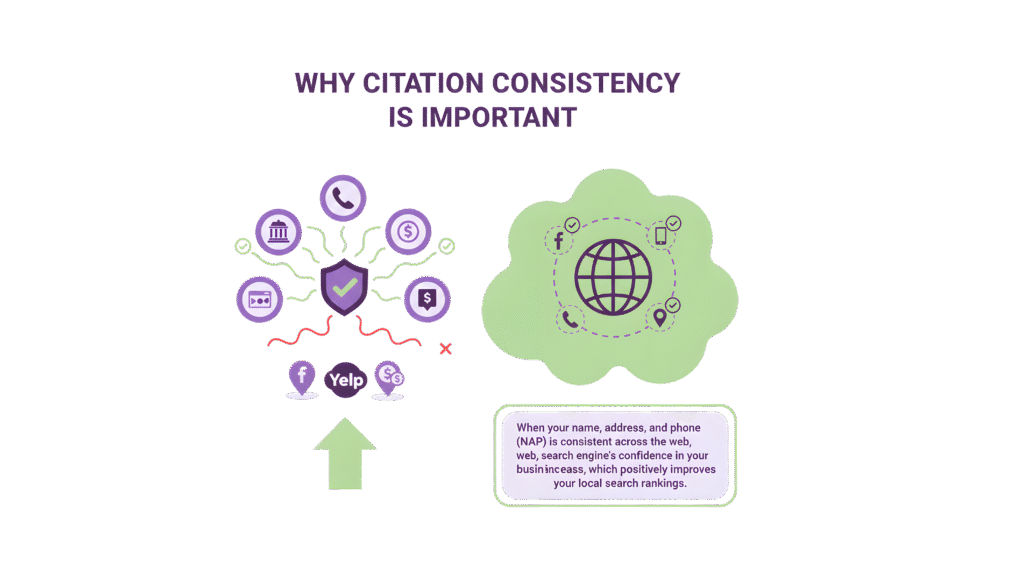
Data consistency is not a cosmetic task. It directly influences ranking stability, map pack inclusion, and user trust.
Search engines cross-check information from multiple sources. If a location’s address appears differently across platforms, the system cannot confidently associate those mentions with one entity. That uncertainty limits ranking potential, even if your website and backlinks are strong.
From a user perspective, inconsistent listings damage credibility. When customers see different phone numbers or addresses, hesitation follows. Missed calls, wrong directions, and negative experiences often trace back to poor citation hygiene.
For franchise SEO, consistency also protects brand integrity. Each location must follow the same naming conventions, formatting rules, and category structures. Without centralized control, individual locations introduce errors that weaken the entire brand footprint.
Managing citations for multi-location brands involves more than submitting listings to free business citation sites. Several hidden challenges slow progress and create long-term issues if not addressed early.
Over time, business information changes. Locations move, phone numbers update, hours shift, and services expand. Without a structured update process, old data continues circulating, creating mismatches across platforms.
Duplicates are common for brands that scale quickly or acquire new locations. These duplicates split authority and confuse search engines about which listing is correct.
Small variations such as “LLC” vs “Inc” or keyword-stuffed business names introduce inconsistencies that weaken trust signals.
Data aggregators distribute information to hundreds of platforms. If incorrect data enters an aggregator, it spreads rapidly and becomes harder to correct later.
Citations function as validation signals. Search engines evaluate:
For multi-location brands, citations help search engines understand geographic relevance. Each consistent mention reinforces where a location belongs and what services it provides.
When citations align with your website, Google Business Profiles, and internal location pages, ranking stability improves. When they conflict, visibility declines, even if reviews and content are strong.
This is why citation building services focused on data consistency outperform manual, one-off submissions.
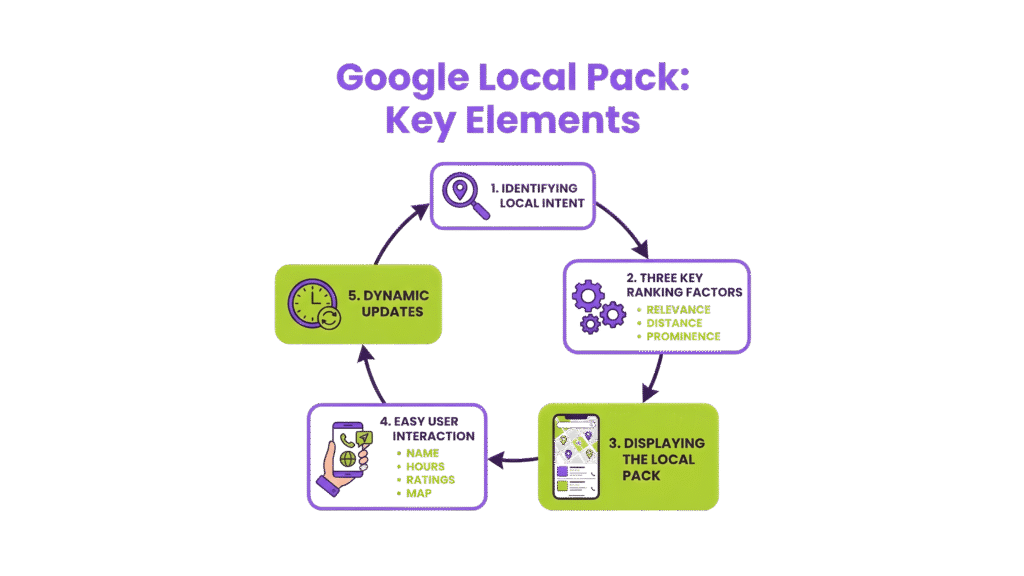
Map rankings are highly sensitive to trust signals. Data consistency is one of the few controllable factors multi-location brands can fully manage.
When NAP details match across directories, map platforms confidently surface your locations. When inconsistencies exist, visibility fluctuates, often without clear explanations.
For franchise brands competing in crowded markets, consistent citations provide a baseline advantage. They do not guarantee rankings, but without them, rankings become unstable.
A structured approach prevents chaos and supports long-term growth.
Every brand needs a master database that defines how business information should appear across platforms. This includes naming format, address structure, phone numbers, categories, and attributes.
Each location must have its own citation footprint, not a generic brand-level listing. Shared phone numbers or addresses weaken local relevance.
Not all citation sites carry equal weight. High-authority directories, major data aggregators, and industry-specific platforms should be prioritized before long-tail sites.
Citation management is not a one-time task. Monitoring prevents regressions and catches unauthorized changes early.
Free business citation sites offer accessibility but limited control. Submitting listings manually takes time and often lacks verification safeguards.
Citation building services provide structured processes, aggregator access, duplicate suppression, and ongoing monitoring. For multi-location brands, this level of control is often necessary.
Free platforms may work for small businesses, but franchise SEO demands scalability and accuracy. Paid services reduce risk and ensure consistency across hundreds of listings.
Consistency starts with formatting discipline.
Avoid keyword stuffing in business names. While it may provide short-term gains, it introduces inconsistencies that create long-term ranking instability.
Inconsistent citations do more than hurt rankings. They impact revenue.
When users encounter incorrect information, conversions drop. Missed calls, wrong directions, and poor experiences translate directly into lost leads.
From an SEO perspective, inconsistency suppresses visibility. Rankings fluctuate, map presence weakens, and competitors gain ground.
For multi-location brands, even small errors multiply across locations, turning minor issues into major performance losses.
Before building new citations, brands must audit existing ones.
A citation audit identifies:
Audits provide clarity. Without them, new citations often amplify existing problems instead of fixing them.
Franchise SEO introduces additional complexity. Individual franchisees may manage their own listings, introducing inconsistencies.
Central governance is critical. Brands must define rules, enforce standards, and monitor compliance. Without oversight, local autonomy weakens brand-level authority.
Strong franchise SEO balances local relevance with centralized control. Citation consistency enables that balance.
As brands expand, manual processes break down. Automation and structured workflows become essential.
Scaling successfully requires:
Citation building services designed for enterprise brands simplify this process and reduce operational overhead.
Citations often serve as gateways to reviews. When listings are accurate, users find the right profiles and leave feedback on the correct location.
Inconsistent citations fragment reviews across duplicates, weakening social proof. Consolidated, accurate listings strengthen both SEO and conversion signals.
Several mistakes repeatedly limit results:
Avoiding these mistakes protects long-term visibility.
Citation corrections are not instant. Search engines need time to recrawl and reprocess data.
Most brands see stabilization within 30 to 90 days. Competitive markets may take longer. The key is consistency over time.
Citation building services help accelerate this process by pushing accurate data through trusted channels.
Measuring the ROI of Citation Consistency
Success metrics include:
While citations alone do not drive growth, they create the foundation that allows other efforts to perform.
Sustainable citation management requires governance.
Define who owns data updates, how changes are approved, and how platforms are monitored. Document standards clearly and enforce them consistently.
This framework prevents drift and protects performance as brands grow.
Citations are not campaigns. They are infrastructure.
When infrastructure is stable, marketing performs better. When it is neglected, everything else struggles.
Multi-location citations support visibility, trust, and scalability. Data consistency keeps the system functional.
Local SEO for multi-location brands depends on accuracy more than tactics. Citation consistency creates clarity for search engines and confidence for users.
Free business citation sites offer a starting point, but enterprise growth requires structured citation building services and disciplined data management.
When multi-location citations align perfectly across platforms, franchise SEO strengthens, rankings stabilize, and local visibility becomes predictable.
Data consistency is not optional. It is the foundation that allows multi-location brands to compete, scale, and win in local search.
Data consistency ensures that search engines can confidently associate all listings with the correct business locations. Even small inconsistencies in names, addresses, or phone numbers can weaken trust signals and reduce map pack visibility. For brands operating across multiple regions, these errors multiply quickly and suppress performance across entire markets. Consistent data strengthens authority and improves local search reliability.
Inconsistent citations confuse search engines and dilute location authority. When multiple versions of the same business appear online, link equity and trust signals get split instead of reinforcing one strong entity. This often results in unstable rankings, poor map visibility, and reduced impressions. Over time, competitors with cleaner data gain a measurable advantage.
Free business citation sites can help establish a basic presence, but they rarely offer the control needed for multi-location brands. Manual submissions are time-consuming and difficult to maintain at scale. They also lack duplicate suppression and aggregator distribution. For enterprise and franchise SEO, structured citation building services provide stronger accuracy and long-term reliability.
Most multi-location brands should conduct citation audits at least twice a year. Brands experiencing frequent changes, acquisitions, or rapid expansion may need quarterly audits. Audits help identify duplicates, outdated data, and unauthorized changes before they impact rankings. Regular monitoring prevents data drift and protects local visibility.
Data aggregators distribute business information to hundreds of directories, apps, and platforms. If incorrect data enters an aggregator, it spreads widely and becomes difficult to correct later. Managing aggregator submissions is essential for maintaining data consistency at scale. This is why many citation building services focus heavily on aggregator accuracy.
Citation updates are not immediate, as search engines need time to recrawl and validate changes. Most brands see stabilization within 30 to 90 days, depending on market competition. Highly competitive locations may take longer to reflect improvements. Consistent updates and monitoring speed up long-term gains.
Citations help establish each franchise location as a legitimate local entity while reinforcing brand-level authority. Consistent listings ensure that individual locations rank without creating brand fragmentation. Centralized citation governance prevents franchise-level errors from weakening overall performance. Strong citation management is a core requirement for scalable franchise SEO success.
