How US Agencies Use Guest Posting to Build Authority for Clients
January 30, 2026



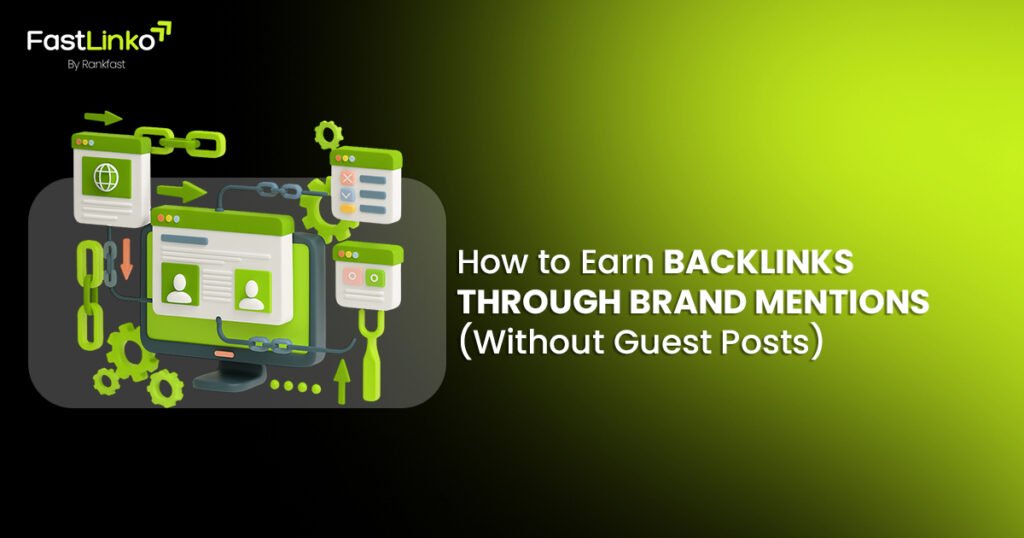

Most brands still treat backlinks as something you place. In reality, the most durable way is to earn backlinks through brand mentions
The trick is to get them without asking for them directly. As search systems mature, Google starts rewarding signals & pr-driven links that look natural, editorial & reputation-based. Brand mentions now sit at the centre of that shift.
When a brand is cited because it adds context, authority or credibility to a discussion, the resulting link behaves very differently from a traditional guest post. These mentions don’t rely on templates, negotiated placements & forced anchors. They emerge from visibility and trust, the same signals search engines already value.
This guide explores how brands earn backlinks through brand mentions by aligning PR, positioning, and content strategy. It explains why high-authority link building is moving away from transactional tactics, how link building specialists use mentions as authority anchors, and what it takes to create natural mentions that convert into long-term SEO equity.
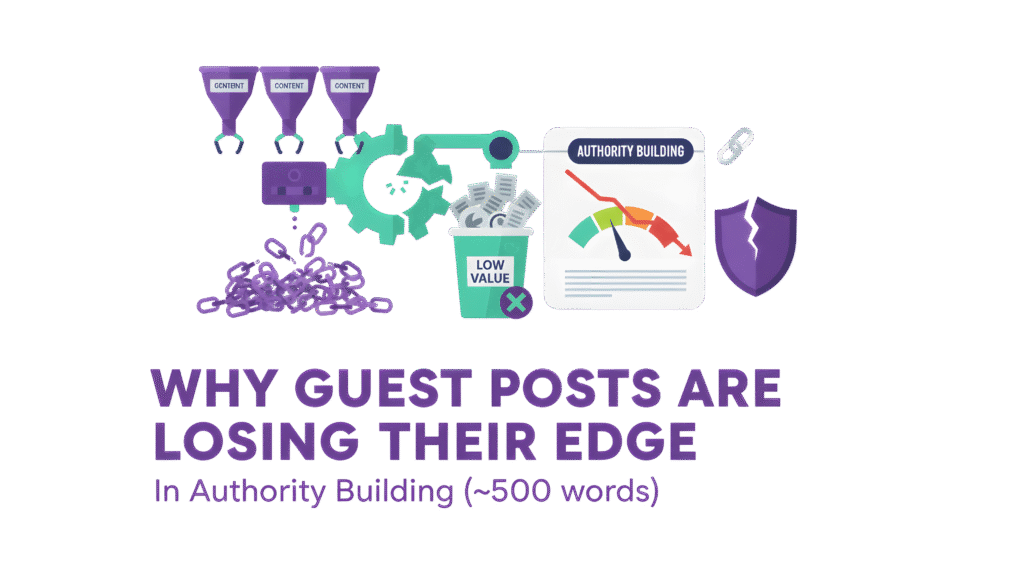
Guest posting still functions well in some limited contexts. But it no longer mirrors how authority is earned today. It is now outdated.
Search engines and publishers today reward recognition, not placement. This section explains why guest posts feel less effective and why brand mentions increasingly define high authority link building.
Discover why guest posts are losing their edge in authority building today.
Guest posts once implied editorial trust. Any publisher who posted, chose your perspective deliberately, after manual consideration. That choice carried authority weight. Over time, that signal has weakened.
Today, guest posts signal execution ability. They show brand outreach, persistence and coordination, but they no longer prove credibility. Search engines see them as effort markers.
In contrast, to earn backlinks through brand mentions reflects recognition. If someone references you without prompting, that distinction matters. Today, recognition signals authority more cleanly than placement ever could.
Nowadays, publishers have to manage relentless inbound pitches. Most of them follow similar templates. They promise value without delivering insight. This creates editorial fatigue.
As the volume of guest posts rises, judgement tightens. Editors stop equating contribution with credibility. Eventually, guest posts begin to feel transactional.
This fatigue reduces authority transfer. After a point, even strong writing blends into noise.
Modern publishers prioritise perspective. They look for data, original framing and informed opinions. Today, editors and publishers value contributors who advance conversation further and explore new angles.
Generic guest posts struggle here. They explain known ideas & avoid strong positions. They falter by prioritising safety over substance.
High authority link building now comes from being cited. Insights are good for earning references naturally. Presence alone no longer moves trust among viewers.
Search engines evaluate performance patterns over time. Individual guest posts rarely cause issues. Repetition does.
Links from guest posts follow recognisable structures. Similar anchors. Similar placements. Similar cadence. Over time, these patterns look manufactured.
PR-driven links behave differently. They appear irregularly. They follow the discussion
flow. They resist easy classification. That difference preserves authority growth.
Modern authority is relational. Search engines observe who mentions you naturally. They study co-occurrence and contextual alignment.
Brand mentions signal relevance without solicitation. They show peer acknowledgment. They reflect embedded credibility within an ecosystem.
This is why link building specialists now prioritise visibility. Being talked about matters more than placing yourself.
Link acquisition optimises for control. Credibility recognition optimises for perception. That distinction defines modern authority growth.
Guest posts still support exposure. They no longer lead trust accumulation. Authority now compounds through natural mentions.
PR-driven links reflect reputation, not effort. Reputation scales more reliably than placements ever did.
Guest posts demonstrate effort. Brand mentions demonstrate authority. Search engines reward recognition over placement. This sets the foundation for earning backlinks through brand mentions at scale.
Only a few brand mentions become a reliable backlink.
In fact, not every link builds authority. Search engines now evaluate brand presence beyond URLs alone.
This section explains how mentions shape trust, why some evolve into backlinks, and how PR-driven visibility supports modern link interpretation without forcing tactics or shortcuts.
A natural mention appears on sites organically, without manipulation. It emerges within real editorial context. Further, it supports a story rather than interrupts it. Readers encounter natural mentions without friction or promotion within content.
Natural mentions reference brands as sources, examples, or explanations. They feel earned, not placed. Their role is to reflect relevance to the topic, it is what search engines expect from them today.
Forced mentions signal intent too clearly, while natural mentions signal contribution. That difference shapes authority outcomes over time.
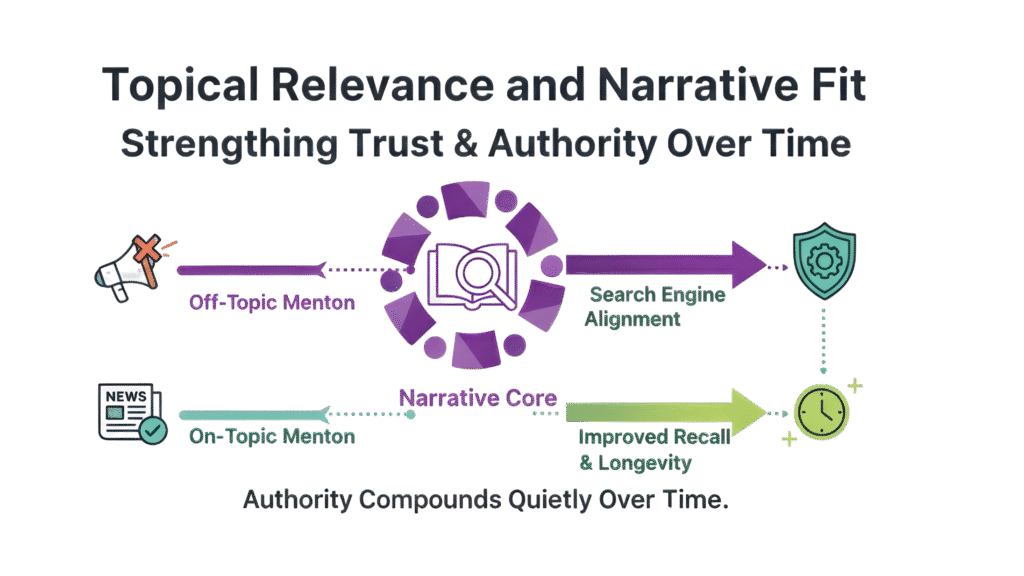
Relevance determines whether a mention carries weight. Brands must align their mentions themes with their story’s core theme. Off-topic mentions feel disruptive while on-topic mentions feel necessary.
Narrative fit strengthens both trust and recall. It helps readers understand why the brand exists in a certain space. A strong narrative fit signals subject-matter alignment to search engines. This reinforces authority signals.
Links are not the only relevant signal in brand entity building. Search engines now recognise brand entities independently. Unlinked mentions still reinforce presence, consistency and relevance for sites on various platforms.
Repeated mentions across trusted sources build familiarity among users. Their repetition strengthens brand association with topics. They help search engines map expertise patterns. This supports authority without direct links.
Unlinked mentions often precede backlinks. They prepare recognition before attribution. Trust forms before citation.
Strong relevance also improves mention longevity. Content ages better when relevance stays intact. Authority compounds quietly over time.
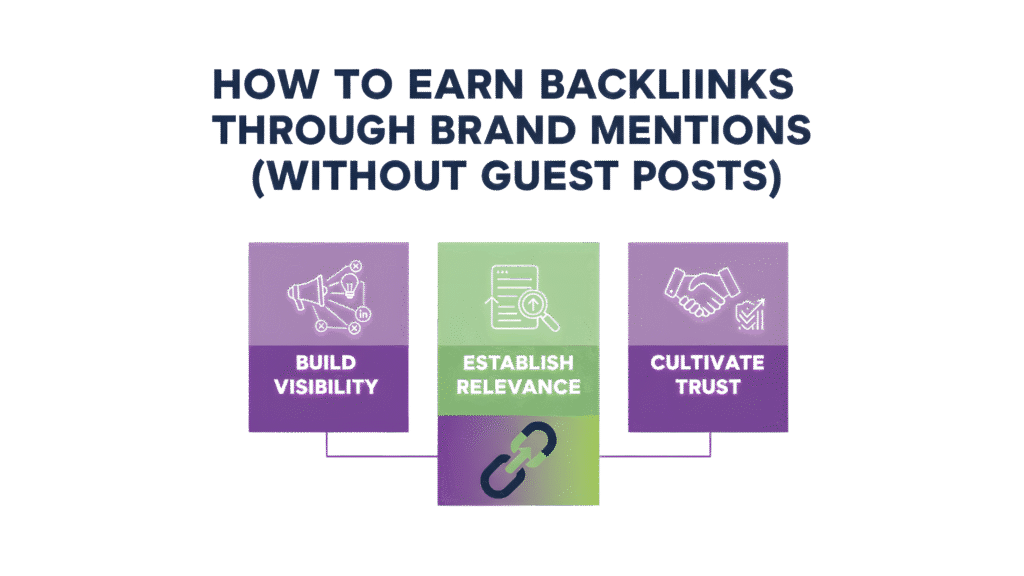
Earning backlinks through brand mentions works best when the mention itself is strong enough. In that case, a link becomes the obvious next step for a publisher. In 2025, search engines are reading the shape of attention around a brand.
They notice which names surface in the same topic clusters repeatedly, which ones get reused by editors and which ones exist as reference points in industry conversations. Links are now a by-product of relevance, not a trophy for outreach.
This shift has made press-driven links more powerful than most people realise. PR-driven links don’t scale because of volume. They scale because they’re rooted in editorial significance.
The smartest brands don’t chase guest posts to earn links. They earn mentions that are reference-ready. Once that happens, links follow without persuasion.
Press links emerge from content that behaves like a source, not a pitch. These include frameworks, interpretations or data comparisons. The strongest content at this stage tends to be original, even when it’s short, because originality signals confidence. This is why posts written by link building specialists that introduce new logic get cited more often than long generic explainers.
An insider secret here is placement design. A page that explains a problem clearly becomes a citation magnet for smaller publishers too. It creates secondary references. These references quietly strengthen Google’s understanding of your category position. This is how authority compounds without direct outreach. Content that resolves industry confusion or explains systems cleanly gives writers a reason to link back to you without you asking for it.
Mentions that lead to links often come from commentary, explainers, and trend analysis, not product or service pages. PR-driven links succeed because they place your brand in conversations that already exist in editorial pipelines. This is a key nuance most brands don’t measure.
Distribution here is intentional, but it doesn’t look like link building. It looks like sector participation. Founders or brand experts appear in industry interviews, public commentary, niche market analysis, or quote-led articles. Over time, these quote appearances are reused by editors. Editors rarely reuse directories. They reuse voices that explain things better than others.
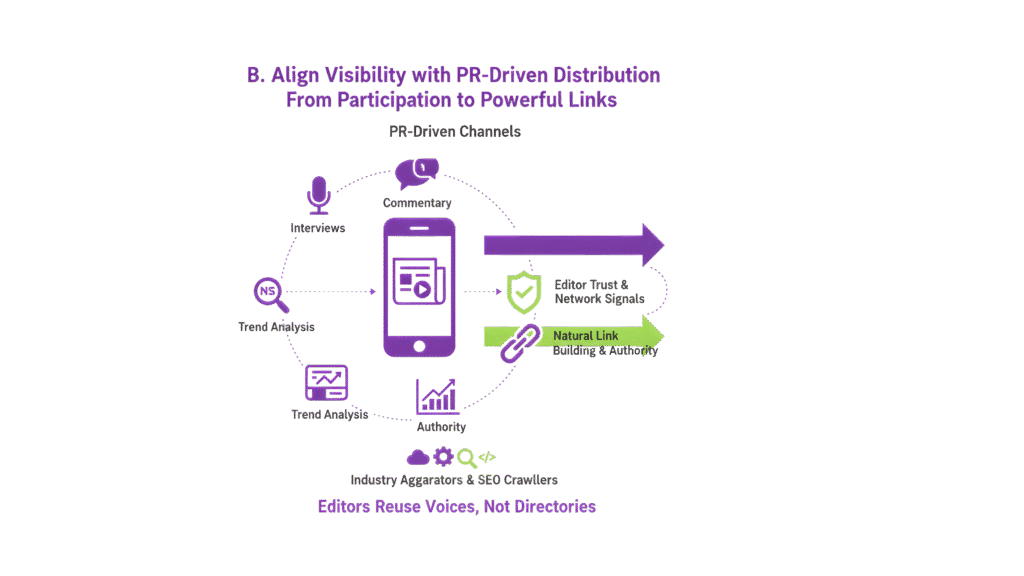
Insiders know that PR-driven links scale better because editors trust these channels more. Publications like fintech, SaaS, cloud infra, or analytics blogs now pull signals from reliable PR networks to decide which voices to include. Once your brand appears in clusters that already get crawled by industry aggregators, the link follows naturally.
The strongest link building in 2025 is happening at the entity layer, not the domain layer. Google now focuses on what a brand is “known for” and studies entities at length. To strengthen this, insiders focus on building consistent mentions across channels. Brand name should surface in places where the topic lineage already exists.
Narrative consistency across PR content is crucial for backlinks. Every mention should echo the same thematic context, whether it’s founder vision, customer impact or workflow mastery. The compounding effect comes from repetition in the right cluster, not repetition in text.
Insiders also reinforce which terms and entities are tied to their brand across press, communities and specialist blogs. This is how natural mentions build topical authority. If your brand’s core messaging, category, and associated entities are coherent across publications, search engines are better able to connect mentions to authority.
Even high authority link building firms know that links don’t become impactful because of the placement itself. They become impactful because the moment was link-worthy. Insiders don’t chase placements, they chase editorial moments.
These high-activity moments emerge when a brand publishes an implementation-ready perspective. This can be industry response content like analysis on regulation changes, adoption barriers or internal buying committees. These articles behave like reference nodes for final viewers.
Editors link to content that they can reuse for downstream narratives & pages that reflect change, not claim it. A page that comments on an industry movement gets reused more often while a page that tries to dominate it dies faster.
The biggest mistake brands make is measuring guest posts or links as isolated KPIs. The real compounding impact comes from mentions and citations, not link counts.
Discovery-stage brands should track:
These metrics reflect that your mentions behave like proof, not outreach. Proof that your brand exists consistently, is cited naturally, and holds its interpretation.
Natural mentions, pr-driven links, and entity coherence now act as the backbone of sustainable authority building. A site that earns links because the mention was reference-worthy will always outperform one that earns links because someone ordered it. In 2025, link building for low DA has become a judgement-first system, where content leads, mentions validate, and backlinks follow naturally.
Backlinks earned through brand mentions reflect how trust forms naturally. As search engines mature, they reward consistently referenced brands because they add value, not because they negotiated placement.
For teams exploring alternatives to guest posting, Fastlinko offers a more sustainable path to authority. It shifts focus from chasing links to earning recognition, from outreach volume to narrative clarity.
Brand mentions don’t replace link building, they evolve it. For brands willing to invest in content, they become the strongest links of all.
Mentions tied to insight usually convert best. When your brand explains a trend, supports a data point, or clarifies a complex idea, editors often link to preserve credibility. The link exists to help the reader, which is why it carries more weight than links added for visibility alone.
PR-driven link earning starts with narrative, not placement. The focus is on shaping ideas that publications already want to reference. As a result, outreach becomes lighter and more selective. Links appear as a by-product of relevance, rather than the primary objective, which keeps the profile cleaner over time.
A specialist helps identify where your perspective fits naturally. They watch which conversations generate citations and guide positioning accordingly. Their restraint matters. Knowing when not to push often determines whether a mention feels organic or forced, which directly affects whether a link follows.
The difference lies in reader behaviour. With mention-driven links, interest flows from the content toward the brand. Readers choose to click because the reference feels useful. That behaviour reinforces trust signals, which search engines tend to value more than links that interrupt the reading experience.
