
How US Agencies Use Guest Posting to Build Authority for Clients
January 30, 2026





Buying links today feels riskier than it should.
Pricing varies wildly, promises sound repeated and it’s often unclear what you’re paying for. For those exploring link building packages prices, the main query isn’t whether links work.
It’s whether the offered links will actually help or quietly create problems later.
This is where backlink quality checks come in. Beyond a link audit step, they act as a way to understand what kind of authority you’re associating your brand with. Experts like Fastlinko make link purchase and evaluation simpler for brands by guiding them throughout their journey .
For many B2B brands, the misstep isn’t buying links. It’s outsourcing link building without spam score evaluation. Understanding how quality is evaluated beyond surface metrics is hard initially. Traffic screenshots, DA scores, and pricing tiers don’t explain risk. They obscure it.
This guide explores backlink quality checks: how to evaluate links before buying them. It also dives into how teams can assess safety, value and alignment when outsourcing link building, without becoming SEO technicians.
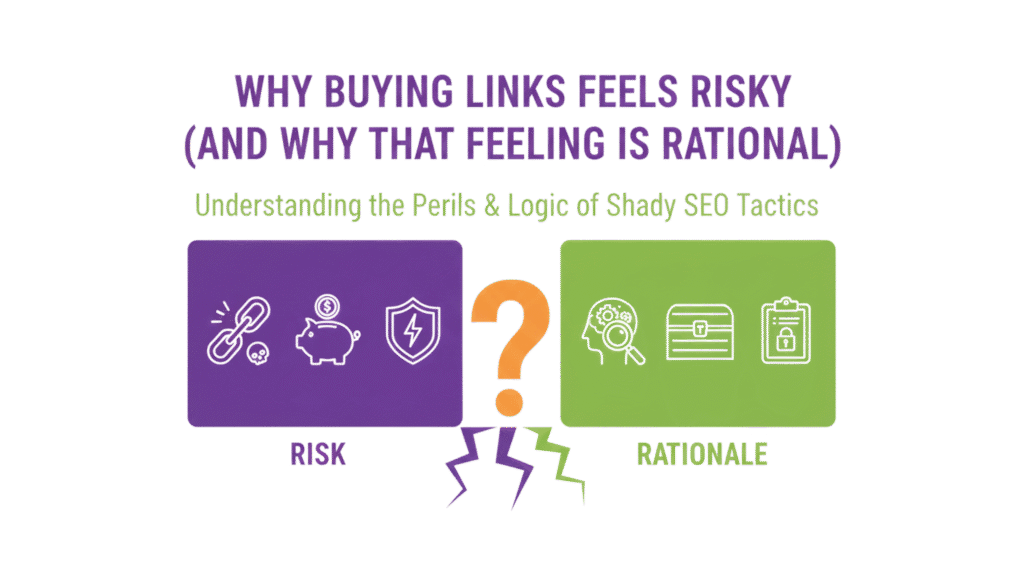
Most of the hesitation around buying links comes from uncertainty, not fear.
The process of outsourced link building feels opaque to most new businesses. Link building packages prices come off as unpredictable and complex. Their accountability also feels distant. That instinct is rational.
First, this blog explains why link buying triggers caution, how risk actually enters the equation and why backlink quality checks exist at all.
Link building packages often look interchangeable. They have similar prices, similar promises and similar language around authority and reach. What changes quietly is quality.
One package might include contextual editorial mentions. Another may rely on recycled sites with thin oversight. Yet, both cost the same. The catch is, only one carries real value.

This mismatch creates uncertainty and buyers struggle to compare choices. That confusion makes commitment feel risky, even before money moves.
Metrics like DA and DR offer quick comfort for link audits and backlink quality checks. They also create a sense of control. Having a single measure for your site health feels easier to navigate than many variables.
That simplicity is also the problem. These metrics are often vanity level and ignore context, audience fit and placement behaviour. They don’t show editorial standards or reflect reader engagement.
Experienced teams know this gap. They feel the risk rightly because these vanity numbers hide too much. That awareness fuels hesitation towards link building, not ignorance.
Outsourced link building adds a layer of separation between your team and the link building process.
Decisions happen outside your view and placements occur without direct oversight. Context becomes abstract. This distance makes risk harder to judge.
As a brand, your team can approve the budgets manually, but not pages. You can only access the reports, not the narratives. That disconnect creates discomfort.
Teams hesitate to go for backlinks simply because they lack visibility.
Search engines don’t punish buying links, they punish predictable behaviour. Repetition, similarity and unnatural clustering raise flags.
When purchased links follow the same structure, anchors and sites, patterns start to emerge. That’s where risk lives.

Intent alone doesn’t trigger penalties, misalignment does. Experienced teams slow down because they recognise pattern risk early.
Buying links is not inherently reckless.The real risk appears when links are forced in the text and actively ignore context, audience and narrative fit. That’s when signals turn noisy.
The logic is simple, strong links support meaning while weak links distort it. The difference lies in alignment, not motivation.
Teams who understand this pause before committing end up protecting their long term trust. They want clarity before scale.
Senior teams rarely rush link purchases. They ask questions first. They focus on understanding sources, placement logic and intent alignment purposefully to avoid any rushed decisions. This caution isn’t fear-driven, it’s driven by experience. They’ve seen how small mismatches compound quietly.
Slowing down allows evaluation. It creates space for backlink quality checks. That process exists for a reason. Hesitation around link buying reflects informed instinct. It signals awareness of hidden variables and long-term consequences. Backlink quality checks exist to reduce that uncertainty. Understanding this mindset prepares readers to learn how quality is actually evaluated next.
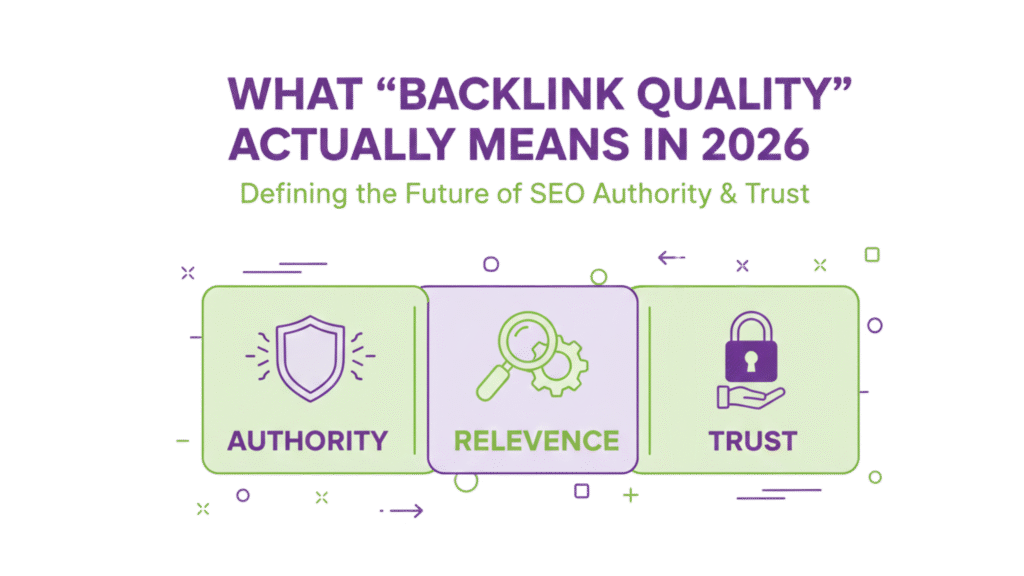
Backlink quality is discussed constantly by brands and websites yet they are rarely felt clearly.
This confusion between expectations and results doesn’t stem from lack of effort. It arises from using conflicting shortcuts and oversimplified advice.
In 2026, backlink quality is not a label or score. It’s how search engines interpret your website’s trust when links appear repeatedly and intentionally at scale. Let’s learn more about what backlink quality actually means in 2026.
Heavy traffic volume feels comforting during evaluation. It gives buyers something measurable. Yet search engines rarely reward size without relevance.
A small audience with clear intent sends stronger signals. These users read deeper and stay longer. Their behaviour confirms that the link served purpose.
Large traffic without engagement weakens meaning. It creates surface noise without depth. In 2026, relevance consistently outperforms reach.
Spam score evaluation often creates unnecessary anxiety.
Marketers and professional teams treat it as viewer judgment instead of signal. That framing distorts decisions. The reality is, spam scores highlight behavioural patterns. They flag ecosystems worth attention and do not condemn individual placements automatically.
A proper link audit uses spam scores carefully. They are a great tool to guide deeper review. However, they can still never replace contextual reasoning.
Some sites look perfect during audits. They showcase low spam, stable metrics and clean histories.
Yet their links underperform consistently. The missing element within these sites is lived engagement. Such sites usually lack real readership. Their content exists, but rarely resonates with any in-person viewers or consumers.
Search engines see this through behaviour. That’s why, for your website, clean profiles without interaction offer very little reinforcement among viewers. Quality requires active attention.
Links are judged in relation to their surroundings.
Online, this judgement is handled by Google. It studies link neighbourhoods, not isolated URLs. The engine also checks for consistency across environments.
A strong link surrounded by weak signals loses strength, whereas a modest link inside a healthy ecosystem gains weight. This is why link building packages prices feel unpredictable. The logic is clear, context determines value more than cost.
Backlink quality in 2026 is interpretive, not mechanical. The practice forms through context, intent, behaviour and environment as the predetermined industry standards change.
With so many resources available online, Backlink quality checks exist to reduce confusion, not promise certainty. This footing prepares readers to understand how quality is evaluated next, before any execution decisions are made.
Evaluating links before purchase isn’t about catching sellers out. It’s about understanding what you’re buying, what risks come with it, and whether the placement aligns with how search engines now read authority. A good backlink quality check is calm, contextual, and systematic. This section explains how experienced teams assess links without overreacting to metrics or marketing claims.
The first thing expert teams examine is not domain scores or screenshots. It’s a traffic context.
Real traffic leaves traces that are hard to fake over time. It fosters consistency, relevance and user behaviour. These viewer habits further suggest if readers are actually engaging with the site or passing through it mindlessly.
Moreover, relevant traffic reflects your audience’s intent. It builds from search queries about the site’s topic, referrals or from repeat visitors. Passive traffic, contrarily, often spikes and disappears.
This is why traffic behaviour matters more than numbers. When teams outsource link building, they focus on the audience that would naturally encounter and trust a reference.
If the traffic doesn’t match your audience, the link rarely carries lasting value.
Once traffic context looks reasonable, the next layer is editorial intent.
This is where many links quietly fail. A link placed to support a point reads very differently from one placed to monetise a page.
Here, natural mentions sit inside content that already has a reason to exist. The link supports an explanation, adds clarity or points readers to further detail. Added insertions often feel forced. They interrupt the flow, repeat anchor patterns or sit in paragraphs that don’t need references at all.

Placement logic influences your site’s trust signals. Search engines observe whether links appear where a reader would expect them.
If the surrounding content justifies the link, it strengthens interpretation. If the link exists only because someone paid for it, the signal weakens. Even if the site looks strong on paper.
Spam score evaluation is useful, but only when interpreted correctly.
Spam scores are calculated using pattern-based indicators instead of result verdicts. They highlight anomalies, not guilt. Even a single elevated score can be a warning sign. Repeated issues across multiple factors become a red flag.
In these cases, experienced teams don’t panic at mild signals. They look for trajectories in your site’s performance history. A site with stable content, steady traffic, and a long publishing history can tolerate minor anomalies.
On the other hand, a site showing multiple risk signals at once usually cannot. This is why patterns matter more than isolated metrics during a link audit.
Not all links carry the same risk and not all businesses need the same profile. Guest posts, niche edits, and organic mentions each behave differently.
Matching link type to business stage is a very important step for developing your clientele.
The safest links often look boring. They sit quietly, drive modest referral traffic, and hold position over time. That stability is usually what compounds.
Price alone doesn’t define risk. Cheap links are not always dangerous and expensive ones are not automatically safe.
The truth is, pricing does not reflect effort, editorial access, and selectivity. It reflects the amount of cost or convenience initially charged to the sellers. Higher prices indicate limited inventory, real outreach and stronger editorial control. Lower prices reflect scale or efficiency rather than manipulation.
When reviewing link building packages prices, the main question isn’t “how many links do I get?” but “what level of scrutiny and effort went into each placement?”
Teams that outsource link building successfully learn to read pricing signals realistically. They avoid extremes, ask what the cost covers, and assess whether the workflow aligns with their risk tolerance and goals.
A strong backlink quality check isn’t about ticking boxes. It’s about understanding context, intent and alignment.
When links are evaluated through traffic behaviour, editorial logic, pattern-based risk, neighbourhood quality, intent fit, and realistic pricing, teams stop buying links blindly. They start investing in placements that support authority calmly and predictably. Experts like fastlinko support brands on their backlink journey and its evaluation.
That mindset is what protects brands from short-term gains that create long-term damage. It is also what allows link building to remain a strategic asset rather than a recurring risk.
Prices often show the seller’s convenience, not credibility. Some links are expensive because they’re easy to sell at scale. Others cost more because access is limited and editorial standards are high. A quality check helps you separate pricing driven by scarcity from pricing driven by packaging.
A link audit shows patterns rather than promises. It reveals how a site treats outbound links, whether it links selectively, and how its content performs over time. When outsourcing link building, these patterns matter more than sales claims because they predict how a link will age.
Traffic shows whether a site is still trusted by users. Even modest traffic can signal relevance if it’s consistent and aligned. When traffic is absent or erratic, it often points to algorithmic distrust. A quality check uses traffic as a reality check, not a vanity metric.
Spam scores highlight accumulation risk. One weak link rarely causes damage, but repeated exposure compounds quickly. Evaluating spam indicators helps you understand whether a site participates in risky patterns. This matters most when buying link packages, where scale amplifies both benefit and harm.
