
How US Agencies Use Guest Posting to Build Authority for Clients
January 30, 2026




Making an SEO budget 2026 has become harder, rather than easier.
Today brands aren’t struggling because SEO is hard to crack, they’re struggling because too many things seem to work. Ecommerce link building strategies, content, technical fixes, authority plays & brand mentions, all compete for SEO pricing in budget planning under the same “SEO” label.
What’s changed is how outcomes are generated. Growth no longer comes from scaling everything evenly. It comes from prioritisation. Search engines now reward coherence, authority concentration & disciplined investment patterns. This means SEO budget planning is less about allocating spend across tactics and more about deciding where not to spend.
Many white label link building companies still approach SEO budgeting as a cost forecast. Smart brands treat it as a risk management and authority-building exercise.
This blog is an SEO Budgeting Guide: How Much Businesses should spend on SEO in 2026. Explore what signals now guide investment decisions.
Once, SEO used to reward visible effort. But senior teams have already sensed a shift in the paradigm.
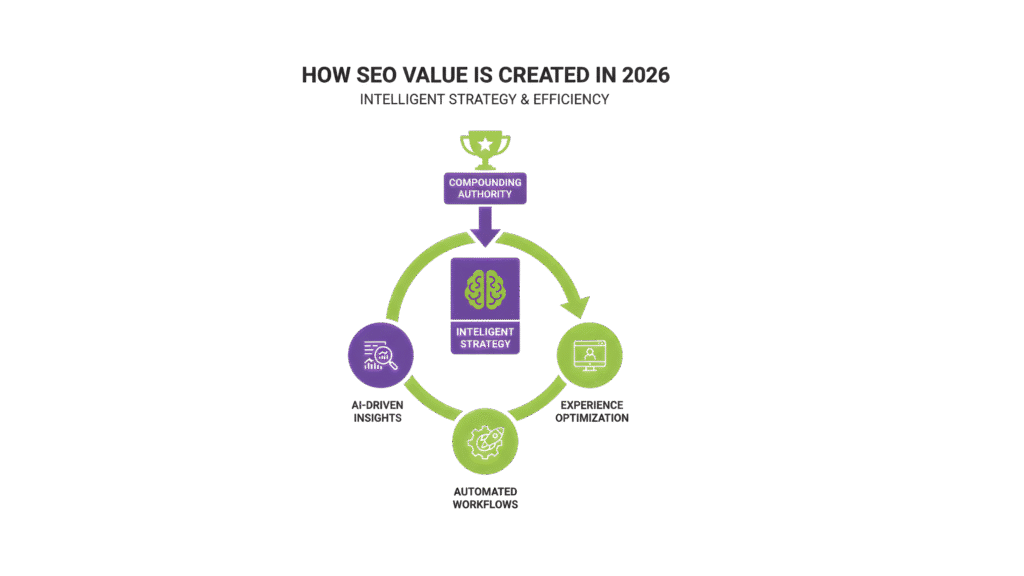
Nowadays, expenditure rises, output increases, yet digital movement stalls. In this section, let’s find out what actually creates SEO value in 2026, and why budget efficiency now matters more than total investment.
Let’s also learn more about how SEO value is created differently in 2026:
Search engines no longer reward breadth. They reward density.
Authority now forms when signals cluster tightly around a narrow subject space.
Sites spreading effort across many platforms and themes seems unfocused to online platforms. In these cases, search engines struggle to define any of your sites’ expertise. Concentrated signals, however, simplify your brand’s interpretation for readers and engines alike.
This approach can change the logic for your SEO budget 2026 fundamentally. Authority is built through fewer, reinforced priorities. Expansion without depth now weakens your perceived credibility.
Modern search systems track your brand’s reinforcement patterns over time. They constantly observe whether performance signals repeat predictably within sites or not. Any sporadic execution resets your site’s trust cycles. Consistency, however, builds memory.
This is why activity bursts end up underperforming. They spike activity without teaching the system anything. SBudget planning now favours cadence over intensity. Predictability outperforms aggression.
SEO no longer operates singularly, all systems are interconnected. Links validate claims made by content and content frames intent behind links. Ecommerce behaviour now confirms commercial relevance.
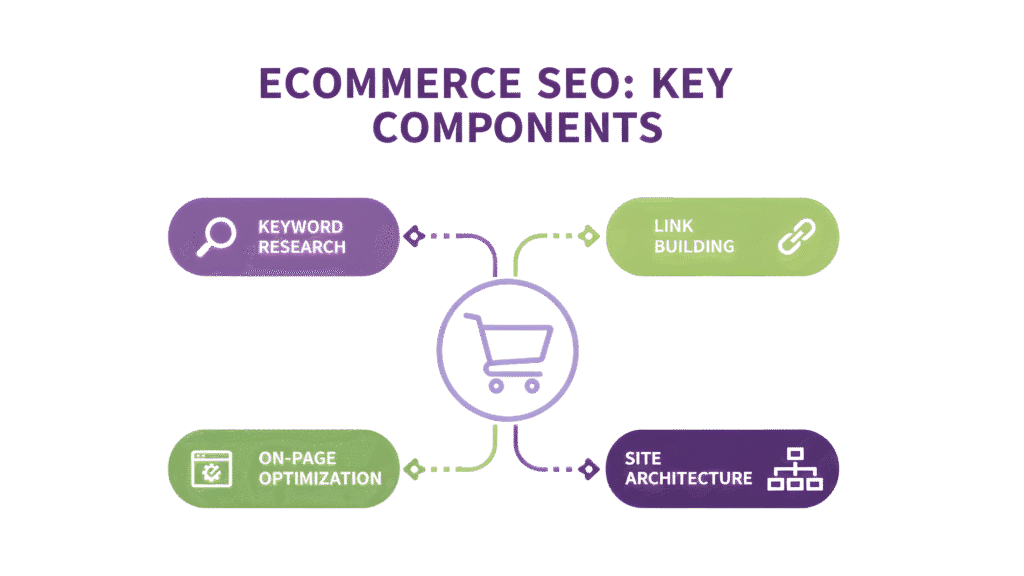
When these elements align, engines reduce uncertainty. Reduced uncertainty improves ranking confidence. Modern ecommerce link building strategies succeed only inside this alignment.
Disconnected execution now produces muted returns.
When increased expenditure stops moving rankings, saturation is rarely the cause. It means your systems are signalling inefficiency. Low-impact actions lose weighting faster when they’re repeated.
This is why SEO pricing feels harder to justify. Expenditure continues but influence decays. Search engines discount redundant patterns quietly.
Senior teams read this correctly. The issue isn’t volume, it’s where investment concentrates.
Poor allocation fragments signals.
This fragmentation reduces topical clarity. Search engines hesitate to rank content when interpretation feels unstable. Ultimately, visibility fluctuates without any direction.
This error is often mistaken for volatility. In reality, it’s signal confusion.
Noise looks like activity, not progress. Focused budgetary allocation restores interpretive confidence. Clear signals travel further with less effort.
Adding more vendors, tools or initiatives to your SEO strategy often increases overlap. This content overlap weakens brand differentiation. Gradually, weak differentiation slows website’s authority formation online.
Modern systems reward restraint with alignment. Fewer actions when structurally connected, perform better. This is why white label link building companies now prioritise coherence.
In 2026, SEO growth comes from orchestration, not expansion.
This section explains system behaviour and breaks down how SEO ROI forms in 2026. It nudges senior readers to rethink allocation, not effort. The next sections apply this logic to budget decisions and execution models.
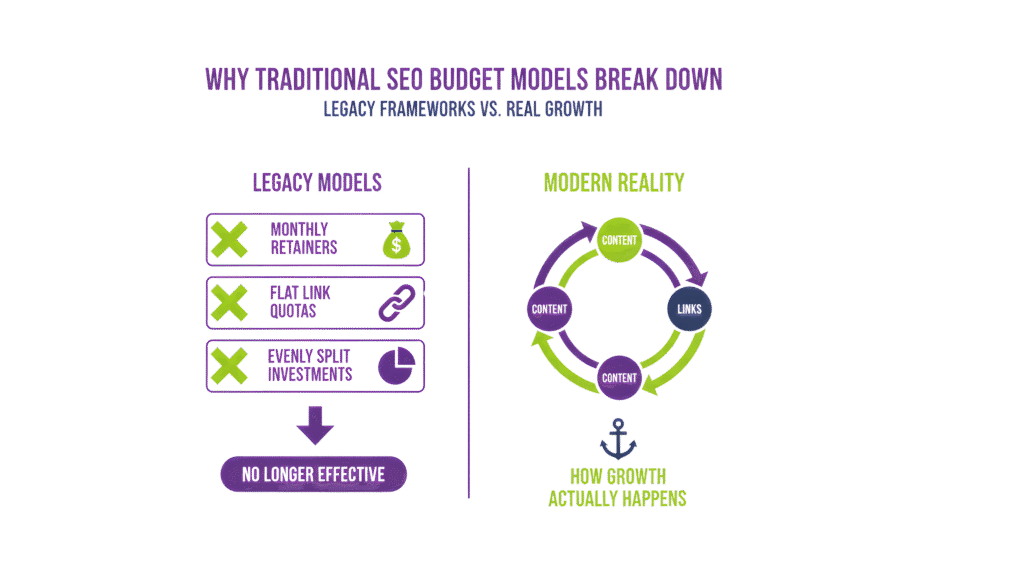
Most SEO budget models were built for predictability.
Monthly retainers, fixed link quotas and even allocation once worked. In 2026, they misrepresent how the search value compounds. This section explains why legacy budget frameworks no longer map to real growth.
Traditional SEO pricing assumes equal output value. A blog post, link or optimization task is priced evenly. That assumption is now invalid. Search systems do not reward activities equally.
Some actions shift authority meaningfully. Others barely register system responses. Flat pricing hides this imbalance. It encourages spending without impact awareness.
Any disconnect between pricing and impact can destabilise your seo budget 2026 planning. Even when your expenditure feels consistent, results may come off as erratic. The framework masks signal weight differences.
Link quotas once scaled authority predictably. More links often meant more movement. Today, authority saturates quickly. Excess links produce diminishing marginal value.
Search engines detect redundancy patterns. They discount repetitive authority signals faster than other offenders. Using volume pricing ignores this decay.
This decay is also why many link-heavy retainers underperform. They focus on optimising their output, not effect. Modern seo pricing lags behind this reality.
Ecommerce SEO budgets often prioritise optimisation layers. Technical fixes, category refinement and internal adjustments dominate the budget expenditure. Often, authority reinforcement receives lesser weight.
But optimisation only improves efficiency, not trust. Authority reinforcement allows ranking ceilings. Without authority growth, optimization plateaus, and does not grow. Users need to trust your brand to enjoy your optimised services.

Many ecommerce link building strategies fail here. They have perfect structure without expanding influence. Therefore growth stalls despite refinement.
White label link building companies are often measured by volume.
Reports emphasise links delivered, not authority gained. This frames performance incorrectly, As a result, authority compounds unevenly. Some placements shift perception whereas others add little value. Output metrics end up ignoring compounding behaviour.
This creates misaligned expectations. Partners optimise for deliverables but systems reward signal reinforcement. The gap widens quietly.
Most budget planning tracks tasks completed, blogs published, links acquired and pages optimised. But, these are activities, not outcomes.
The trust is, search engines respond to pathways. They reward how signals reinforce over time. Deliverables alone do not guarantee progression. This planning mismatch stalls ROI.
Movement requires structural continuity. Task completion does not equal growth.
SEO pricing frameworks evolve slowly, while algorithms shift continuously. This is why budget models trail system behaviour by years.
Nowadays, legacy models prioritise predictability for vendors whereas search systems prioritise interpretation accuracy. These goals conflict.
Until pricing reflects compounding logic, the tension between them persists. Senior teams feel this gap first. If left untreated, the model breaks before execution does.
This section explained framework decay. Further, it separated model failure from execution failure. It helps us understand why modern SEO budgets feel harder to justify. With that being cleared, the next section explores how modern budgets are rebuilt.
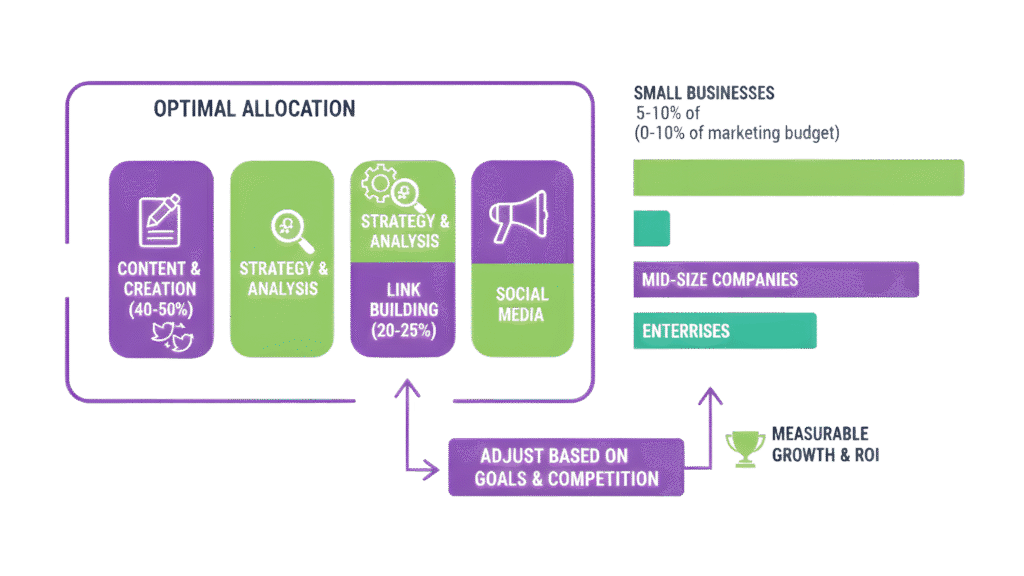
Effective SEO budgeting in 2026 starts with a mindset shift.
The question is no longer how much we can do this month. The real question is where does this investment start compounding. Big brands waste a budget not because they spend too little, but because they spend in places that only look productive.
In 2026, the smartest teams spend around phases of authority, not tactics.
Large SEO budgets break down when every channel is funded equally. Search systems don’t reward equal effort. They reward clear phases of adoption.
Early-stage authority is when Google is still interpreting the business. The budget here must favour content that explains your category. This is where manual link building and relevance-first placements attach safely.
Mid-stage reinforcement is when a site begins ranking but needs narrative insulation. This is where a white label link building company works best, when it deepens meaning, not just domain score.
Mature authority is when rankings and buyer paths stabilise and content can pull long-term impressions reliably.
Timing matters more for building authority than category because approvals and publisher pickup depend on when and how signals are noticed. Even well funded brands stall when links arrive too early or too fast.
Spacing budget between phases gives your content room to get crawled, ranked and trusted.
Most brands leak link expenditure into packages that front-load volume. This creates a ceiling, not momentum.
Links that compound tend to share two invisible traits, editorial safety and audience overlap with commercial intent. Fewer, higher-impact links outperform scalable link packages because search engines track what happens after the click.

If a link drives 8 curious visitors who read 4 pages each, that signal is richer than 50 unengaged clicks. High authority link building compounds only when it supports a topic lineage already reinforced by your internal linking logic.
The smartest brands evaluate white label link building companies by studying link survival, publisher credibility and whether the site historically removes sponsored content. Local tech blogs with clean editorial trails often retain links longer than public marketplaces that allow bulk submissions.
When a link stays indexed for 90+ days, it compounds into authority reinforcement instead of disappearing like noise.
In 2026, the biggest budget killer is not links or content.
It is work that looks productive but plateaus. Many optimisations stop moving rankings after a threshold because engines stop seeing new meaning in those changes.
Activities that plateau include page speed tweaks after a stable threshold, internal content edits that repeat the same intent signals and links placed inside directories with no audience behaviour data. These signals don’t compound, so spend quietly leaks here.
Search engines reward change only when it shifts interpretation. When it doesn’t, engines stop responding. That’s why budget leakage must be identified early by studying ranking response, crawl behaviour and what your competitors are publishing next.
Locking budgets into rigid monthly deliverables is the biggest mistake B2B brands make. SEO pricing models that tie spend to monthly link quotas or page updates distort outcome alignment.
The smartest teams keep flexibility in pricing. They reallocate budgets based on search response, not calendar cycles. If a competitor announcement suddenly reshapes search demand, you must be ready to shift your budget into content that answers new committee-level objections, not publish the same “monthly output” plan.
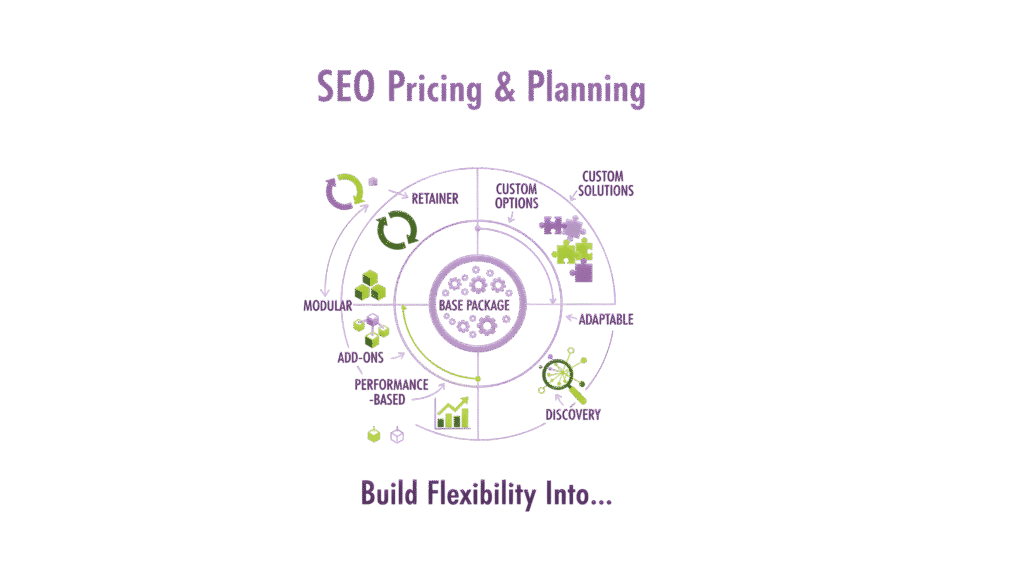
This is where link and content budgets should be adjusted based on which topics are trending commercially, which categories need reinforcement, and which landing pages are pulling qualified search impressions.
Ranking spikes are not proof of SEO success. They are proof of attention volatility. Stability is the new KPI. This is what mature budget frameworks track.
Ranking consistency, authority retention, and reduced volatility after updates are the strongest signs your budget is working. When your pages begin ranking without backlinks, but then hold position even after 90 days, that is proof that your content has compounding authority insulation.
This approach protects your brand from algorithmic volatility. It also strengthens your content’s eligibility for AI Overview extraction and editorial pickup. Budget planning is now about insulating authority, not inflating activity.
This is not a checklist. This is execution logic grounded in system understanding. It explains how budgets behave inside search, editorial, and ecommerce ecosystems. In 2026, SEO budget 2026 succeeds when authority, relevance, and internal coherence move together in predictable buyer patterns..
SEO budgeting in 2026 is no longer about scaling effort. It’s about making fewer, better decisions. Brands that grow sustainably understand how authority compounds, where spend quietly stops working, and why disciplined prioritisation outperforms aggressive expansion.
When SEO budgets are aligned with how search engines actually interpret value, growth becomes steadier and more predictable. Link building, ecommerce SEO, and content no longer compete for budget — they reinforce each other.
The most effective SEO strategies aren’t the most expensive. They’re the most intentional.
They’re choosing restraint over reach. Instead of buying volume, they invest in fewer, stronger placements that reinforce authority. This approach slows spending initially but reduces cleanup later. Over time, it creates steadier ranking growth and more predictable returns.
White label partners help when execution needs scale but judgment must remain tight. Their value shows when they follow clear guardrails around relevance and pacing. Used well, they protect internal teams from overextension while keeping authority growth controlled.
Because outcomes are less immediate. Some SEO spend improves trust rather than traffic. That impact isn’t visible right away, but it supports everything else. Brands that understand this stop judging pricing by short-term movement and start evaluating how spend stabilises performance.
By investing in fundamentals that don’t expire. Clean data, credible links, and clear content age well. These elements continue supporting visibility even as weighting shifts. Budgeting around durability reduces the need for reactive spending later.
