
How US Agencies Use Guest Posting to Build Authority for Clients
January 30, 2026








Press release credibility is inherently sensed by leading editors. Trust is a feeling that can’t be evaluated consciously. When going through PRs, editors must decide within seconds whether a story feels grounded enough to trust or if it reads like another unverified announcement competing for attention.
For many brands, credibility loss doesn’t come from exaggeration, it comes from insufficient proof. Their local press release claims are made without anchors & statements appear without external validation. Such stories may be accurate brand wise and technically, but it shows a lack of trust signals that editors use to justify coverage.
In modern newsrooms, credibility is inferred through evidence density & expert quotes. Resultantly, having the best press release distribution service like Fastlinko has become a structural concern for brands today. Distribution reach, formatting & tone matter only after some level of trust is established with core viewers.
This guide explores why many press releases fail that test silently. Let’s learn how to add credibility to your press release with data, quotes & proof.
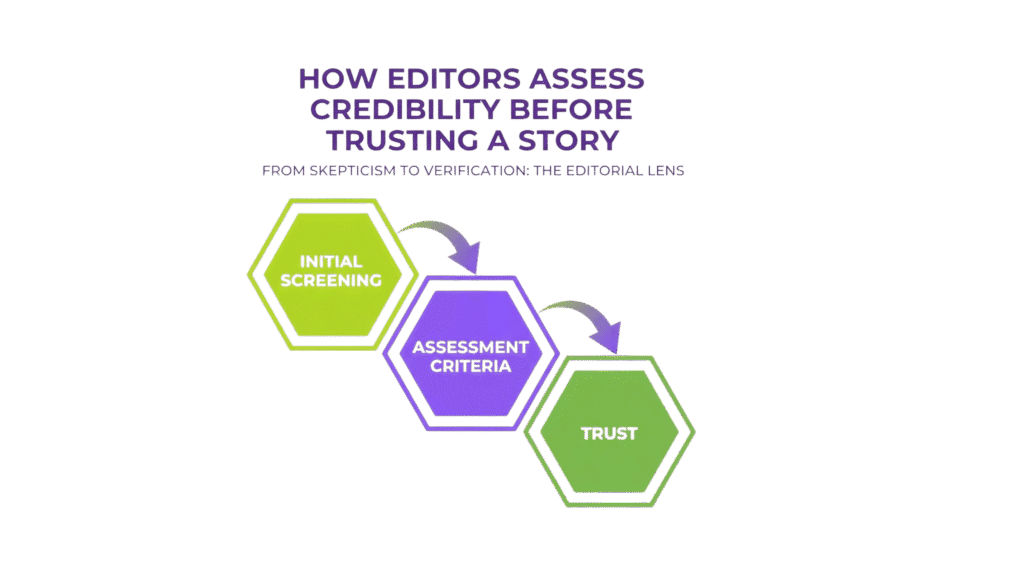
The editor’s job is not to begin by verifying every claim in a press release. That task comes later, if at all. The first decision is far simpler and far more decisive for local press releases.
It is, does this story deserve verification in the first place? This screening decision happens quickly and often subconsciously. The first screen then determines whether a release is read closely, skimmed or discarded outright.
At this initial stage, editors are not evaluating the truth. They are evaluating risk. In the forefront, credibility works as a gate. If the gate does not open, the content never reaches fact-checking, follow-ups or editorial discussion.
Let’s learn how editors assess credibility before trusting a story today.
Editors do not rely on isolated facts to assess credibility. One statistic, one quote, or one claim rarely moves the needle on its own. Instead, editors look for signal clustering, they are multiple small indicators that align and reinforce each other.
These signals may include the nature of the announcement, the specificity of the claims, the presence of recognisable third parties, and the internal consistency of the narrative. None of these alone proves anything. Together, they reduce uncertainty. Credibility is inferred through pattern recognition, not evidence evaluation.
One of the fastest ways editors assess credibility is by scanning for external anchors. These are references that exist outside the press release itself. Internal claims, no matter how confidently written, carry limited weight at the screening stage.
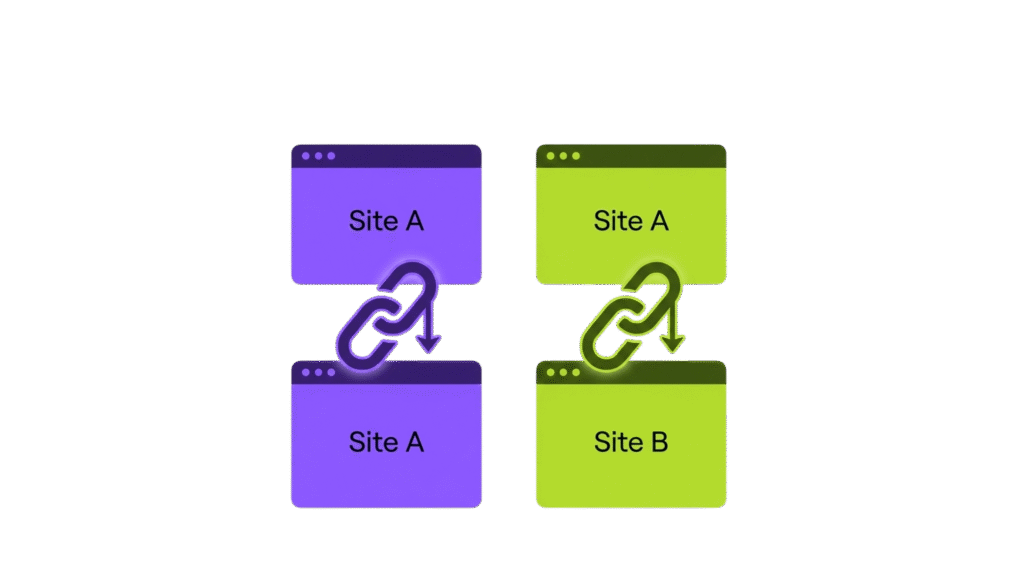
External anchors might include named experts, verifiable organisations, recognised data sources, or contextual references that can be independently checked later. Their presence signals that the story does not rely solely on self-assertion. Editors are not verifying these anchors yet. They are simply noting that verification would be possible.
What counts as credible proof varies by publication type. A trade journal evaluates credibility differently from a local newsroom. A national outlet applies different risk thresholds than a niche industry blog.
Editors screen stories through the lens of their audience, editorial mandate, and reputational exposure. A local press release grounded in community relevance may feel credible to a regional editor even with limited data. The same release might feel insufficient to a national desk. Credibility is not universal. It is contextual.
Data and expert quotes play distinct roles in early credibility assessment. Data reduces uncertainty by suggesting that claims are measurable or grounded in reality. Quotes reduce liability by shifting responsibility to a named individual.
Editors recognise this difference instinctively. Data suggests substance. Quotes suggest accountability. Neither guarantees coverage, but together they signal that the story has considered editorial risk. This is why releases that rely exclusively on one or the other often feel incomplete at first glance.
Local relevance is a powerful credibility accelerator, especially at the screening stage. Stories tied to specific places, communities, or regional developments often feel more concrete and less abstract. They imply proximity to real-world impact.
For editors, local grounding reduces uncertainty. It narrows scope. It makes verification feel manageable. This is why local press release stories often pass the credibility gate faster than broader, more generic announcements.
It’s important to separate credibility from editorial interest. Editors often decide whether a story is credible before deciding whether it is interesting. These are not the same judgments.
A story can be credible but uninteresting. It can also be interesting but fail the credibility gate. Screening for trust is a defensive process. Screening for interest is creative. Credibility decisions are therefore faster, stricter, and less forgiving.
Editors are not consciously ticking off credibility checklists. They are operating within systems designed to minimise reputational and legal risk. Over time, these systems train editors to recognise trustworthy patterns quickly.
Press release credibility, at this stage, is not about persuasion. It is about fit. Fit with editorial norms. Fit with audience expectations. Fit with risk tolerance. Stories that align pass through. Stories that don’t are filtered out long before anyone checks the facts.
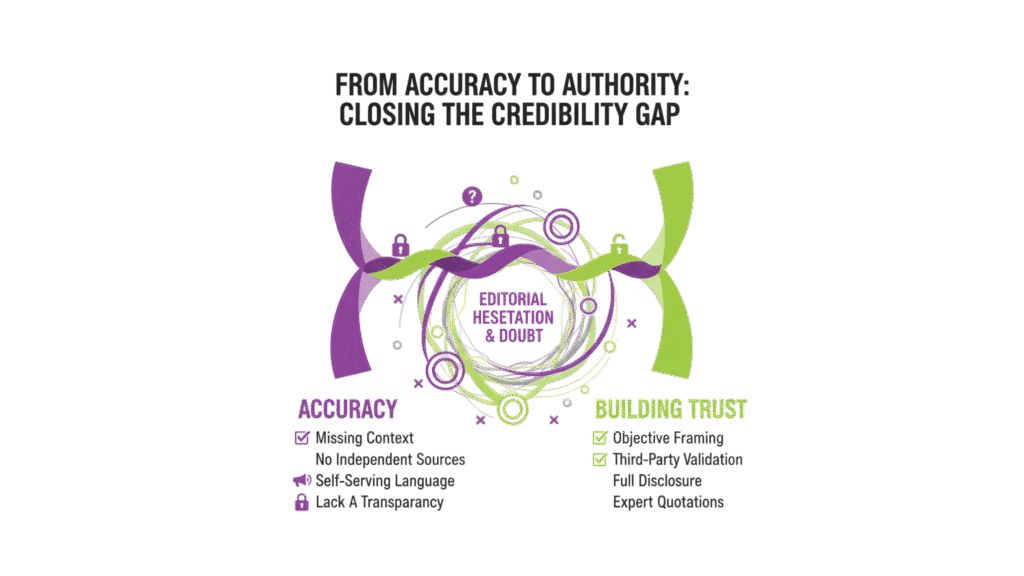
Accuracy is rarely the problem with modern press releases.
Most releases are factually correct, legally cautious, and internally approved. Yet editors still hesitate. Stories stall. Follow-ups never come. What fails in these moments is not truth, but recognisability. The release does not behave like something that can be trusted quickly.
This disconnect is frustrating because it feels irrational. If the facts are right, why the doubt? The answer sits in how credibility is assessed before verification ever begins. Editors are not asking whether a claim is true yet. They are asking whether the story creates enough confidence to justify further attention.
At this stage, credibility is inferred structurally. Editors scan for signals that reduce uncertainty, not for proof that resolves it. When those signals are absent, even accurate releases trigger hesitation.
Many releases present correct claims in isolation. Statements are clear, confident, and precise, yet unsupported by reference points that place them in a broader reality. Without those anchors, accuracy floats.
Editors need orientation before verification. They need to understand where a claim sits, not just what it states. When a release offers conclusions without visible grounding, the editor must do extra interpretive work. That work increases perceived risk, regardless of correctness.
The issue is not disbelief. It’s friction. Accuracy that requires effort to contextualise feels less reliable than accuracy that arrives already situated.
Quotes are often assumed to be credibility shortcuts. In practice, they only work when their authority is immediately legible. Many quotes fail because the reader cannot quickly assess why this person matters in this moment.
When the speaker’s relevance is unclear, the quote adds content without adding confidence. It introduces another voice without clarifying responsibility. Editors interpret this not as validation, but as padding.

This reaction has nothing to do with truthfulness. The quote may reflect a real opinion. The problem is that it does not reduce uncertainty at the screening stage, which is the only job it has at that moment.
Numbers are another frequent source of mistrust. Editors see many statistics that are accurate but vague. Percentages without baselines. Growth figures without timeframes. Findings without methodological hints.
Accurate data still needs boundaries. Without scope, numbers feel detached from reality. They raise questions instead of closing them. Editors are not doubting the math. They are questioning the interpretability.
When data feels abstract, it increases editorial workload. Increased workload equals increased risk. Accuracy alone cannot offset that perception.
Press releases often feel untrustworthy when the narrative never leaves the brand’s point of view. Even accurate claims begin to feel self-referential when no external presence is visible.
Editors look for signs that a story exists beyond the organisation telling it. When everything points inward like statements, perspectives, framing, then credibility weakens. Not because the brand is lying, but because the system cannot see corroboration pathways.
This is a structural absence, not a messaging flaw. Accuracy does not compensate for isolation.
Local press releases reveal this issue clearly. A release can be geographically correct and still feel disconnected from its environment. Editors scan for signs that a story is embedded in real community context.
When local validation is missing among familiar institutions, recognisable settings, grounded relevance, then accuracy alone does not establish trust. The story feels performative rather than lived.
This is not about exaggeration. It’s about recognisability. Editors trust what feels locally situated before they verify it.
Highly polished releases often trigger skepticism when supporting structure is thin. The contrast between presentation and grounding raises questions. Editors have learned, through experience, that polish sometimes masks fragility.

This response is defensive, not cynical. When clarity, reference, or context is missing, strong language amplifies the gap. The release looks finished, but feels unsupported.
Accuracy survives scrutiny. Credibility must survive first impressions.
What makes accurate press releases feel untrustworthy is not dishonesty. It is the absence of structural cues that allow accuracy to be recognised quickly. Credibility fails not at the level of fact, but at the level of interpretation.
Editors are not rejecting the truth. They are declining in uncertainty.
This reframing matters because it removes blame from content correctness and places attention on how trust is evaluated as a system behaviour. Once that distinction is clear, credibility stops feeling subjective or unfair. It becomes legible.
This section does not suggest improvements or best practices. It does not argue for distribution choices or formatting changes. Its purpose is to help readers understand why accurate work still struggles to move forward.
Once that frustration is properly explained, future sections can explore how credibility emerges — without turning the discussion into instruction or sales.
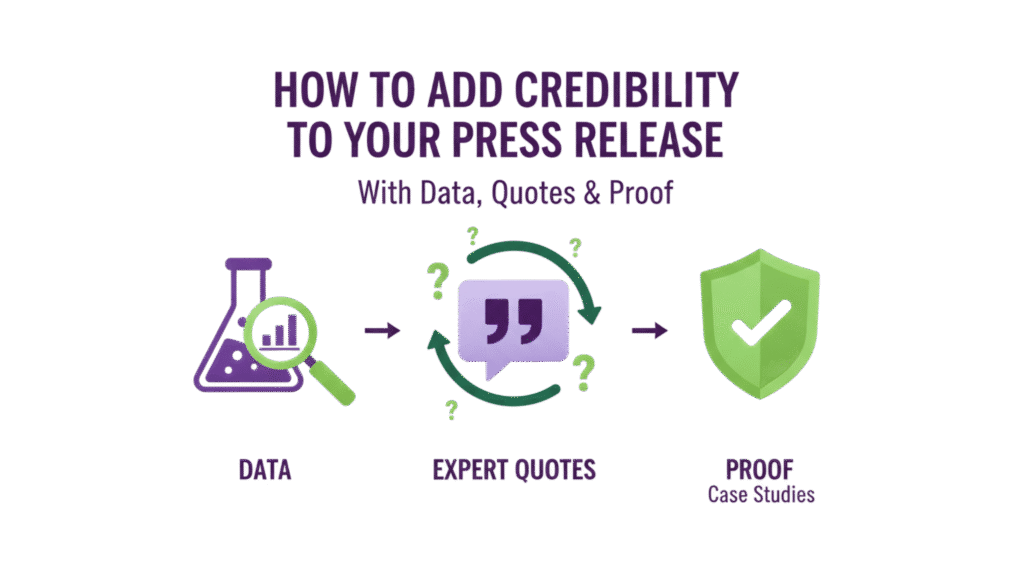
Once editorial trust mechanics and structural gaps are understood, credibility can be built intentionally. In 2025, press release credibility is not a byproduct of distribution volume or persuasive language. It is the outcome of how well data, expert quotes, and proof signals reduce uncertainty for editors and readers. This section explains how these elements work together to support publication decisions and long-term trust.
Data does not exist to impress. It exists to explain impact. Editors rarely care about scale unless it clarifies consequences. A claim supported by numbers should answer a practical question: what changed, by how much, and under what conditions. Metrics that explain time saved, cost reduced, errors avoided, or behaviour shifted are easier to validate and safer to cite than headline numbers that lack context.
Framing matters as much as selection. Numbers should be bounded by timeframes, sources, and scope so editors can reuse them without risk. When statistics stand on their own, they function as trust signals rather than promotional flourishes. This is where press release credibility strengthens, because the data removes ambiguity instead of adding interpretation overhead.
Expert quotes are effective only when they add interpretation. Editors do not need a second version of your positioning. They look for voices that clarify implications, explain relevance, or place the announcement within a broader industry pattern. Quotes that do this reduce editorial effort and increase confidence in the story.
The choice of expert matters. Editors favour voices they can recognise, verify, or contextualise quickly. This includes operators, researchers, analysts, or practitioners with visible credentials. When expert quotes are aligned with insight rather than promotion, they transfer authority naturally. They also function as trust signals, because they show that the story stands on reasoning, not endorsement.
Proof gains strength when it matches the publication’s audience. A local press release often carries more credibility for regional outlets because it demonstrates operational presence and accountability. Local relevance shows that claims are grounded in real environments, not abstract projections. This reduces scepticism and increases acceptance.

Matching proof type to the audience is critical. Trade publications respond to operational outcomes. Regional media prioritise local impact. Industry platforms value benchmarks and peer comparisons. When proof aligns with reader expectations, it reinforces credibility without additional explanation. This alignment turns information into trust signals rather than background noise.
Editors assess risk before they assess story value. Clear sourcing, transparent attribution, and accessible references lower that risk immediately. When claims are supported with traceable data, named studies, or verifiable documentation, editors can validate quickly or choose not to because the signals are already clean.
Verification cues should make follow-up unnecessary. Precise citations, consistent naming, and clear ownership of data allow editors to move faster with confidence. This is a subtle but decisive factor in press release credibility. It signals preparedness and respect for editorial standards, which directly influences whether a release is published as-is or set aside.
Credibility increases when proof leads and positioning follows. A restrained brand voice signals confidence and awareness of scrutiny. Overstated claims force editors to question intent, while measured language allows data and expert quotes to carry the narrative.
External validation should speak before brand framing. When evidence is presented clearly, the brand’s role becomes contextual rather than dominant. This approach is especially important in B2B environments, where trust is tied to perceived risk. Restraint suggests that the brand understands evaluation and welcomes it, which strengthens credibility over time.
Distribution choices affect how credibility is perceived. The best press release distribution service supports trust, not just reach. Placement on platforms with editorial standards reinforces legitimacy, while indiscriminate syndication can dilute it. Where a release appears signals how confident the brand is in its claims.
Strategic placement matters more than volume. Selecting outlets, wires, or regional networks that match the story’s proof profile strengthens trust. A local press release placed within the right regional ecosystem often outperforms broad distribution because it aligns message, proof, and audience. Distribution should reinforce credibility signals, not overwhelm them.
Credibility is not an add-on. It is the structure that allows a press release to function. When data explains impact, expert quotes add interpretation, proof aligns with audience context, and distribution reinforces trust, editorial resistance drops naturally. This execution framework works only after the foundational mechanics are understood, which is why it follows earlier sections. Press release credibility is built when every element reduces doubt for the editor and reader who ultimately decide whether your story is worth standing behind.
Data grounds the narrative. It turns opinion into reference material. When statistics are relevant and clearly sourced, editors can quickly assess significance. That clarity helps them decide whether the story contributes insight or simply adds noise to an already crowded news cycle.
Expert quotes shift the focus outward. They show that the story is supported by informed voices, not just internal messaging. When quotes explain impact or context, editors see a broader narrative forming. This reduces scepticism and increases confidence in the story’s relevance.
Local releases benefit from proximity. Editors recognise local context and community relevance faster. When facts, quotes, and examples reflect real local conditions, the story feels grounded. That familiarity lowers the barrier to trust and makes verification easier.
Placement signals intent. When a release is sent to the right outlets, it shows awareness of audience and relevance. Editors notice this alignment. It tells them the story was shaped with care, which increases trust before they evaluate the content.
