
Why US Businesses Lose Rankings Due to Incorrect Citations
January 29, 2026




Guest posting still plays a role in agency SEO, but in a different way than most brands assume. For US agencies with long-term client authority, guest posting is a reputational placement decision.
What agencies measure today isn’t how many guest posts can be secured, but where clients appear, why those mentions exist and what those placements communicate over time. In competitive SERPs, authority is shaped less by link count and more by the quality of environments a brand is repeatedly associated with.
This shift explains why two agencies can offer guest posting services and produce entirely different outcomes. Those like Fastlinko build durable & compounding authority. The other delivers activity that fades.
Understanding how agencies approach guest posting decisions reveals what the best guest posting service actually means in practice. This blog breaks down how US agencies think about guest posting, how they assess service providers and how authority is built quietly through placement discipline rather than scale.
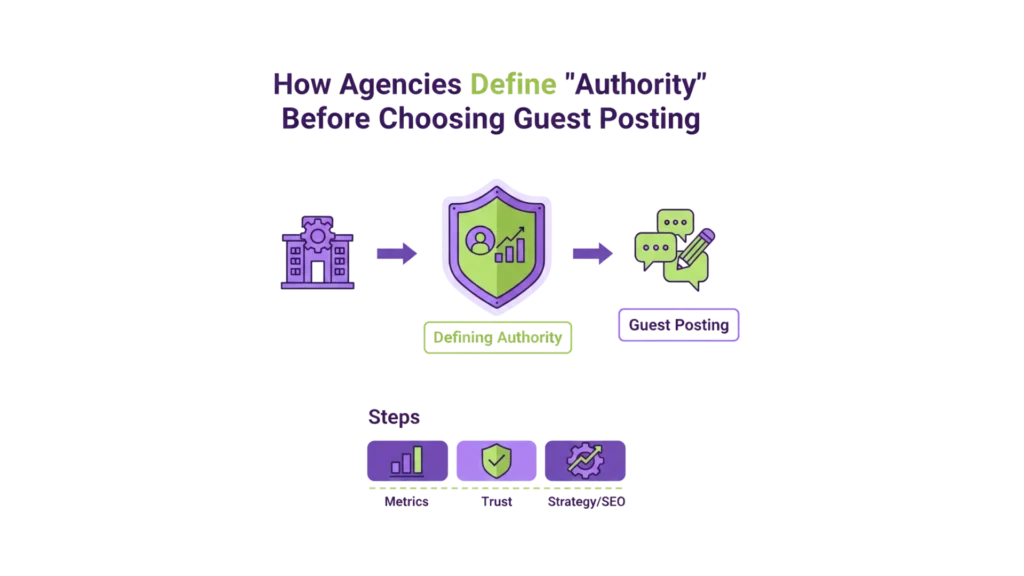
Before agencies evaluate the best guest posting services, they first align on what authority should actually mean for the client. Authority is not treated as a shortcut to rankings or a substitute for links. It is understood as a perception that forms across search systems, editorial environments, and audiences over time. Until that perception is clearly defined, no guest posting service provider can be assessed meaningfully.
This section explains how agencies frame authority before tactics enter the discussion.
Agencies do not view authority as something created by one strong placement or one successful seo guest post. Authority forms when a brand repeatedly appears alongside sources that are already trusted. Over time, those associations shape how the brand itself is interpreted.
Search engines and editors do not ask where a link came from in isolation. They observe patterns of proximity. A single placement may introduce visibility, but association establishes legitimacy. Agencies therefore think in terms of cumulative presence, not individual wins.
Authority strengthens when repetition occurs in environments that already carry editorial weight. Agencies look for consistency in where a brand appears, not just how often. Familiarity forms when the same standards, audiences, and topical spaces recur.
This is why guest post & blogger outreach services are judged on ecosystem quality rather than output volume. Repetition across loosely connected sites produces noise. Repetition within trusted environments reduces uncertainty. Recognition follows consistency.
Authority is always contextual. Agencies consider how closely a brand’s appearances align with its core industry and adjacent spaces. Being referenced in nearby industries can strengthen authority if the relationship feels logical and grounded.
For agency seo teams, the goal is clarity, not expansion for its own sake. Each association should make the brand easier to categorise. When adjacency feels forced, authority blurs instead of compounding. When it feels natural, trust deepens.
Agencies separate domain strength from editorial value. Metrics describe reach, but they do not explain relevance. Editorial context explains why a brand belongs in a conversation.
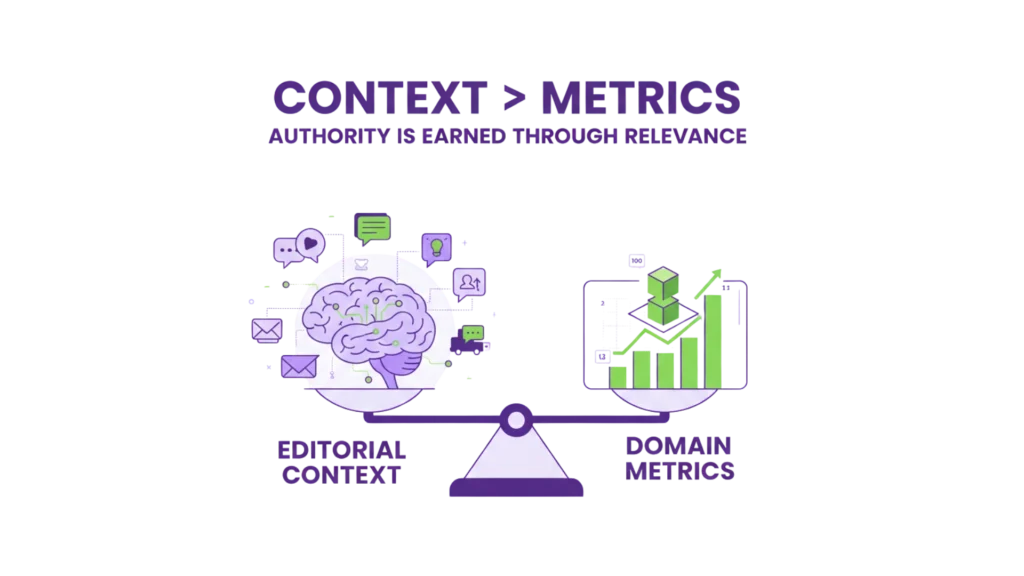
A mention inside thoughtful, well-aligned editorial content often carries more authority than a stronger domain placement without narrative fit. This is why agencies deprioritise raw metrics when defining authority. Context determines interpretation. Metrics only describe location.
Agencies draw a clear line between visibility and authority. Visibility can rise quickly through promotion. Authority grows slowly through consistency. Each appearance must reinforce the same understanding of the brand.
Short-term attention rarely changes perception. Repeated, aligned presence does. This is why agencies assessing the best guest posting services focus on long-term coherence rather than immediate spikes. Authority compounds quietly and resists volatility once established.
Before vendors or outreach models are considered, agencies define authority as a perception built through association, repetition, and context. Links support this process, but they do not define it. With that clarity in place, choices around guest posting service providers become more deliberate, less reactive, and far more durable.
Many services market themselves as the best guest posting services, yet still fail agency scrutiny. The gap is not about effort or intent. It comes from a structural mismatch. Most guest posting services are designed for transactional SEO outcomes, while agencies are accountable for long-term performance, stability, and client trust. When responsibility extends beyond link delivery, the weaknesses of common service models become harder to ignore.
This section explains why those models break down under agency-level expectations.
Most guest posting services are built around volume targets. More placements are treated as progress. From an agency perspective, this logic creates immediate risk. Volume changes incentives. It shifts focus away from editorial fit and toward fulfilment speed.
Agencies working in agency seo environments know that each placement carries reputational weight. A single weak placement can dilute months of careful positioning. Volume-first models prioritise throughput over interpretation, which makes outcomes unpredictable. What looks like scale to a service provider often looks like signal noise to an agency.
Many services rely on domain authority as a proxy for safety. Sites are shortlisted based on metrics, not behaviour. Agencies see this as incomplete evaluation. Domain metrics describe strength, not suitability.
A guest posting service provider may present a high-DA list, but agencies look deeper. They assess whether the site’s editorial tone, audience expectations, and historical content align with the client’s category. High-DA placements without contextual fit introduce interpretive risk. Authority is not transferred cleanly when the environment feels misaligned.
Writing is another common failure point. Generic seo guest post content is often produced to fit multiple clients and industries. It may be clean, readable, and technically optimised, but it lacks specificity.
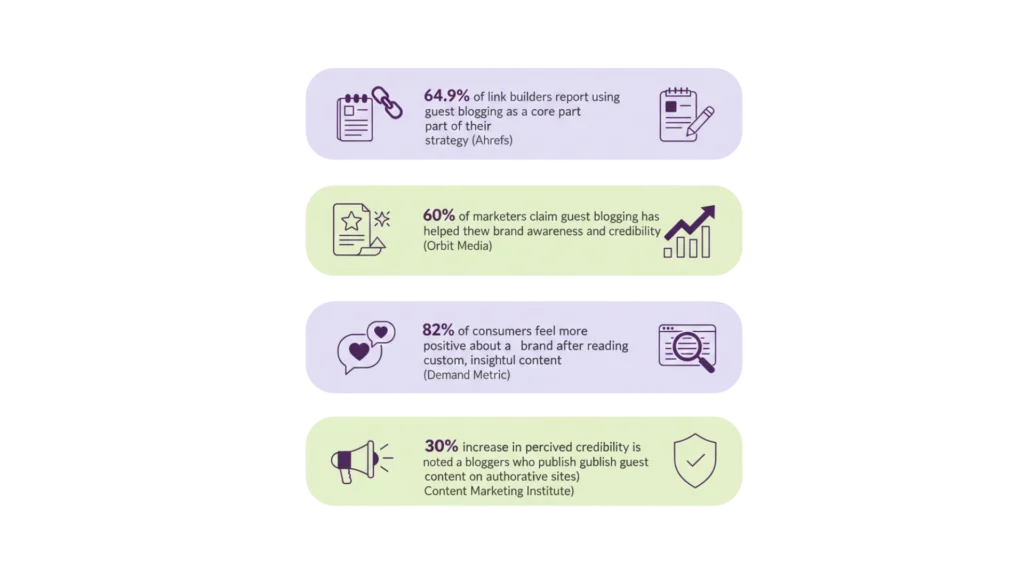
Agencies are sensitive to this because credibility in editorial environments is fragile. Content that feels templated weakens trust signals, even when placed correctly. Over time, repeated exposure to generic writing erodes authority memory. The issue is not quality in isolation. It is sameness across contexts.
A large portion of guest post & blogger outreach services prioritise access over selectivity. Outreach success is measured by acceptance rates, not editorial standards. Agencies see this as a fundamental misalignment.
Editorial selectivity matters because it shapes how content is interpreted. When outreach networks include loosely moderated blogs, thin publications, or inconsistent standards, every placement carries higher risk. Agencies cannot afford that risk when outcomes compound over time.
Agencies do not reject most guest posting services because they are ineffective in the short term. They reject them because the underlying models cannot support accountability, consistency, and authority growth.
This section explains why common service structures fail agency-level standards, without introducing alternatives. Understanding this mismatch is essential before evaluating what does meet those standards.
Once authority definition and service limitations are clear, agency guest posting strategy becomes far more deliberate. At scale, guest posting stops being a traffic tactic and starts behaving like a reputation system. US agencies use it to shape how clients are understood, referenced, and trusted across search and editorial ecosystems. The objective is steady authority growth, not short-lived visibility.
What separates strong agency execution from weak campaigns is restraint. Agencies that succeed treat guest posting as a long-term signal, not a volume exercise. Every placement is evaluated for how it compounds credibility over time and whether it strengthens or weakens the client’s positioning.
Agencies begin with one question: does this publication already speak the language our client should be associated with? Topic relevance comes first because it determines how a mention is interpreted. A well-placed contribution inside the right editorial context reinforces meaning, while a mismatched placement creates doubt rather than authority.
Voice alignment matters just as much. Agencies review how a publication explains ideas, handles nuance, and addresses its audience. When the fit is right, the guest post feels native to the platform. That familiarity is what allows the authority signal to stick without drawing scrutiny.
Agencies approach writing as a form of reputation exchange. Every article reflects judgment, clarity, and credibility, not just for the client but for the agency behind it. This is why insight-led writing is non-negotiable.
Strong guest posts focus on explaining systems, trade-offs, or operational realities readers already face. Promotional framing is avoided because it weakens editorial trust and reduces reuse. When writing contributes understanding instead of intent, authority transfers naturally and lasts longer.
High-performing agencies control pace. They understand that frequent placements across similar sites create visible patterns that dilute credibility. Authority grows when signals are spaced, not stacked.
Agencies allow time for each placement to be indexed, contextualised, and reinforced before introducing the next one. This spacing lets rankings stabilise and associations settle. The result is steadier growth that avoids triggering evaluation loops or trust decay.
Guest posting works best when it reinforces something that already exists. Agencies map placements directly to core content assets, category pages, or decision-support resources. This ensures every mention strengthens a known topical position instead of creating isolated signals.
By aligning placements with SEO priorities, agencies help search engines connect the dots faster. Guest posts support existing relevance rather than attempting to manufacture it. Over time, this coordination improves category ownership and reduces volatility.
When agencies use a guest posting service provider, the relationship is treated as a partnership. Process transparency is essential because agencies must protect client reputation at all times. This includes visibility into site selection, editorial access, and content review standards.
Editorial control is especially important. Agencies ensure placements remain within approved categories and networks that align with client positioning. The best guest post and blogger outreach service providers respect these boundaries and operate within agency-defined constraints.
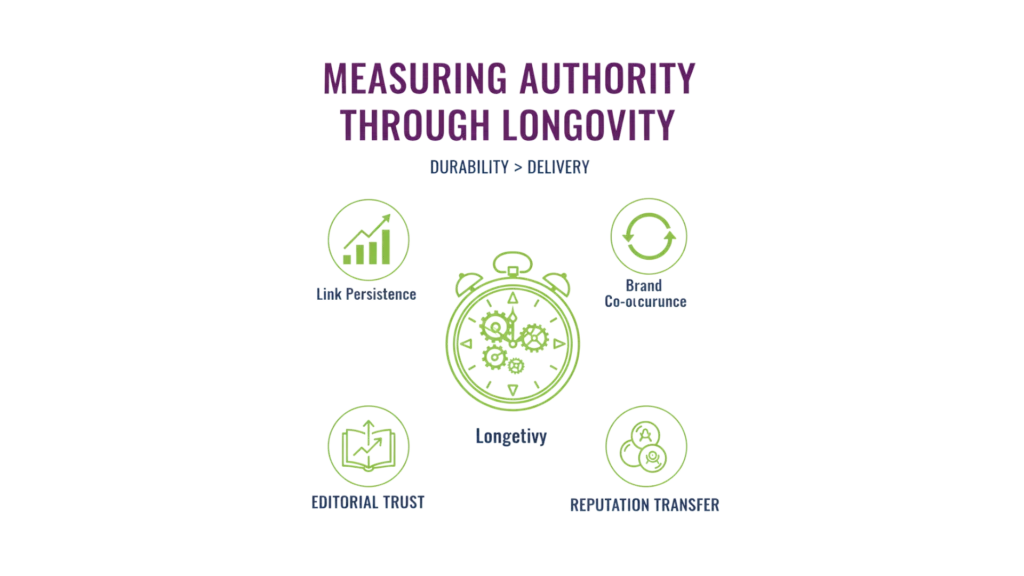
Agencies measure success by durability, not delivery. Link persistence over time indicates editorial trust. Ranking stability around supported pages shows that authority has been absorbed rather than challenged.
Brand co-occurrence is another key signal. When a client repeatedly appears alongside relevant concepts and peers, association strengthens naturally. These indicators matter more than short-term traffic because they reflect lasting credibility rather than temporary attention.
US agencies that use guest posting effectively are not chasing exposure. They are designing influence. By prioritising narrative fit, treating writing as reputation transfer, pacing placements carefully, and integrating guest posting into agency SEO strategy, they build authority that compounds quietly.
The best guest posting service supports this discipline instead of undermining it. When executed this way, guest posting becomes an asset that survives audits, algorithm shifts, and buyer scepticism because it was earned through alignment and restraint.
For US agencies, guest posting isn’t about publishing more. It’s about placing clients in environments that quietly reinforce credibility. The best guest posting service is the one that understands this distinction and operates accordingly.
Authority is built through repetition, restraint and relevance. Agencies that treat guest posting as a reputational asset rather than a link tactic produce outcomes that age well and withstand algorithm shifts. Fastlinko is a leading professional expert in this field.
In agency SEO, guest posting works not because it’s scalable but because it’s selective.
They look for pages that explain, not just sell. Evergreen guides, category context, and brand narratives tend to distribute authority better than isolated landing pages. Agencies think in internal flow, ensuring guest post links strengthen the site as a whole.
Links age well when they remain relevant. Posts that answer ongoing questions or explain stable concepts continue attracting readers and citations. When content is trend-chasing or promotional, engagement fades, and so does the link’s influence.
Agencies now treat guest posting as part of authority design, not link acquisition. They consider how posts fit alongside PR mentions, citations, and on-site content. This integrated view reduces volatility and makes performance easier to defend to clients.
A major mistake is outsourcing judgment along with execution. When agencies don’t control placement logic or content framing, links lose coherence. Another mistake is repeating formats across clients, which creates detectable patterns over time.
