
How US Agencies Use Guest Posting to Build Authority for Clients
January 30, 2026






Competitor content analysis is often approached backwards. Modern teams start examining content by inspecting elements like word counts, headings & backlinks. They start making outranking strategies before understanding why those pages exist in the SERP analysis altogether.
This assumption often results in failure because analysis is left incomplete. Modern SERPs are not lists of best content, they are negotiated outcomes between search intent, authority distribution & ecosystem signals. Local citation building services help brands rank high and fast because they discover a special place for it.
Experts like Fastlinko help brands occupy a specific role by outperforming competitors within their ecosystem, not because they run on visible metrics alone. This guide breaks down with precision, how to interpret SERP dynamics correctly.
Let’s find out how to analyse competitor content & outrank them step-by-step.
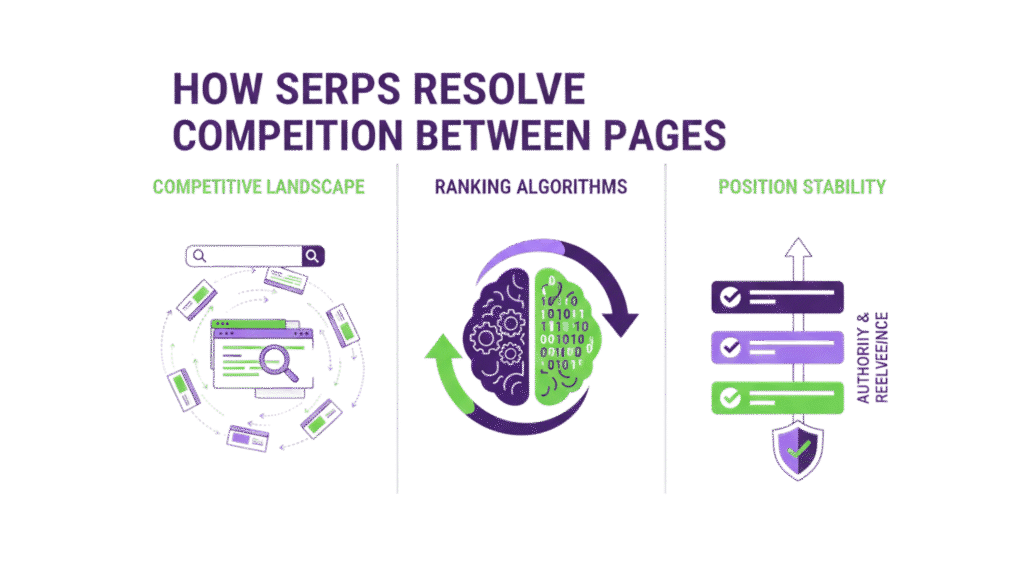
By the time pages appear on the first page of results, Google is done deciding whether they are relevant or authoritative. That work has already been done upstream.
What the SERP is resolving is a different problem entirely. They explore how to order multiple pages that all qualify, under conditions of uncertainty and risk.
Basically, it explains why ranking behaviour often feels unintuitive. Pages improve, links accumulate & engagement strengthens, yet positions remain fixed. From the system’s perspective, the question is not whether a page is good enough. It is whether replacing an existing page reduces the user dissatisfaction across any query as a whole.
Most queries are not singular in intent, even when they appear straightforward. Informational searches often mask evaluation intent. Contrarily, commercial searches carry unresolved understanding gaps.
Google does not try to collapse this ambiguity into a single interpretation. Instead, SERPs are assembled to distribute intent coverage. One result explains the topic, another compares options while some validate trust & enables action. Each result absorbs a different type of failure, assuring that if one interpretation misses, another still satisfies the user.
This is why SERPs often feel mixed by design. They are not ranking the best page. They are constructing coverage that reduces overall failure risk.
Once intent coverage is distributed, pages are evaluated by role, not general quality. A long-form blog does not compete with product pages online. Similarly, a local listing is not competing with a thought-leadership article. Competition only exists between pages serving the same function inside the SERP.

This is a critical point that many analyses miss. When teams try to outrank pages that serve a different role, they see no movement and assume quality gaps. In reality, the system is simply not comparing those pages to each other.
The bottom line is, SERP competition is local, not global.
Search engines actively avoid homogeneity. A SERP filled with near-identical pages increases the risk of correlated failure. If all results fail in the same way, user trust erodes quickly.
To manage this risk, SERPs preserve diversity across domains, formats and perspectives. This constraint limits displacement. Replacing one page often means collapsing an entire role, which Google resists unless failure becomes evident.
Average pages persist because they stabilise the system. They are predictable, even if unremarkable, and maintain the ecology.
Ranking movement does not occur because a page improves in isolation. It occurs because an incumbent page becomes less reliable in its role. Improvement only matters when it coincides with comparative failure elsewhere.
This is why many optimisations appear invisible. The SERP remains in equilibrium until the system decides that reusing existing pages carries more risk than replacement.
Without this understanding, competitor content analysis remains surface-level. Seen correctly, SERPs resolve competition by balancing intent, minimising risk and reusing the least error-prone pages available.
Competitor content analysis is often treated like a tool that should explain outcomes. Teams expect it to reveal why certain pages rank, why others stagnate and what changes will close the gap.
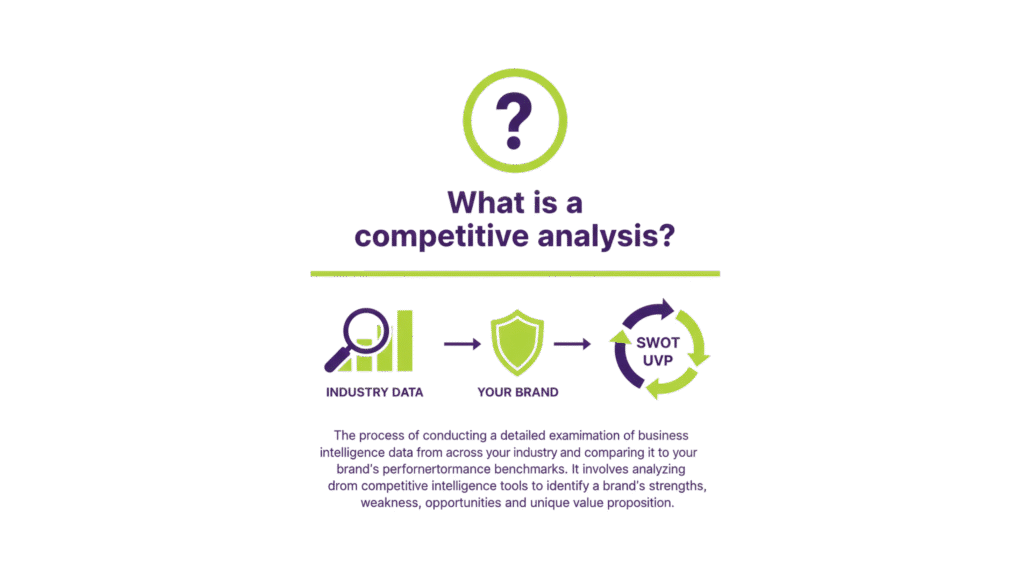
When those answers don’t appear, the analysis is labelled incomplete. The truth is, this expectation misunderstands the role of analysis entirely. Competitor content analysis does not explain why a system behaves the way it does. It explains what the system has already accepted.
Here is an overview of what competitor content analysis actually explains for readers:
The first thing SERPs reliably reveal is content positioning. When multiple pages rank together, they are not competing on the same axis. They occupy different interpretive roles within the query environment.
Some pages exist to establish understanding while others exist to compare options. Some reduce perceived risk whereas others facilitate action. These roles are visible through tone, framing, depth assumptions and narrative posture. Competitor analysis can surface these distinctions clearly.
What content positioning explains is inclusion. It explains why a page belongs on the SERP at all. It does not explain why any one page remains stable while another fluctuates.
Once positioning is understood, intent coverage becomes legible. Ranking pages rarely solve the same problem in the same way. Search engines assume that many queries carry unresolved ambiguity, even when phrased clearly.
Rather than choosing a single interpretation, SERPs distribute coverage across multiple intent variations. Competitor analysis can map this distribution with confidence. What it cannot do is infer which intent interpretation the system prefers long term. Preference only becomes visible through persistence, not structure.
Page length, hierarchy and sequencing influence how information is processed. A predictable structure reduces cognitive effort while a chaotic one increases it.
Competitor analysis shows whether depth is used to guide interpretation or simply to expand coverage. It can reveal whether structure helps readers orient themselves or overwhelms them with optional paths.
What structure does not explain is dominance. A well-structured page may still underperform online. Structure only explains how meaning is delivered, not whether meaning resolves better than alternatives.
Once positioning, intent coverage and structure are mapped, analysis reaches its natural limit. Authority sits beyond that line. It cannot be observed directly because it is not created on-page.
Authority accumulates through historical reuse, behavioural stability and reduced system risk. Search engines trust sources that have failed less often, not those that look stronger today. None of this history is visible inside a snapshot analysis.
This is why authority is often misinterpreted. Analysts infer it from brand familiarity or backlink presence, but these are proxies, not mechanisms.
Competitor content analysis explains what the SERP is showing you. It does not explain why the SERP refuses to change. Now that we know what competitor analysis means, let’s learn more about analysing competitor content
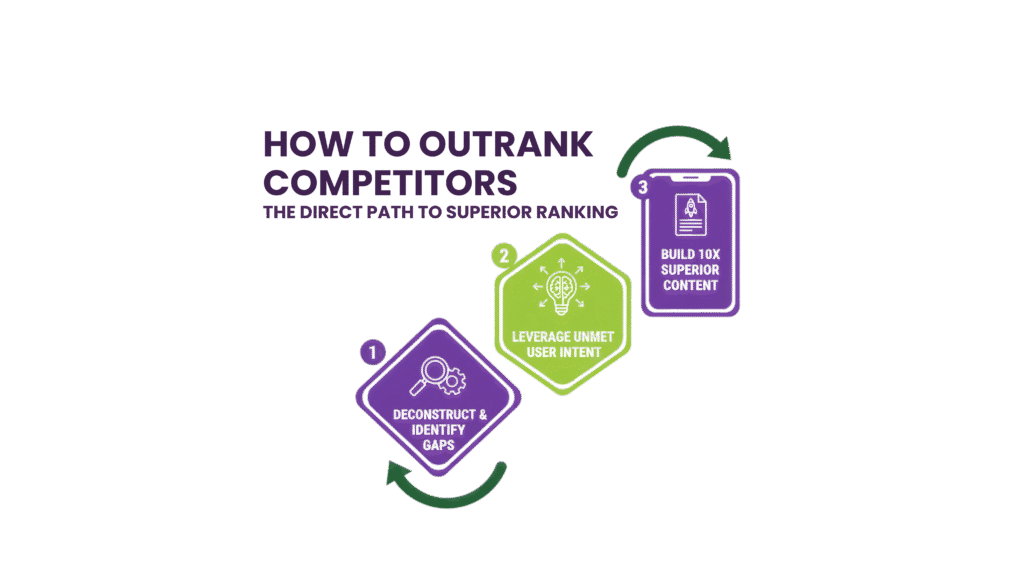
Once SERP mechanics and limits are clear, competitor insights can be translated into strategy. These techniques help to outrank competitors without copying formats or tone. The goal is to win roles on the results page by owning intent layers that others overlook.
Most brands think rankings come from backlinks or content mimicry. That idea is outdated. Pages ranking without backlinks are succeeding because they solve for meaning, speed and confidence. Let’s find out more about how to anazlyse competitor content and outrank them step by step in this blog.
Displacement is not about weaknesses in grammar or design. It’s about finding which ranking roles are overcrowded and which roles are still open for ownership. Competitors don’t lose because they’re flawed. They lose because the SERP has no room for them.
Ecommerce teams that understand this stop chasing competitor flaws. They start studying category pressure by mapping which topics are repeated often on ranking pages. If dozens of pages already explain the same concept, engines stop rewarding the next explainer.
Insiders look for displacement in quieter layers. These layers include justification-heavy queries, procurement-level comparisons, regional directories feeding into maps, or niche-specific evaluation hubs. These spaces influence buyer decision paths more effectively than broad content networks.
When you identify the right displacement opportunity, you are not competing with a brand. You are competing with a role. That clarity alone changes the strategy.
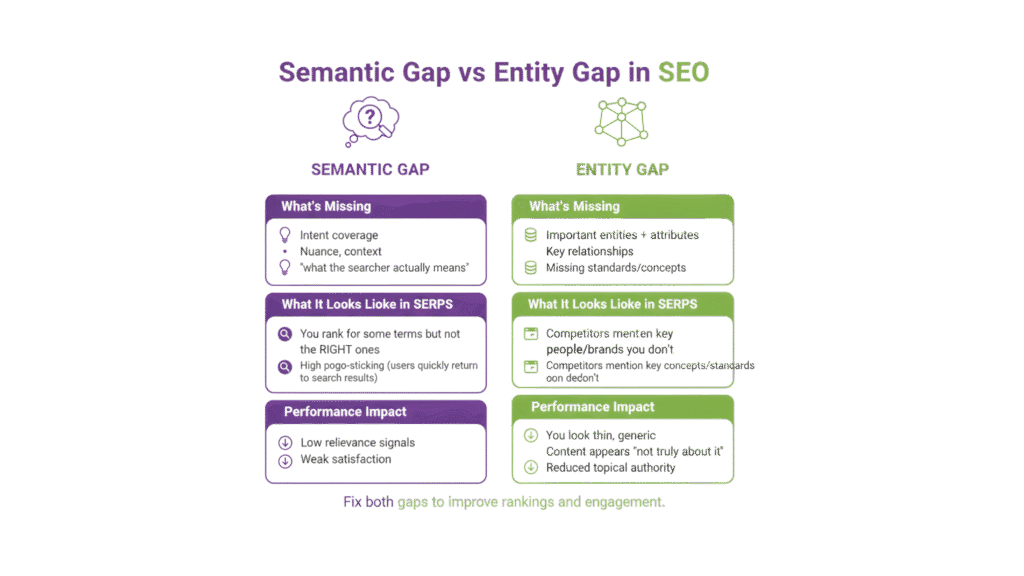
When a small site tries to outrank competitors, the first confusion is diagnosing the gap wrong. A content gap means the page is not answering enough questions buyers silently expect. Authority gaps are not about missing links. They are about the engine not trusting the page to hold a category position yet.
If users land on a page and immediately search again for alternatives, that page did not close the loop. This is how content gaps reveal themselves. They show up as quick exits, repeated searches, or comparison hunting.
Authority gaps behave differently. A page may have clarity. Still, its rank fluctuates weekly. This signals the engine is testing fit, not rejecting it. At this point, adding more paragraphs won’t help. Reinforcement must come through stable contextual signals, not link volume.
The real secret is that authority growth starts after the engine understands your page confidently. Not before.
Most teams believe that outranking means copying what already ranks. But the fact is, SERPs doesn’t reward duplication. It rewards clean role ownership.
In 2025, there are only a few ranking roles that matter for SaaS and ecommerce pages. These are interpretation pages, justification pages, comparison pages, and category anchors.
A page designed as a mid-funnel justification piece will behave differently from a broad explainer. This difference is what protects the charm and credibility of the page.
The trick here is avoiding format duplication traps. When your content looks like 40 other pages, the engine stops classifying it. When it looks like the cleanest answer class, it wins the role quietly.
Even pages ranking without backlinks need reinforcement. Not through link pressure, but through association signals.
Search engines track how your brand appears in category-native conversations. For ecommerce brands, local citation building services influence rankings quietly. They validate your business details across directories that maps and AI summaries pull from.
A mention inside a category-defining analyst blog carries more semantic weight than a link inside a flat directory. That’s because it reinforces topic lineage, not link count.
Experts treat these mentions as authority stacking. Each signal supports meaning, it does not expose intent. That is the only model that survives indexing cycles safely.
Displacement creates resistance when links appear before context settles. Guest post & blogger outreach services avoid this by sequencing early signals in quiet, deliberate gaps.
First in the process comes content clarity, secondly internal semantic linking, then NAP and citation clusters to prove stability. Only then outreach starts.
Links acquired too early look like pressure, not adoption. They don’t let rankings stabilise before the next mention lands. Momentum is built in pauses. That is how pages ranking without backlinks actually sustain visibility long enough to compound.
Rank jumps are not progress. Local citation building services track insulation and coexistence patterns instead.
Mainly, they study a brand’s position volatility over 30 days. During this, they observe pages ranking beside competitors before replacing them and measure refinement query momentum. Then, their job is to check which pages quietly influenced buying decisions through assisted conversions.
These behavioural markers show if the SERP trusts your content, not if it is trending, long or has links. Progress is how the results page behaves around your brand.
Outranking competitors is not a writing contest. It is a role contest. When your content closes, reasoning loops faster and your mentions reinforce category meaning cleanly. Here, displacement becomes a natural outcome.
Outranking competitors starts with understanding how competition is resolved, not how content is written. This can be achieved with competitor content analysis. Using local citation building services like Fastlinko helps brands avoid wasted optimisation and replaces guesswork with informed prioritisation.
Strong SERP performance comes from occupying the right role, reinforcing it with appropriate authority signals, and sequencing improvements to reduce resistance.
Competitor content analysis doesn’t show you what to copy. It shows you where leverage actually exists. It is only by analyzing competitor content that you can start outranking them, step by step.
SERPs act like a live brief. By comparing page formats, angles, and supporting elements, gaps become visible. You start noticing what competitors overlook or under-explain. Filling those gaps matters because search engines reward completeness when it aligns with user intent.
They appear subtly. Citations, internal links, mentions, and supporting examples all contribute. When content is surrounded by credible signals, it feels reliable. Search engines pick up on that consistency, which is why authority often explains stability more than freshness.
By revealing where authority comes from. When you see which pages attract mentions or backlinks, patterns emerge. Those patterns guide outreach priorities, whether through guest post & blogger outreach services or citation building. Links work best when they reinforce content strengths already in place.
It becomes iterative. Teams revisit SERPs, track changes, and adjust content thoughtfully. Each update builds on earlier insight rather than replacing it. Over time, this discipline compounds, making outranking feel deliberate instead of reactive.
