
How US Agencies Use Guest Posting to Build Authority for Clients
January 30, 2026




Content marketing is one of the most trusted growth channels for modern businesses. It builds authority, drives organic traffic, and supports long-term revenue without depending on constant ad spend. Yet it also causes one of the biggest frustrations among founders, marketers, and leadership teams.
The question almost everyone asks is simple.
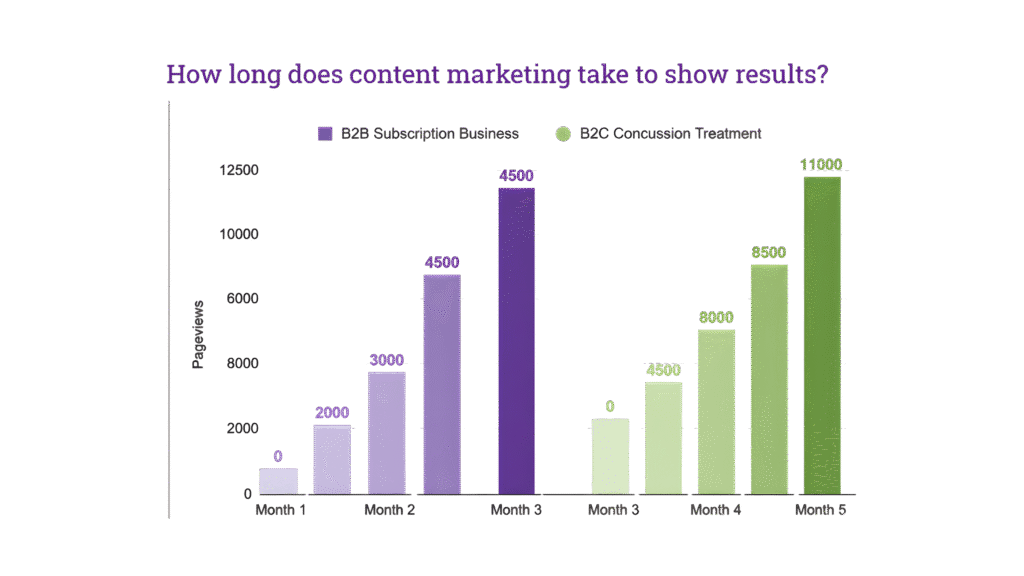
Some expect leads within weeks. Others hear stories about blogs taking a year to rank. Agencies often promise momentum but rarely explain timelines clearly. As a result, content marketing is judged too early, paused too soon, or scaled too quickly.
The reality sits between extremes.
Content marketing works on a compounding curve, not a straight line. Early effort often shows little visible return. Then traction builds quietly. And once momentum sets in, results accelerate in ways paid channels cannot match.
This guide breaks down the real content marketing timeline, what happens at each stage, how SEO fits into the equation, and what realistic ROI expectations look like for different business models. Whether you work with a content marketing consultant, manage an in-house team, or evaluate content marketing agencies, this breakdown will help you align your efforts with outcomes.
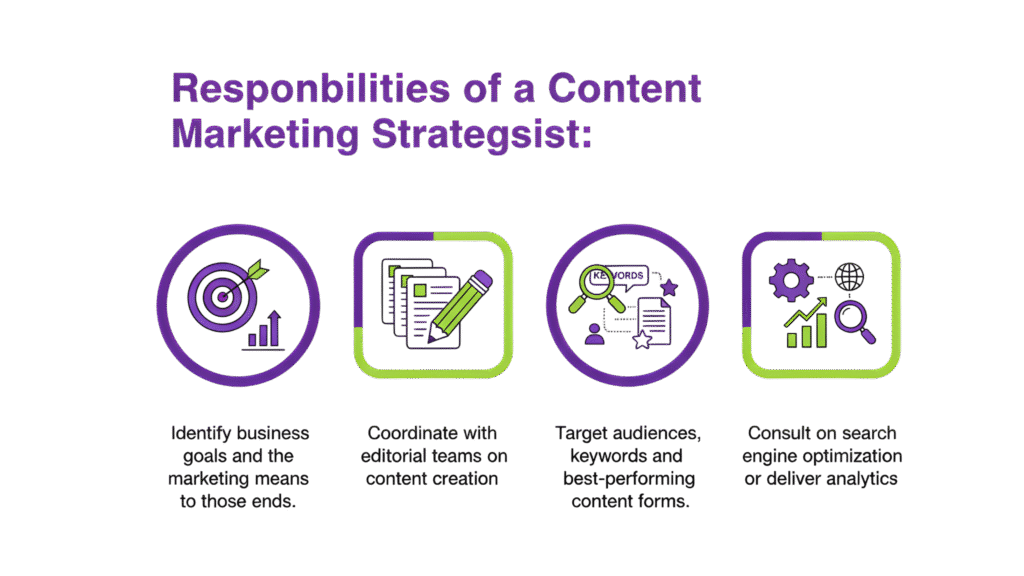
Before defining timelines, it is important to clarify what counts as a result. Content marketing does not deliver a single outcome. It produces multiple layers of impact, each appearing at different stages.
Early-stage results often include:
Mid-stage results usually show up as:
Late-stage results tend to look like:
Many businesses make the mistake of measuring content performance only by leads in the first few months. That is like judging a sales funnel by the first email open. Content marketing requires alignment across visibility, trust, and intent, and those layers build sequentially.
Understanding this progression is the foundation for setting accurate ROI expectations.
No two content strategies progress at the same pace. While the principles of content marketing remain consistent, the timeline for results depends on several underlying factors that determine how quickly content gains visibility, trust, and traction in search engines.
1. Domain authority:
Websites with an established backlink profile and a history of publishing quality content tend to see faster movement. Search engines already recognize these domains as reliable sources, so new content is indexed and evaluated more quickly. In contrast, new websites or recently migrated domains must first earn that trust. Even strong content takes longer to gain momentum when the domain lacks historical signals.
2. Competition level:
Ranking for local services or narrow niche queries often requires less authority than competing in crowded B2B software or enterprise spaces. Highly competitive SERPs demand deeper content, stronger backlinks, and sustained publishing efforts. The more saturated the keyword space, the more time it takes for content to break through.
3. Content quality:
Thin, surface-level articles rarely hold rankings or attract links. Content that clearly addresses search intent, provides detailed insights, and answers real user questions performs better across every stage of the content marketing timeline. High-quality content earns engagement, encourages sharing, and attracts organic links, all of which accelerate growth.
4. Publishing consistency:
Sporadic posting limits momentum and weakens topical signals. A structured publishing schedule with interconnected topics helps search engines more quickly identify subject expertise. Consistency compounds results over time, while irregular output repeatedly resets momentum.
The SEO foundation underneath your content determines how effectively results surface. Technical issues such as poor crawlability, weak internal linking, slow page speed, or unclear site architecture can delay progress even when content quality is high. These barriers prevent search engines from fully accessing and valuing your content.
Because these factors are interconnected, many businesses involve a content marketing consultant early. Strategic missteps during the first 60 days often create delays that push measurable results back by several months.
This phase rarely feels productive to stakeholders, but it determines everything that follows.
Key activities include:
There is usually no visible ROI during this phase. That is normal. The goal is to remove friction before publishing begins.
Businesses that skip this stage often publish faster but stall later.
During this stage, content begins to be indexed. Google begins testing pages for relevance, but rankings are unstable.
What you typically see:
Leads are rare at this stage unless the content targets bottom-of-funnel queries.
This is where unrealistic ROI expectations cause problems. Content is working, but quietly.
This is the first stage where results feel real.
Common outcomes include:
For B2B brands, this is often when sales teams start hearing, “I read your blog.”
At this point, content marketing begins to support brand trust, even before it drives direct leads.
This is the inflection point.
Content published months ago starts consistently attracting traffic. Internal linking strengthens topical authority. Backlinks arrive naturally.
You may notice:
This is where many of the best content marketing agencies outperform short-term channels. Growth becomes cumulative instead of linear.
By this stage, content marketing becomes a dependable acquisition channel.
Results often include:
For most businesses, 12 months is the minimum window to evaluate content ROI fairly.
Anything shorter usually underestimates its value.
This is where content marketing shifts from a growth tactic to a competitive advantage.
Benefits include:
Companies that remain consistent for more than one year rarely revert.
Content marketing and SEO are deeply connected, but their timelines are not identical.
An SEO timeline focuses on rankings and traffic. A content timeline focuses on trust, engagement, and conversion.
SEO progress typically looks like this:
When content and SEO work together, timelines compress. When they operate separately, progress slows.
This is why many businesses struggle when they hire writers without SEO direction or SEO agencies without content depth.
Understanding your category is critical to setting internal expectations.
Most content strategies fail not because the content does not work. They fail because execution stops too early.
Common reasons include:
A strong content marketing consultant will set expectations upfront and protect the strategy from short-term pressure.
While content marketing requires patience, certain actions accelerate progress.
Speed comes from structure, not shortcuts.
In-house teams offer control but often lack scale early on. Agencies bring systems but vary widely in quality.
The best content marketing agencies:
Whether you choose an agency or a consultant, clarity matters more than promises
Waiting for leads is risky. Instead, track indicators that signal future ROI.
These include:
These metrics tell you whether the strategy is compounding.
You should reassess only if:
Do not pivot simply because leads are slow in the early months.
Content marketing rewards consistency, patience, and strategic clarity. It is not designed for instant gratification, but it delivers something more valuable: sustained growth that compounds over time.
If you measure it correctly, support it with SEO, and align it with real search demand, content marketing becomes one of the most predictable channels available.
Set timelines honestly. Align stakeholders early. And judge performance based on progress, not impatience.
That is how content marketing turns from a cost center into a growth engine.
Content marketing builds trust and authority over time, while paid advertising delivers immediate visibility. Search engines need time to evaluate content quality, relevance, and engagement before ranking pages. Once momentum builds, content delivers sustained results without ongoing ad spend.
Yes, but timelines are longer for new websites. Without existing authority, search engines take more time to trust the domain. New sites should focus on clear search intent, structured content clusters, and consistency to build traction steadily.
SEO directly influences how quickly content gets indexed, ranked, and discovered. Strong technical SEO, internal linking, and on-page optimization shorten timelines, while unresolved SEO issues delay visibility even when content quality is high.
Content targeting low-competition, high-intent keywords tends to perform faster. Problem-solving guides, comparison pages, and solution-focused articles often gain traction earlier than broad awareness content.
Publishing at least two to four high-quality pieces per month helps maintain momentum. Consistency matters more than volume. A structured publishing plan focused on topical coverage delivers better long-term results than sporadic posting.
A content marketing consultant is useful for strategy, positioning, and early direction, while agencies offer execution and scale. The right choice depends on your internal resources, budget, and growth stage. Strategy clarity matters more than team size.
Before leads appear, track indicators such as keyword impressions, ranking improvements, organic traffic growth, engagement metrics, and branded search lift. These signals show whether your content strategy is compounding correctly.
