
How US Agencies Use Guest Posting to Build Authority for Clients
January 30, 2026








Guest posting in 2026 is not what it was five years ago.
It’s no longer about sending mass emails, publishing thin content, or buying cheap links in bulk. Search engines are better at detecting link manipulation. Editors are stricter. Budgets are scrutinized by CMOs and founders who want clear ROI, not vague promises.
Yet, guest posting still works when it’s done with clarity, intent, and pricing discipline.
The problem most businesses face today isn’t whether guest posting is worth it. The real challenge is determining what a guest post should cost in 2026 and whether that cost aligns with your SEO and growth goals.
Some agencies charge $150 per placement. Others quote $2,000+ for a single editorial link. Marketplaces show wildly different prices for sites with similar metrics. Outreach freelancers promise volume, while premium services pitch authority and trust.
So, what’s the real number?
This guide breaks it down, clearly, practically, and without hype.
You’ll learn:
If you’re managing SEO budgets, evaluating agencies, or scaling link acquisition in 2026, this guide gives you the clarity most pricing pages don’t.
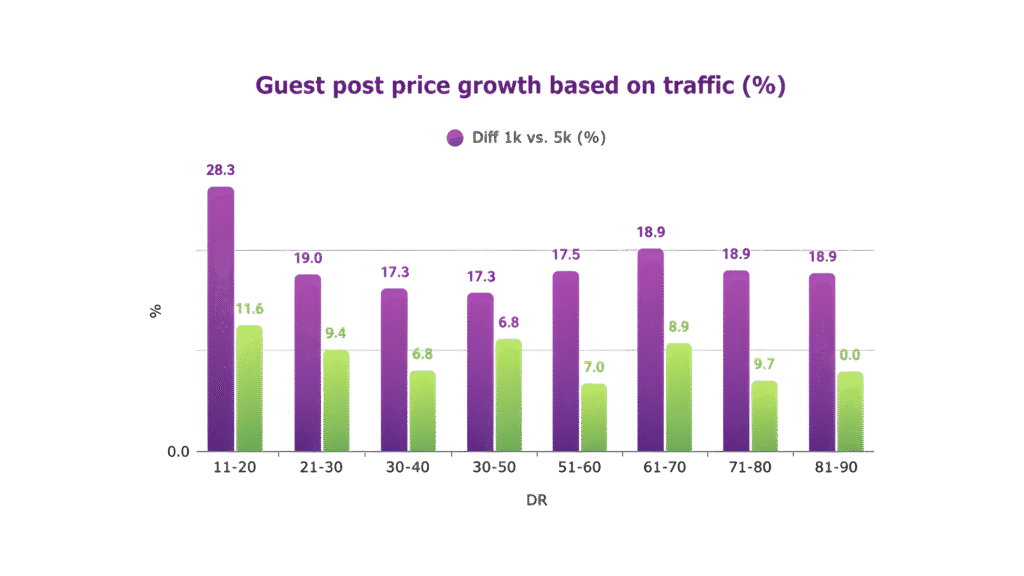
Guest post pricing didn’t increase randomly. It shifted because the market matured.
Three forces reshaped the pricing structure:
Google no longer needs manual penalties to devalue bad links. Algorithmic signals can suppress impact quietly. That has reduced the effectiveness of low-cost, high-volume guest posting.
Publishers who maintain clean editorial standards charge more because their links still pass trust.
In 2026, many niche blogs, SaaS publications, and industry portals understand SEO economics. They know a contextual link can influence rankings, traffic, and conversions. Pricing reflects that awareness.
Founders and marketing leaders want controlled acquisition costs. They prefer fewer links with a clearer upside rather than hundreds of placements that deliver no measurable results.
This shift explains why guest post cost 2026 spans such a wide range, and why cheaper isn’t always smarter.
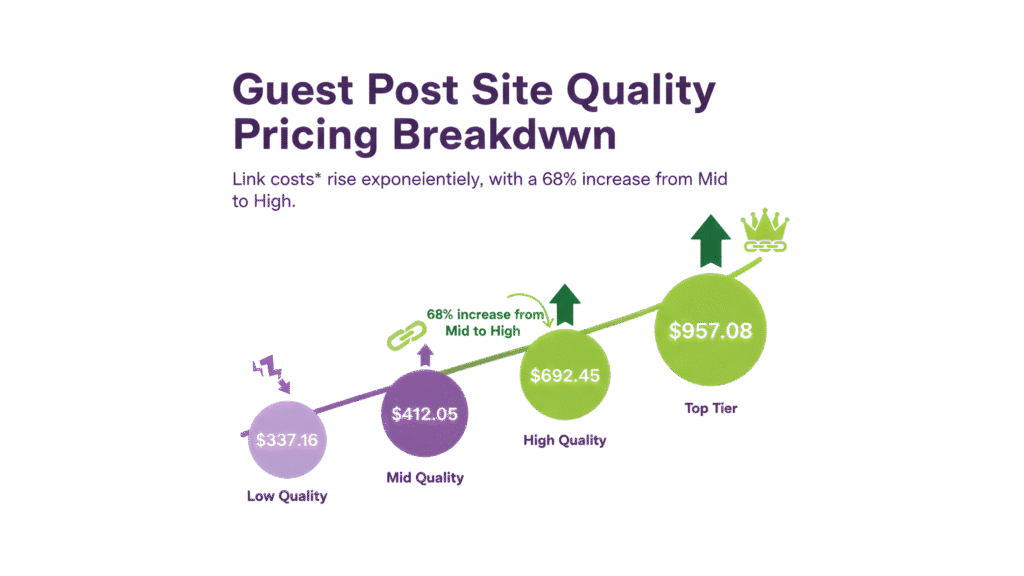
Let’s address the question directly.
Guest Post Cost in 2026: Actual Market Ranges
| Category | Typical Cost Per Guest Post |
|---|---|
| Low-tier blogs/hobby sites | $20 – $150 |
| Niche authority blogs | $150 – $400 |
| Established industry sites | $400 – $1,200 |
| High-authority publications | $1,200 – $4,000+ |
These numbers represent real transactions, not inflated list prices.
However, price alone tells you nothing unless you understand why a site charges what it does.
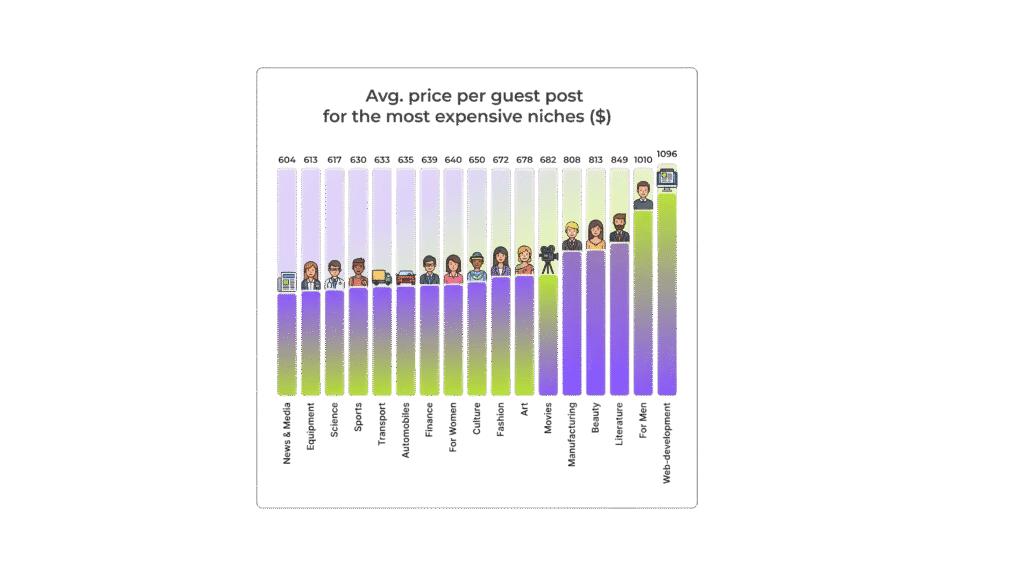
Most businesses make the mistake of judging price based on Domain Rating alone. That’s outdated thinking.
In 2026, pricing is driven by six factors.
A DR 40 site that is tightly aligned with your niche often outperforms a DR 80 general blog.
Editors charge more when:
Relevance commands premium pricing because it delivers ranking stability.
Publishers increasingly price based on:
A site with 10,000 monthly visitors that ranks for buyer-intent keywords often costs more than a site with 100,000 passive readers.
Guest posts in 2026 are rarely “publish and forget.”
Higher prices usually mean:
If a site accepts content instantly, pricing reflects that lack of scrutiny.
Where the link appears matters.
Pricing increases when:
Temporary links or footer placements may be cheaper, but their impact fades quickly.
Publishers with:
…charge more because their links carry less risk.
Risk reduction is part of the price.
Some niches simply cost more.
Finance, SaaS, health, legal, and B2B technology sites experience constant outreach pressure. Limited inventory drives up prices, especially for clean sites that reject mass placements.
Most businesses don’t manually buy individual placements. They work with paid guest posting services.
Here’s how the structure costs for those services will be in 2026.
Cost: $150 – $1,200 per link
Best for: Businesses with clear targets and flexible timelines
You pay for:
This model works when:
Cost: $1,500 – $5,000 per month
Best for: Growth-stage companies
Packages usually include:
Pricing depends on average site quality, not volume alone.
Cost: $6,000 – $25,000+ per month
Best for: SaaS, enterprise, funded startups
These campaigns focus on:
Here, you’re paying for strategy, not just links.
Let’s be blunt.
Cheap guest posts don’t fail because they’re cheap. They fail because they’re predictable, replaceable, and easy to ignore.
They might index. They rarely influence rankings long-term.
This doesn’t mean every expensive link is worth it. It means pricing must align with purpose.
Outreach budgeting isn’t about spending more. It’s about spending with intent.
Small Businesses & Solo Founders
Monthly Budget: $500 – $1,500
Focus:
Goal: Authority foundation, not domination.
Growth-Stage SaaS & E-commerce
Monthly Budget: $3,000 – $8,000
Focus:
Goal: Ranking movement + lead flow.
Enterprise & Funded Startups
Monthly Budget: $10,000 – $40,000+
Focus:
Goal: Market positioning and search visibility stability.
Guest posting ROI is misunderstood because many teams stop at rankings.
Here’s a cleaner way to evaluate cost.
Example Scenario
Monthly revenue contribution:
40 × 0.02 × 0.20 × $3,000 = $480
If the post drives traffic for 12 months:
$480 × 12 = $5,760
That’s a clear business case.
Rankings amplify that return further.
In 2026, the best guest post service is not the cheapest or the biggest.
It’s the one that provides clarity before commitment.
What a Legit Service Will Show You:
Warning Signs:
If they won’t explain pricing logic, don’t trust delivery.
Many teams confuse these two.
| Factor | Guest Posting | Digital PR |
|---|---|---|
| Cost | Lower to mid | High |
| Control | High | Limited |
| Speed | Predictable | Variable |
| Branding | Moderate | Strong |
| SEO predictability | High | Medium |
One of the most expensive mistakes businesses make in guest posting is paying for Domain Rating instead of relevance. A high-DR site with no topical connection to your product or audience rarely delivers stable rankings or qualified traffic. You end up paying a premium for a metric, not for outcomes.
Another frequent error is buying volume without testing. Ordering 10 or 20 placements upfront might look cost-effective on paper, but without validating site quality, traffic behavior, and indexing consistency, this approach often locks budgets into links that don’t move the needle.
Many teams also ignore referral traffic completely. Guest posts are treated purely as SEO assets, even though real value comes from placements that drive engaged visitors who convert. If a link never drives clicks, its long-term value is limited.
Overusing exact-match anchors is another cost inflator. Sites that allow aggressive anchors often charge less because they already carry risk. In 2026, natural anchor patterns protect your spend far better than forcing keywords into every link.
Finally, scaling before measuring impact turns small inefficiencies into large losses. Without tracking rankings, traffic, and conversions from early placements, scaling only multiplies wasted spend.
Each of these mistakes doesn’t just reduce ROI; it quietly increases your cost per result.
There is no universal price for a guest post in 2026. The market is too mature, the quality gap too wide, and the business goals too varied for a single number to make sense. What does exist, however, is a clear decision framework that separates smart spend from wasted budgets.
A guest post in 2026 should cost enough to reflect real editorial effort. That includes relevance to your niche, content that meets publishing standards, and placement within an article that genuinely serves the audience. It should also cost enough to reduce risk. Clean sites with controlled outbound links, stable indexing, and consistent traffic don’t operate at bargain prices, and that’s a good thing.
If you’re paying $50 and expecting meaningful authority growth, the gap between expectation and outcome will be wide. On the other hand, paying $2,000 for a placement with no traffic, weak relevance, or unclear editorial value is just as costly.
The strongest SEO teams in 2026 don’t chase cheap links or recognizable logos. They invest in measured, relevance-driven, ROI-tracked guest posting systems that align cost with business impact, and that’s where real returns are built.
Paid guest posting services are worth the investment when they offer transparency, quality control, and predictable delivery. These services reduce the time and effort required to build publisher relationships and manage outreach internally. The real value lies in access to vetted sites, editorial placements, and structured reporting. However, not all services operate at the same quality level, so due diligence is critical. Businesses should evaluate services based on placement quality rather than the number of links delivered.
Guest post pricing varies because websites differ in relevance, audience quality, editorial rigor, and demand. A niche blog with buyer-intent traffic may command a higher price than a general site with higher surface-level metrics. Publishers with strict content guidelines and limited placement slots price higher prices to protect their brand. Competition within certain industries also drives costs upward. Pricing reflects perceived value, not just measurable SEO metrics.
Domain Rating influences pricing, but it is no longer the most important factor in 2026. Relevance, organic traffic quality, and link placement context often have a greater impact on performance. A lower-DR site with strong topical alignment can outperform a high-DR site with weak relevance. Overpaying for DR alone often leads to disappointing results. Smart buyers evaluate the full placement context before approving the cost.
A guest post is likely overpriced if the site has little organic traffic, weak relevance, or excessive outbound links. A lack of transparency around traffic data or prior placements is another warning sign. If the publisher cannot explain why the placement delivers value beyond authority metrics, the price may not be justified. Comparing similar sites within the same niche helps identify inflated pricing. Overpriced placements usually rely on brand perception rather than measurable outcomes.
Cheaper guest posts can still work when used selectively and with clear expectations. They may support link diversity or help test content angles, but they rarely drive meaningful authority on their own. Low-cost placements often lack traffic and editorial depth, limiting long-term impact. Relying heavily on cheap links increases risk without improving results. They should complement, not replace, higher-quality placements.
Businesses should budget for guest posting based on growth stage, competition level, and customer lifetime value. Smaller teams may start at $500 to $1,500 per month, while growth-stage companies often invest $3,000 to $8,000 per month. Enterprise brands may allocate significantly more for premium editorial placements. Budgets should allow room for testing before scaling. Tracking performance ensures spend aligns with outcomes.
A valuable guest post delivers more than rankings; it drives referral traffic, builds brand visibility, and builds trust. It places your business in front of a relevant audience already interested in the topic. Strong placements can generate leads, partnerships, and secondary backlinks over time. They also support brand authority within the industry. In 2026, guest posting is most effective when viewed as a growth channel, not just a ranking tactic.
