
How US Agencies Use Guest Posting to Build Authority for Clients
January 30, 2026







Imagine your latest product launch, merger, or award announcement landing in inboxes like any other press release. Unread, skimmed, forgotten.
Now picture the same news told as a story that sparks curiosity, empathy, and excitement.
Traditional press releases treat announcements as transactions. They report facts, tick boxes, and hope someone notices. But narrative-driven PR flips that script. Each release becomes an emotional touchpoint.
They channelise audience engagement strategies, invite media coverage, and encourage social sharing.
Storytelling doesn’t just improve visibility. It shapes perception. A well-crafted narrative amplifies brand trust, strengthens audience connection, and makes your announcements memorable.
In 2025, press release marketing is moving from formality to impact. Companies that integrate brand storytelling techniques and PR emotional impact are the ones that push audience engagement strategies.
In this blog, we’ll explore strategic storytelling in press release marketing. But first, let’s first examine why narrative-driven press releases consistently outperform conventional announcements.
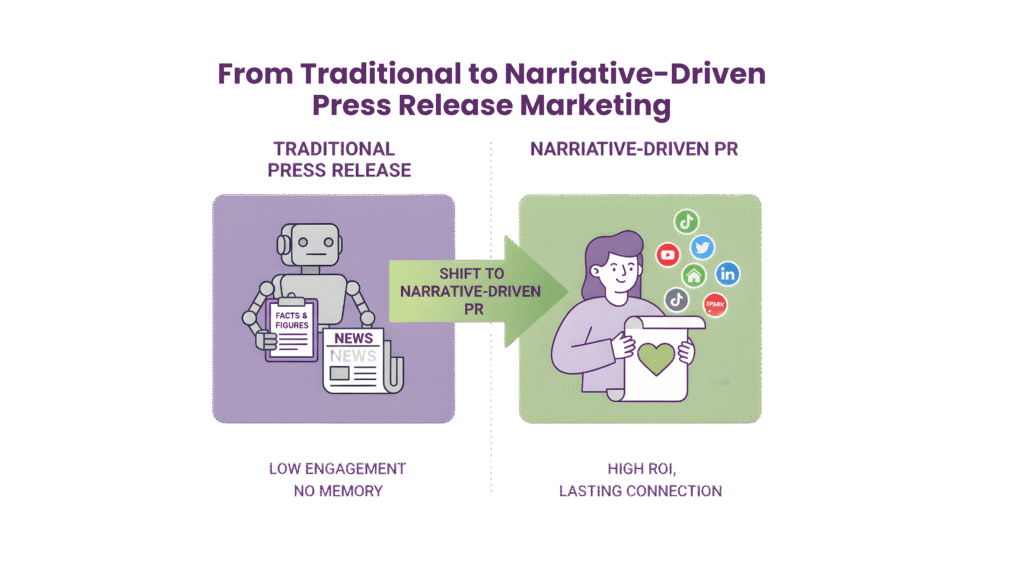
Traditional press releases once relied on facts, figures, and announcements. These were the only ways to earn media attention.
That formula no longer holds.
Today’s audiences scroll fast, skim headlines, and skip robotic content. Journalists too look for stories that add value, not templated corporate updates. The traditional press release that was transactional in tone and stripped of personality has now lost its pull.
A flat announcement can secure some brief coverage, but it rarely creates memory. It tells what happened but not why it matters. In such PRs, engagement fades because there’s no emotional bridge between the brand and its audience.
The ROI of such assets remains low. Visibility alone doesn’t build authority anymore. The right connections do.
That’s where narrative-driven PR enters.
It transforms a brand update into a story that moves people. By weaving together context, motivation, and consequence, it humanises the announcement. Instead of starting with the what, it begins with the why. Readers are naturally drawn into the story, understanding the intent behind a launch, partnership, or milestone.
This mirrors how people naturally absorb information. Through stories with characters, conflict, and resolution. Here, the brand becomes the guide, not the hero.
It helps its audience in solving a relatable problem. Whether announcing a new AI tool or an ESG milestone, the focus shifts from data points to meaning. This makes the content both newsworthy and memorable.
The core principles of story-led press releases are simple but powerful.
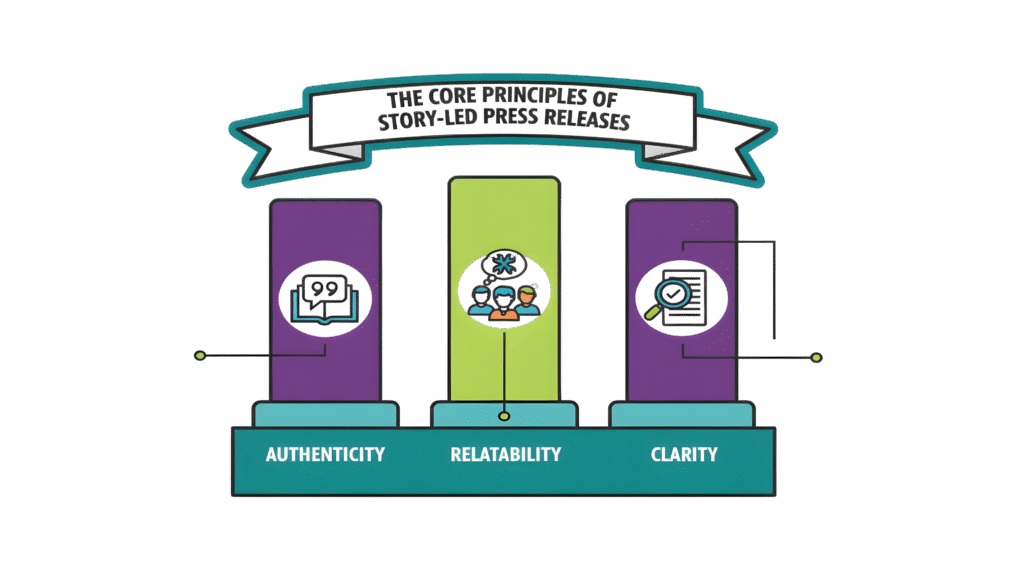
These principles turn announcements into experiences. When readers feel something, they remember it. That’s precisely where brand recall begins.
From a strategic view, this shift also builds on audience engagement strategies. Narrative-led releases get higher open rates, better pickup, and more social amplification. Journalists find them easier to frame for their audiences. Readers engage longer and deeper.
Emotional storytelling naturally drives trust, shaping stronger brand impressions over time.
Once the narrative framework is understood, the next challenge is designing storytelling that impacts PR outcomes.
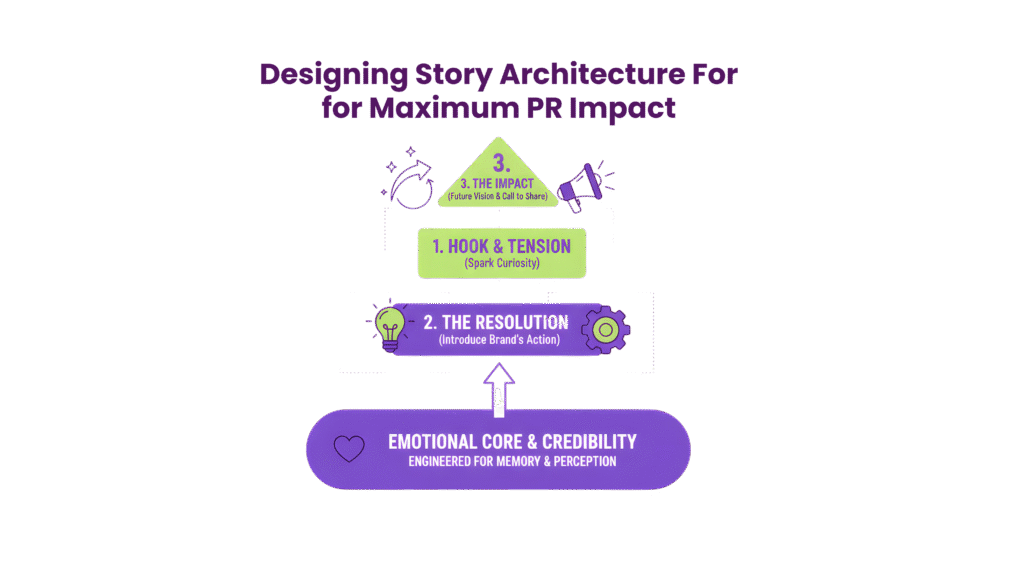
A story-led press release isn’t built around emotion alone.
It’s engineered around sequences like how information unfolds, what it signals, and where it lands. When structured rightly, a release doesn’t just inform. It moves perception. It makes the reader remember your message long after the headline fades.
Every high-impact press release follows an invisible design. They embellish a rhythm to guide attention, emotion, and credibility.
The following structure separates a good announcement from a disruptive one that shapes conversation:
1. Start with a meaningful trigger
Every story needs urgency.
A trigger defines why the press release exists right now. It could be a result of shifting customer behaviour, market development or an internal milestone that signals change.
A fintech brand, for example, may frame its funding as a response to rising demand for transparent finance not a transaction. That subtle contextual framing gives journalists a hook and readers a reason to care.
A clear why now turns an update into a timely narrative.
2. Build tension before resolution
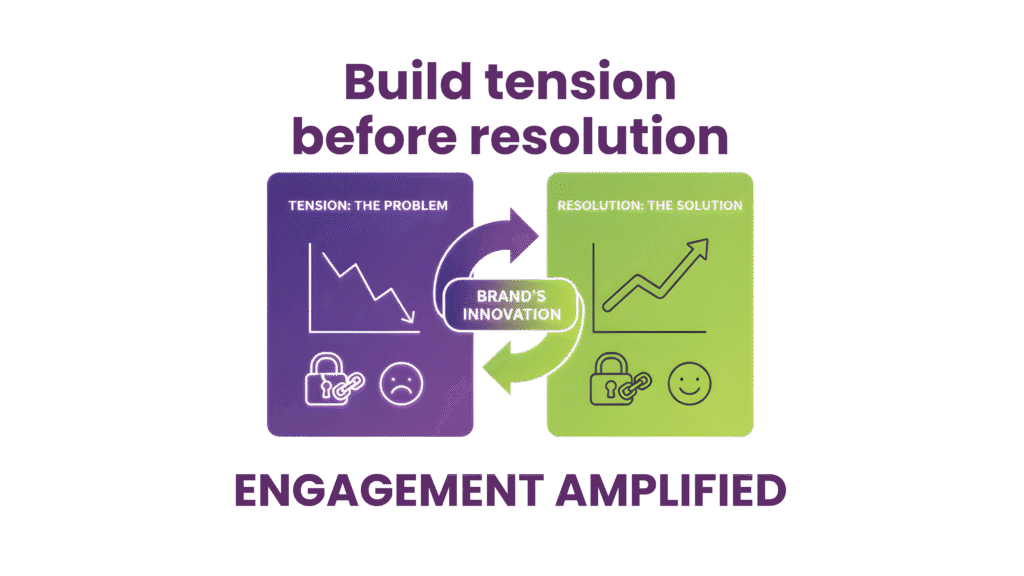
Flat announcements reveal everything upfront. Story-led releases pace the reveal.
They begin with the problem or gap. Then they position the brand’s action as the resolution.
For instance, A B2B cybersecurity firm might open with a rising industry concern about data breaches before unveiling its new security suite. This sequencing allows readers to feel the stakes before they see the solution
Thus engagement is amplified naturally. Tension keeps attention and resolution delivers reward.
3. Layer credibility with human context
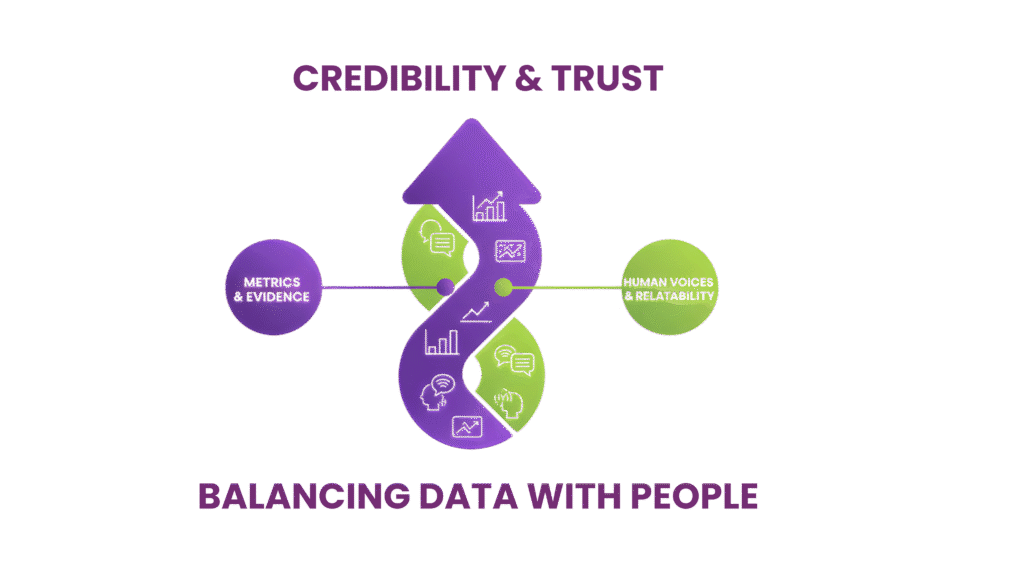
Readers trust stories that sound alive, not manufactured. Best press release marketing pairs data with people. Metrics prove value and human voices create relatability.
This dual framing builds authority without losing warmth. It turns evidence into narrative.
Balance is this architecture’s strongest beam. Numbers ground the belief and voices anchor emotions.
4. Shape the visual rhythm
Story architecture isn’t just verbal, it’s visual.
A structured formatting with short paragraphs, bold subheads and breathing space creates movement for the eye.
Editors and readers don’t read line by line. They scan for story beats. Releases that visually guide them through the context → challenge → proof → resolution pipeline stand out instantly.
In PR, readability is credibility. A designed layout signals professionalism as much as the message itself.
5. Close with continuity, not closure
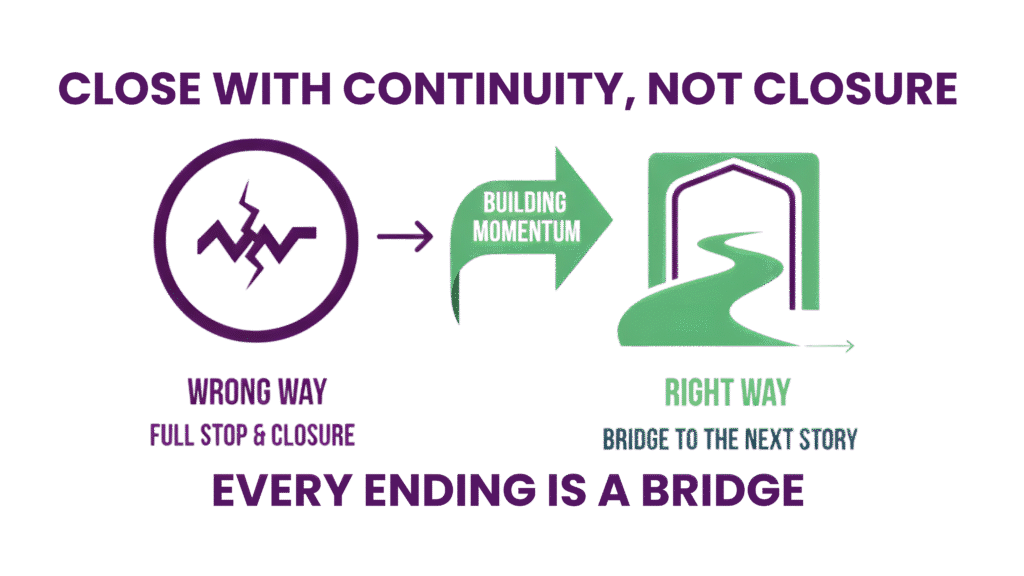
Endings shouldn’t tie everything up, they should lead forward.
A good closing text ideally teases impact or hints at what’s next. This can be future launches, collaborations, or a wider shift in the industry.
For example, instead of ending with the product is now available, close with how early adoption is shaping industry benchmarks. It ends with momentum, not a full stop.
Every ending is a bridge to the next story.
6. Maintain narrative continuity across campaigns
Story architecture compounds over time. When each release holds up the same voice and values, recognition builds organically.
Editors remember tone and audiences remember framing. That’s how familiarity turns into credibility.
Through repetition with evolution.
In 2025, structure is strategy.
Press releases that read like stories don’t just travel farther, they endure longer.
In a landscape defined by speed, longevity separates noise from narrative.
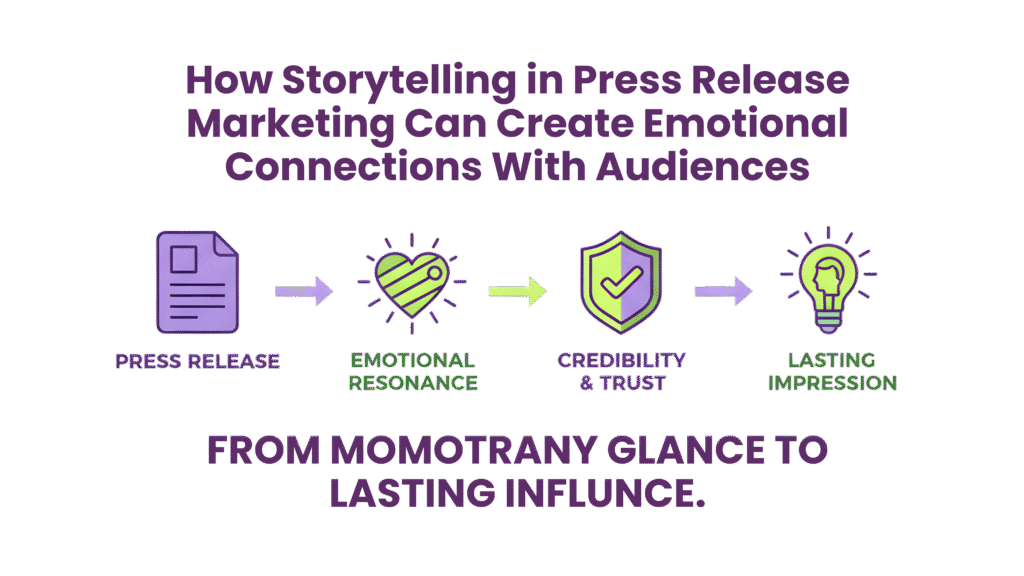
In 2025, press releases are no longer just announcements. They are instruments for building narrative influence.
Only a few brands can capture attention on online markets consistently. These are the ones that embed narrative-driven PR into every release.
Storytelling in press release marketing creates emotional resonance. It turns your content from a momentary glance into a lasting impression. Thus it reinforces credibility and trust among high-intent audiences.
The impact of a press release depends on how well it connects to the audience.
Highlighting product updates alone is not enough. Stories need context that makes readers care. Successful press releases feature brand storytelling techniques & PR emotional impact. These press releases cover topics like:
These human anchors provide relatability. Narrative arcs further strengthen brand engagement.
Press releases that weave tension, conflict, and resolution maintain high reader attention across multiple paragraphs and platforms. Emotional triggers like problem-solving, aspiration, and achievement signal relevance to journalists and audiences.
These factors reflect that your story has staying power beyond a single announcement. When readers feel invested in the narrative, they share, reference, and return to your content repeatedly.
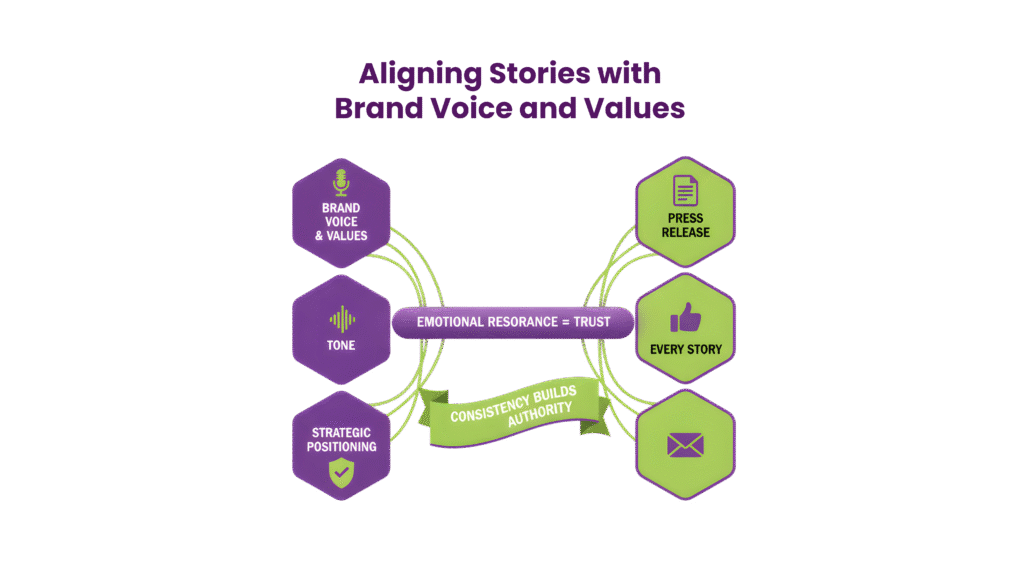
Emotional resonance only works when it’s aligned with the brand’s identity.
Every release should reflect your firm’s mission, tone, and strategic positioning. Maintaining consistency across channels like press, social media, and newsletters is also imperative. It ascertains that every story pushes the same perception of authority and reliability.
Authenticity is also critical. High-intent audiences can easily detect overstated claims or tone misalignment.
For B2B brands, trust directly impacts how users perceive their thought leadership and risk.
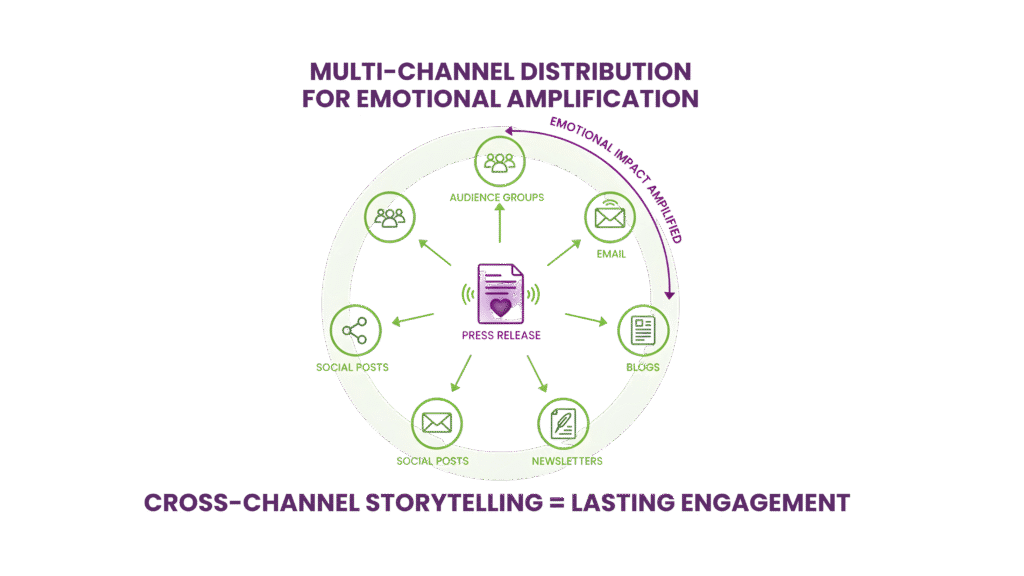
A press release’s reach extends far beyond the wire.
Narrative driven PRs should be adapted for social posts, newsletters, and blogs. By doing so, the emotional impact of your publication compounds.
Cross-channel storytelling props up retention. Syndication across select media networks amplifies brand exposure while preserving context. Thus, stories become part of a larger conversation.
This allows audiences to recognize patterns in the brand’s vision and contributions. Multi-channel repetition cements emotional connections and increases engagement.
Visual elements make content assets tangible.
Infographics, images, and short videos translate your brand’s abstract achievements into memorable content. Multimedia integration improves comprehension. Better understanding increases the chance of journalists lifting the story directly for reprints or social shares.
Pairing narrative with visual cues like –
enhances journalist pickup and audience engagement.
In 2025, press releases that merge human storytelling with compelling visuals outperform text releases. Both in reach and impact.
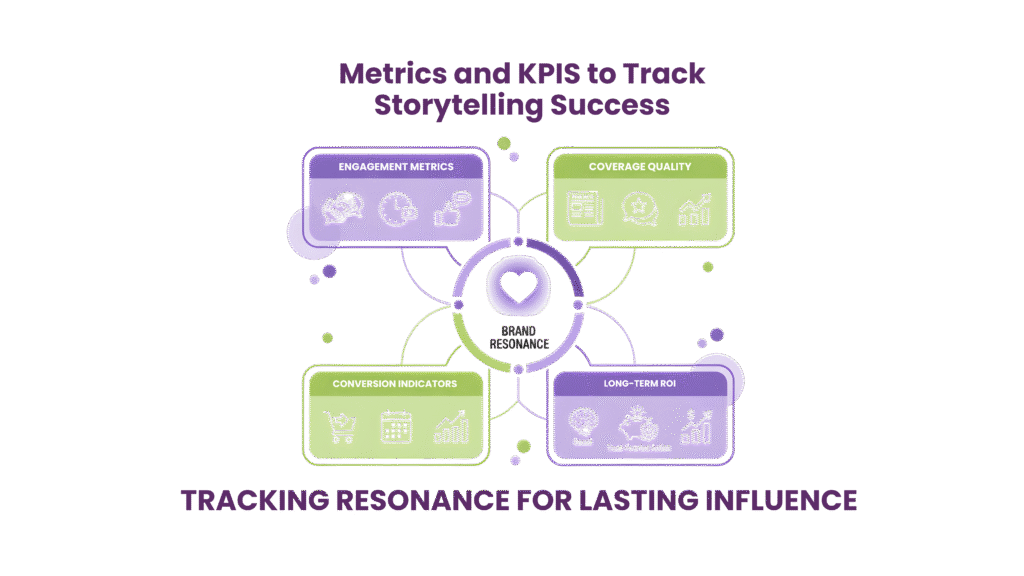
Storytelling must be tracked subtly.
It can be effectively assessed through engagement rather than pure output. Metrics like open rates, shares, time on page, and comments reveal brand resonance.
Coverage quality can be analyzed by sentiment, depth, and relevance. This indicates whether journalists and editors found the story newsworthy or skippable.
For B2B brands, popular conversion indicators include newsletter sign-ups, demo requests, or event registrations. They demonstrate downstream influence. Long-term ROI is achieved only from repeated media attention, audience trust, and brand recall.
Tracking these patterns allows brands to craft strong narratives. They maximize visibility and influence without sacrificing reality.
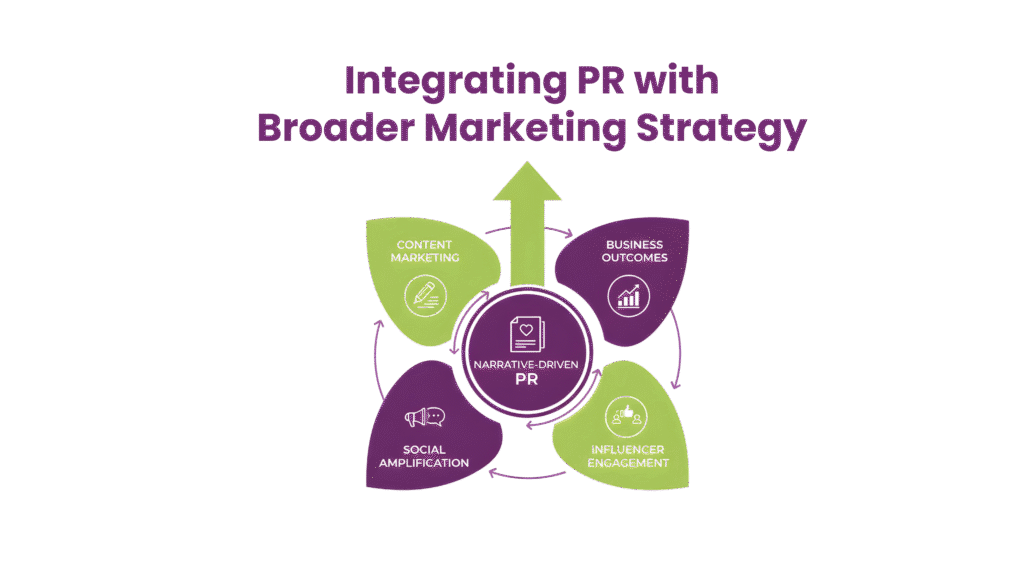
Press release storytelling should not work in isolation.
The pay-off of narrative driven PR multiplies when it’s synced with content marketing, social amplification, and influencer engagement. Insights from these engagement metrics feed back into campaign planning, informing blog content, social strategy, and thought leadership.
A coordinated approach translates emotional resonance in press releases into measurable business outcomes. It boosts brand positioning in the market and primes audiences for future touchpoints.
All these rules should be followed while maintaining editorial credibility.
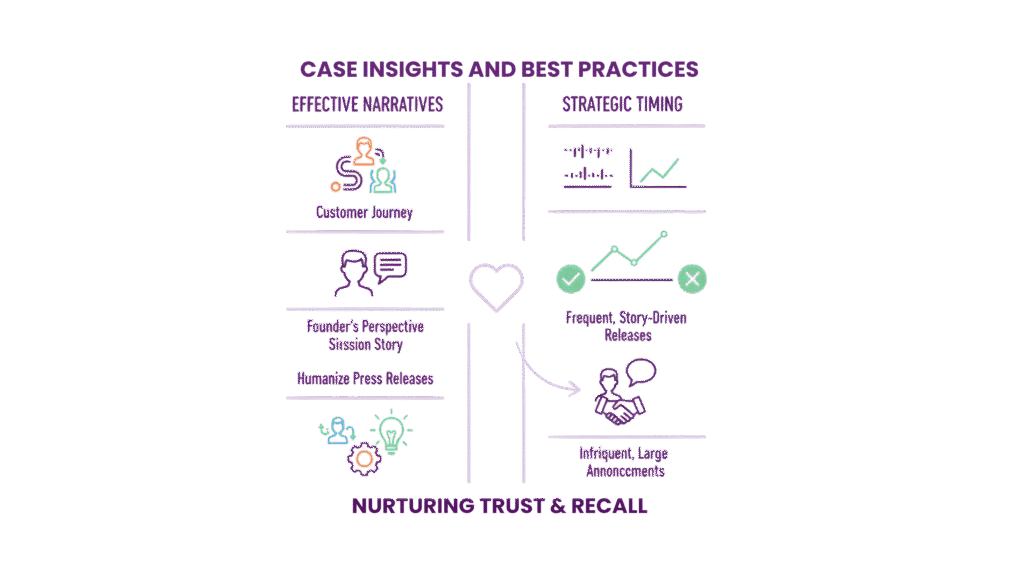
Brands that humanize press releases achieve superior reach and engagement.
Customer journey narratives, founder perspectives, and innovation stories outperform announcements based solely around product or feature updates.
Frequent, story-driven releases maintain narrative continuity. They reinforce emotional connections. Small, strategically timed releases yield more engagement than infrequent, large announcements.
This approach nurtures trust and keeps your brand on top for journalists, prospects, and partners alike.
Press release storytelling is not just about content creation. It is an engine for emotional engagement.
Embedding real and raw narratives into press release marketing means syncing them with brand voice, amplifying across channels, and measuring resonance. This way B2B brands can convert announcements into lasting influence.
Emotional impact boosts immediate recognition and long-term business outcomes. Storytelling positions your press releases as a strategic differentiator in modern PR.
Data strengthens storytelling. It grounds emotions in evidence. Statistics or results create credibility, while the story translates numbers into meaning. Together, they form persuasive narratives. This combination shows not only what happened but why it matters. Such a release appeals to both logic and emotion.
Common mistakes include over-dramatising, losing factual accuracy, or ignoring audience relevance. Good storytelling balances authenticity with structure. It stays informative while being emotionally engaging. Overly promotional language weakens trust. Meaningful stories are subtle, honest, and focused on value, not exaggeration or brand self-praise.
Emotional impact of storytelling in PR is measured through various engagement metrics. These are read time, shares, and sentiment analysis. Qualitative signals like media pick-ups or journalist feedback also show resonance. The best indicator for storytelling is message recall. It’s working when audiences remember not just the news, but how it made them feel.
Each industry emphasises on different emotional triggers. Tech PR may use curiosity and innovation, while healthcare leans on empathy and trust. Storytelling should adapt to your brand’s tone, depth, and framing. This helps to match audience motivation and authenticity across brand ecosystems and communication goals.
