How US Agencies Use Guest Posting to Build Authority for Clients
January 30, 2026



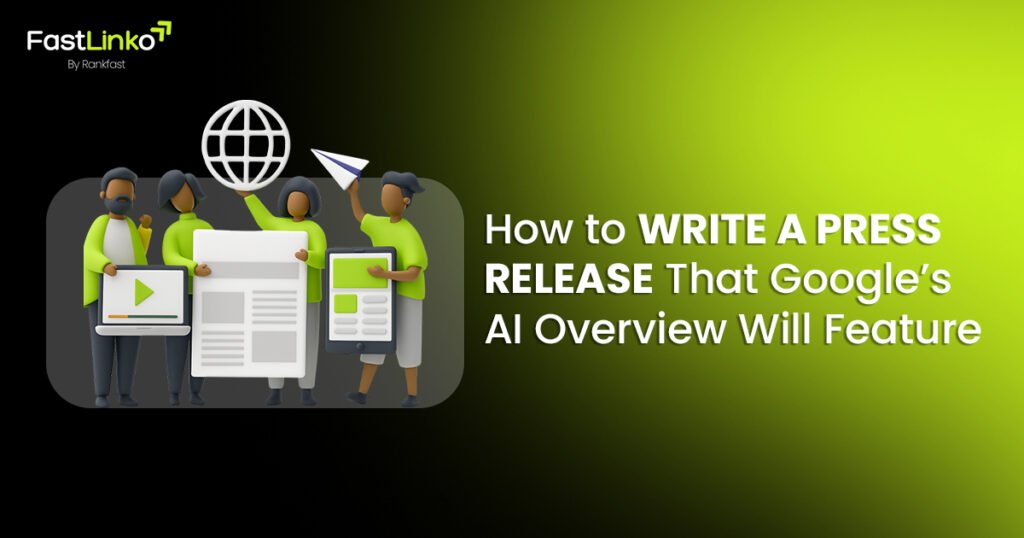


Google’s AI Overview is quietly rewriting the rules of press release writing.
What once relied on keywords and backlinks now depends on clarity, context, and credibility. These are the signals that AI uses to decide what’s genuinely helpful among a stream of content.
In this new landscape, even the most newsworthy announcement can vanish if it isn’t structured for AI.
Optimized press release services are adapting fast. Experts like Fastlinko balance data cues like E-E-A-T and entity recognition with the human art of building a story.
The truth is, AI doesn’t feature what’s written for algorithms. It highlights the press release submissions written for people and structured for machines.
The real challenge isn’t just press release SEO anymore. It’s crafting content that serves dual readers, the human scanning for value and the AI scanning for meaning.
To understand how press release marketing works, let’s break down what makes a press release visible and feature-worthy in Google’s AI era.
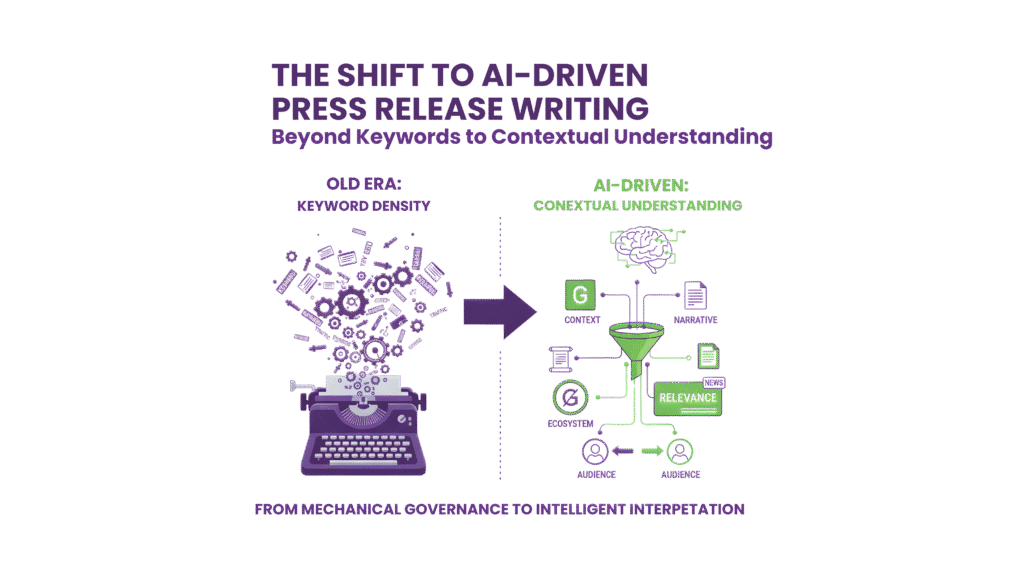
Press release writing is no longer about keyword density or distribution scale.
It’s about how effectively your message fits into Google’s evolving information ecosystem. With increased mechanical governance, the shift to AI-optimized press release services demands contextual understanding and interpretation.
1. Understanding Google’s AI Overview’s Intent
Google’s AI Overview now defines what visibility means in 2025.
It doesn’t reward the loudest brands but the most contextually aligned ones. The algorithm analyses intent, authority, and semantic depth. After parsing these metrics, it decides which sources appear in AI-curated summaries.
For brands, this means the old formula of press release + keyword has expired. AI Overview identifies and promotes content that connects meaningfully to recognised entities within a niche. Be it products, industries, or issues with existing topical weight.
A release that :
has a far greater chance of being surfaced.
2. From Keyword Stuffing to Context Mapping
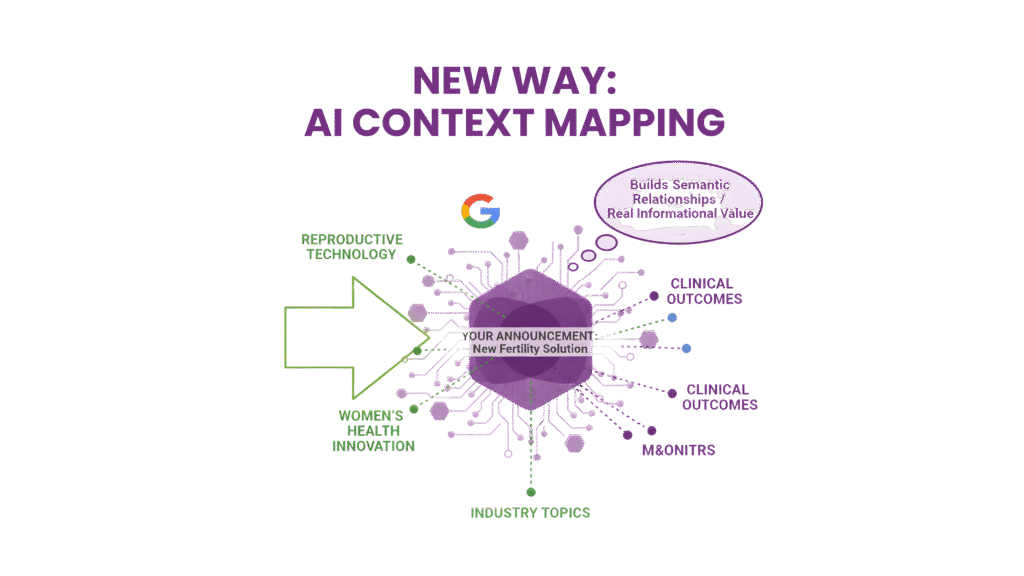
Keyword stuffing was once the foundation of press release SEO. Now, it signals irrelevance.
AI-led visibility today depends on context mapping. It is basically understanding how your announcement fits within a broader knowledge network.
Press release marketing services build semantic relationships between your brand, industry topics, and core intent. For example, a healthcare firm announcing a new fertility solution must be linked semantically to keywords like ‘‘reproductive technology, women’s health innovation, and clinical outcomes, rather than repeating a single keyword phrase.
This method tells Google your release contributes real informational value, not just search noise.
3. Story-Centric Structure for Machine Understanding
AI systems can interpret structured storytelling more accurately than bits of fragmented information.
Press releases designed around classic storytelling sections like headline, lead, body, quote, and CTA are easier for Google to parse and summarise.
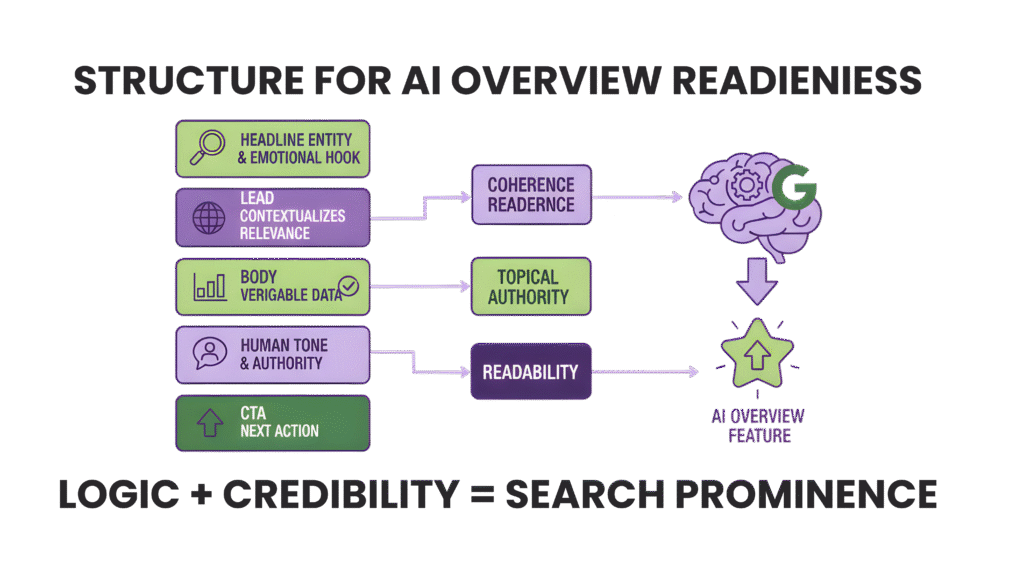
Each section should serve a purpose:
AI Overview assesses the coherence and readability of your press release submission. Then it determines topical authority.
A logically structured release signals credibility, improves snippet-level inclusion, and search prominence.
4. Why Traditional Press Release Submission Falls Short
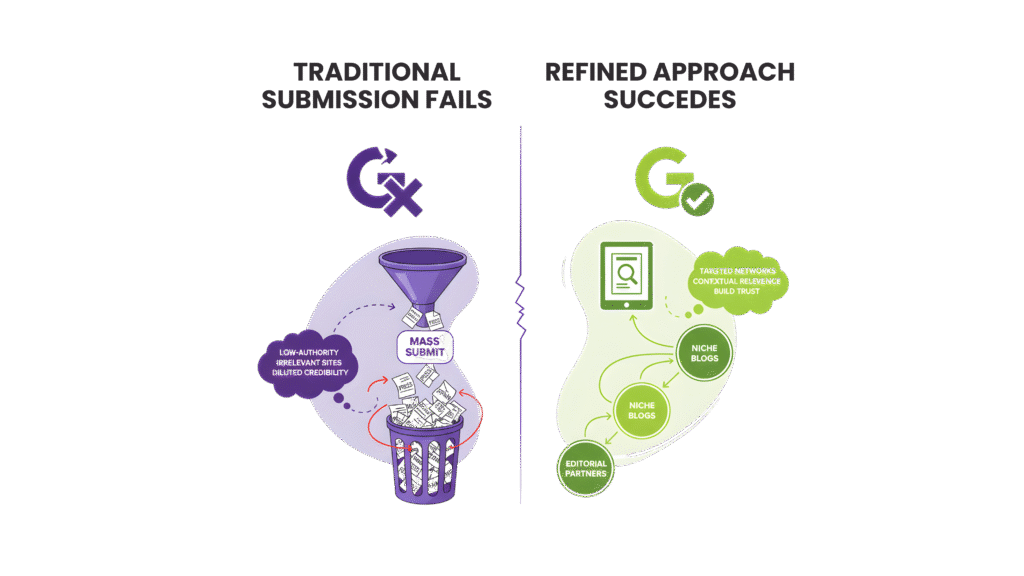
Mass submissions still happen and still fail.
Submitting identical releases to irrelevant or low-authority platforms dilutes your brand’s credibility online. Press release SEO has evolved, and so have its success metrics.
Google’s AI now traces distribution intent for every published press release. If your release appears across sites with weak engagement or mismatched topics, it registers as spammy rather than strategic.
A refined press release writing approach targets networks that match your brand’s authority ecosystem. This includes sources like trade publications, niche blogs, and editorial partners with contextual relevance.
Having selective visibility on digital platforms builds both human and machine trust. Thus, it amplifies reach without algorithmic penalties.
5. The Outcome
Businesses that adopt AI-enhanced PR writing don’t just climb rankings, they build future-proof communication frameworks.
Each release becomes a data signal of credibility, mapped into Google’s evolving knowledge graph.
In this AI-first landscape, quality, structure, and context define visibility.
The brands that understand this shift aren’t just writing press releases. They’re writing their way into the next generation of search discovery.
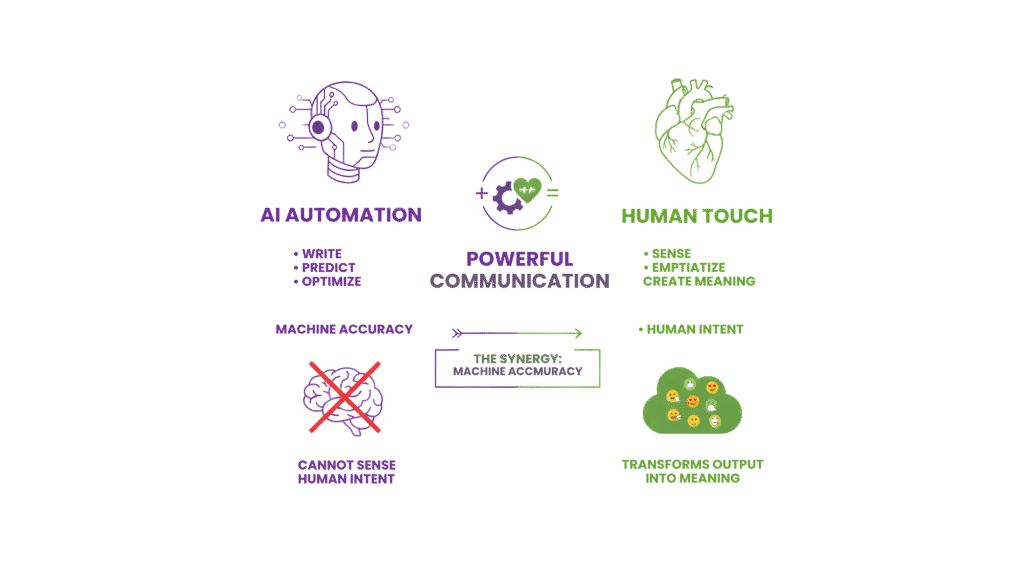
AI can write, predict, and optimise. But it can not sense.
That’s where the human element of press release writing continues to hold. The most effective press releases in 2025 don’t rely on AI automation. They merge machine accuracy with human intent. This approach transforms output into meaningful communication.
Let’s take a look at how human–AI collaboration works. Balancing automation with the human touch is about:
1. AI as a Precision Tool, Not a Creative Substitute
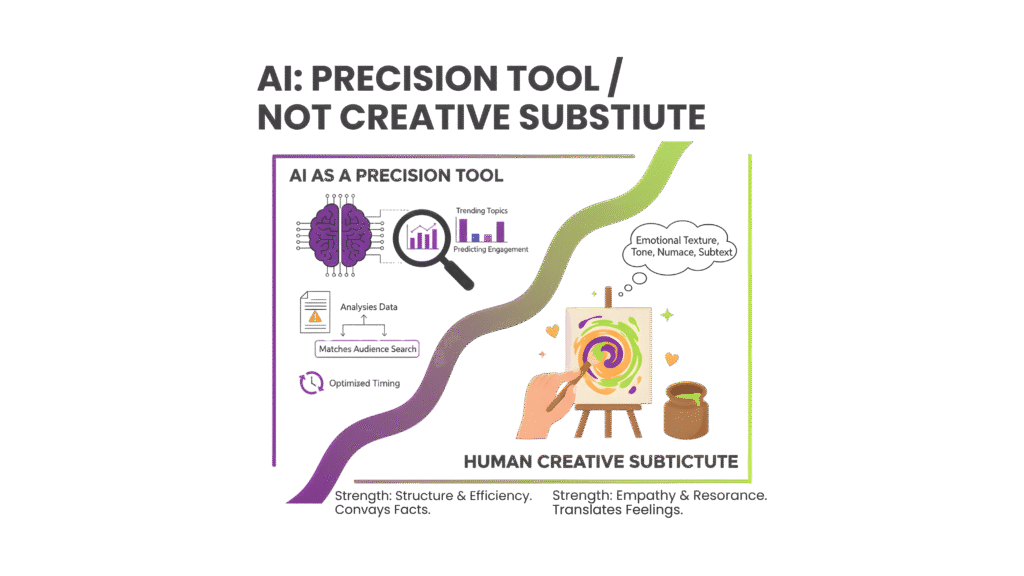
AI’s strength lies in its structure.
It is designed for identifying trending topics, predicting engagement, and optimising timing. It can analyse datasets faster than any team. AI can quickly examine if your content matches what audiences are actively searching for.
However, it lacks emotional texture. Press releases written exclusively by AI don’t sound normal; they sound formulaic. Such press release submissions convey facts, not feelings.
Human editors translate such AI insights into messaging that resonates.
They define tone, nuance, and subtext, the parts of communication that algorithms still misread.
2. Human Insight Shapes Narrative Direction
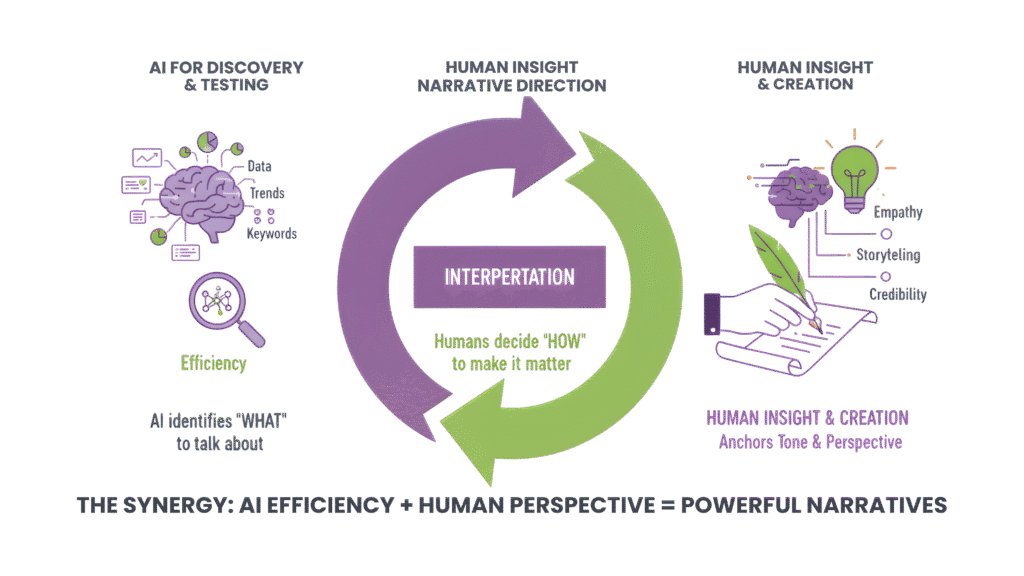
AI can tell you what to talk about. But only humans can decide how to make it matter.
Writing for B2B tech, finance, or healthcare companies demands understanding the difference between engagement and indifference. This simple answer lies in interpretation.
A strategist knows how to position a feature update as a shift in capability, or a data report as a movement in the market. This sense of storytelling involves understanding human context. It’s exactly where AI’s efficiency meets human perspective.
The most sophisticated PR teams now use AI for discovery and testing, while humans anchor narrative tone and credibility.
3. Data-Driven Creativity in Workflow
The human-AI collaboration works best when tasks are clearly divided:
For example, AI can analyse previous campaign performance to find what phrasing improved CTR. But it’s the human copywriter who turns data into a credible sentence that sounds like it’s from a CEO’s perspective.
This balance transforms creative processes. It shifts from guessing what might work to knowing what resonates. All this while it still preserves brand personality.
4. Avoiding the Over-Automation Trap
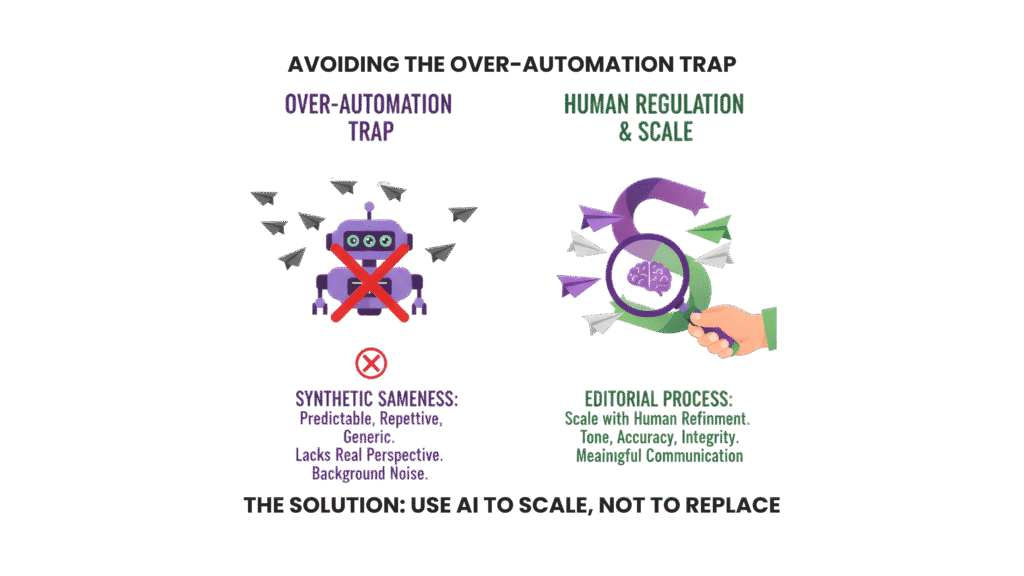
In the digital marketing industry, the growing temptation is to let AI take over tasks entirely. That’s where many brands falter.
Over-reliance on automation creates synthetic sameness. All AI-generated releases have an eerily similar meaning, predictable tone, repeated phrasing, and generic storytelling.
Audiences and journalists spot this instantly. A release that lacks real perspective reads like background noise, no matter how perfectly optimised it is.
The solution isn’t rejection but regulation. Use AI to scale, not to replace.
A strong editorial process ensures that every AI-assisted draft passes through human refinement. For tone, accuracy, and message integrity.
5. Outcome: Strategy Over Substitution
In 2025, the most competitive PR teams are not the ones using the most automation. It is about those who use it intelligently.
Human–AI collaboration transforms how brands communicate:
The goal isn’t to automate creativity but to amplify judgment.
When machines provide structure and humans add sense, every press release becomes faster
Above that, they become smarter, sharper, and far more human in impact.
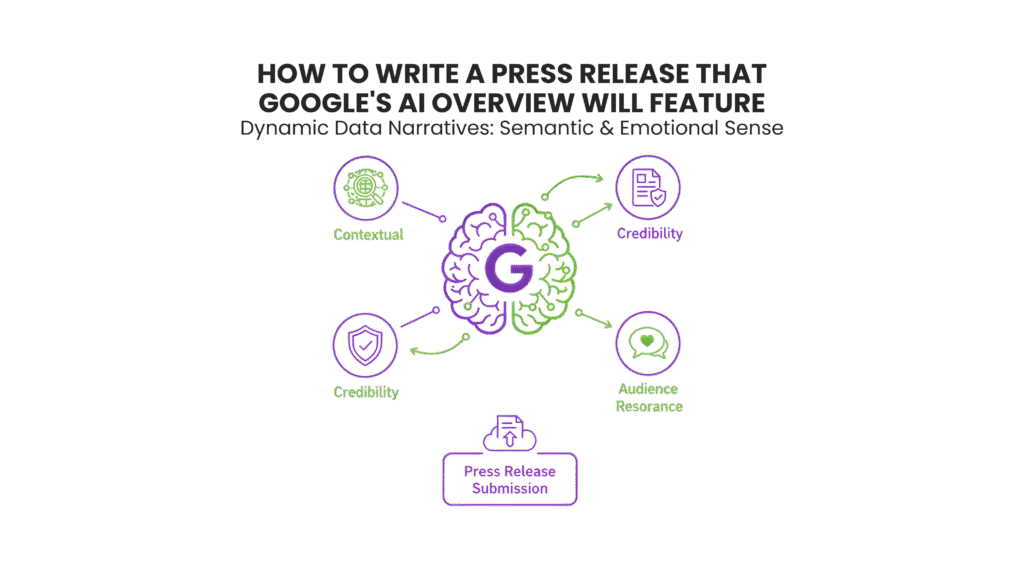
Press releases are now evaluated as dynamic data narratives, not static announcements.
Google’s AI Overview scans press release submissions for contextual depth, credibility, and audience resonance. All before deciding what to highlight.
This means that optimisation today is not about stuffing keywords or adding links. It’s about crafting press releases that make semantic and emotional sense simultaneously.
Below is a six-part framework to build that kind of AI-intelligent visibility.
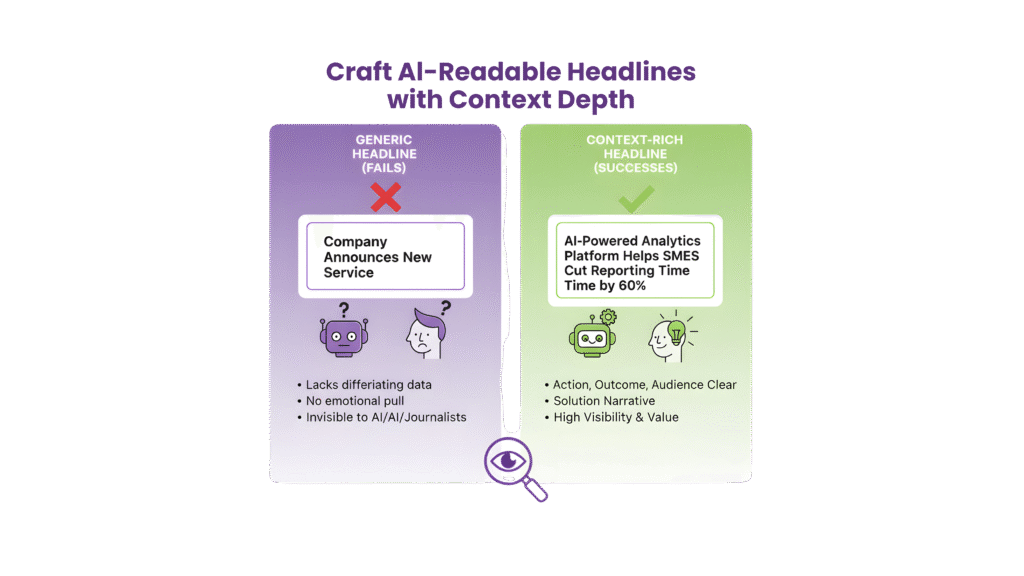
AI overviews extract meaning from phrasing, not syntax alone. A headline must show immediate topical relevance to rank on SERPs .
Generic openings like “Company Announces New Service” fail because they lack differentiating data and emotional pull. A stronger example would be: “AI-Powered Analytics Platform Helps SMEs Cut Reporting Time by 60%.”
Here, the action, outcome, and audience are all clear.
This context depth helps AI models recognise the press release as a solution narrative rather than a plain update. It also signals value to journalists who scan for stories worth syndicating.
Brands that consistently produce such clarity are the ones that shape narrative-driven PR visibility. This is achieved simply by combining keyword precision with human readability.
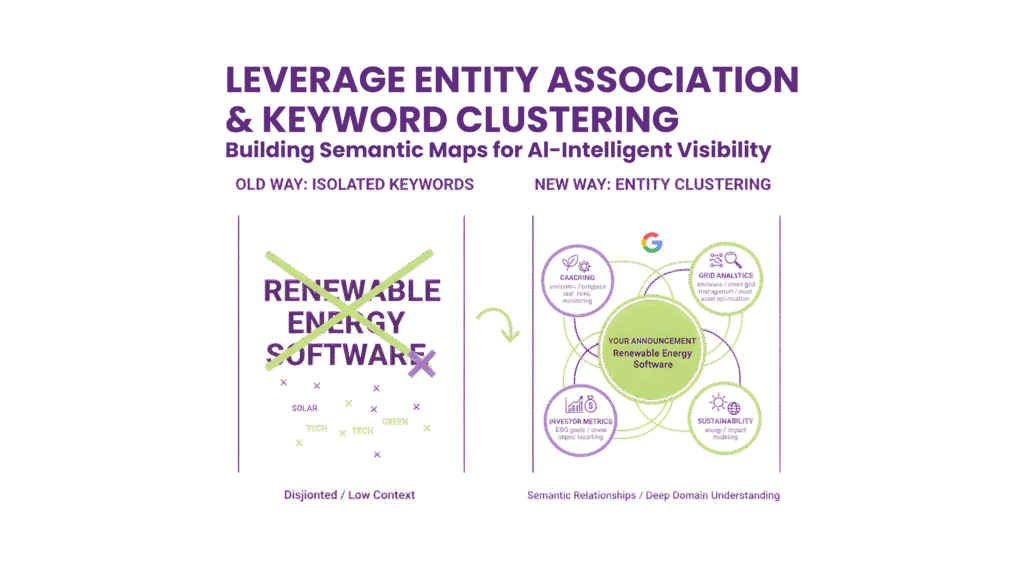
Google’s AI doesn’t just read, it interprets relationships between concepts.
That’s why isolated keyword placement no longer helps. Instead, b2b brands are using entity associations that define your niche’s context.
For instance, a release about renewable energy software should naturally mention carbon tracking, grid analytics, and sustainability metrics.
These related clusters strengthen semantic maps and show the AI that your brand understands its domain completely.
Strategically placed keywords, tied together by natural context, improve credibility with editors. It shows that your team isn’t chasing trends.
That’s reporting from inside the ecosystem.
This form of keyword clustering refines brand storytelling techniques. It blends meetings with audience engagement strategies. Thus, it sustains visibility across multiple discovery surfaces.
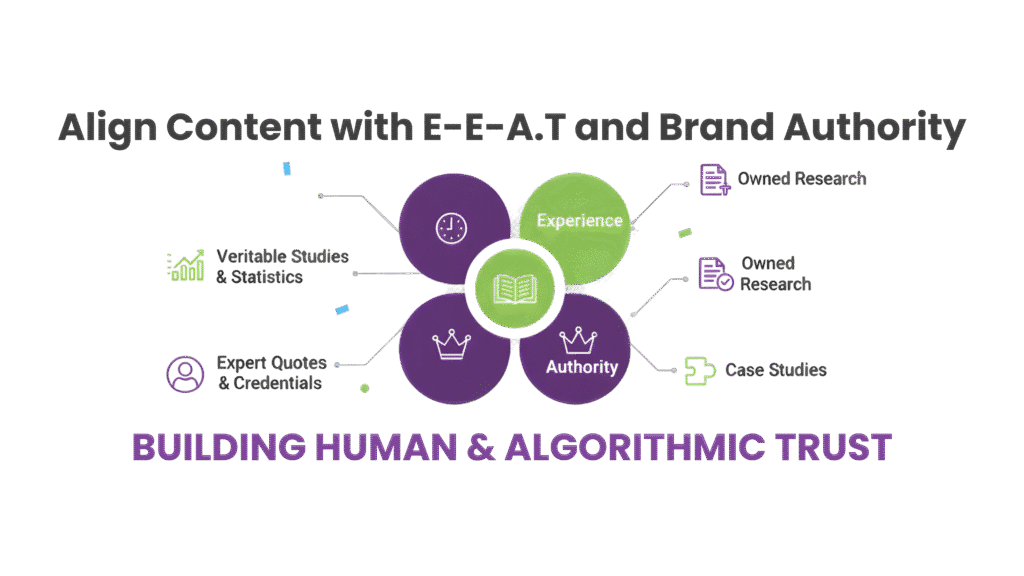
AI-led rankings rely highly on trust signals. Every press release is judged on the following criteria that the brand has:
Such signals make the press release submission readable and referenceable. Transforming them into something journalists can cite without hesitation.
Beyond algorithmic value, this practice builds human trust.
AI models are trained to predict meaning from structure.
The best-performing press releases follow a natural story rhythm. They deliver context → insight → impact → takeaway.
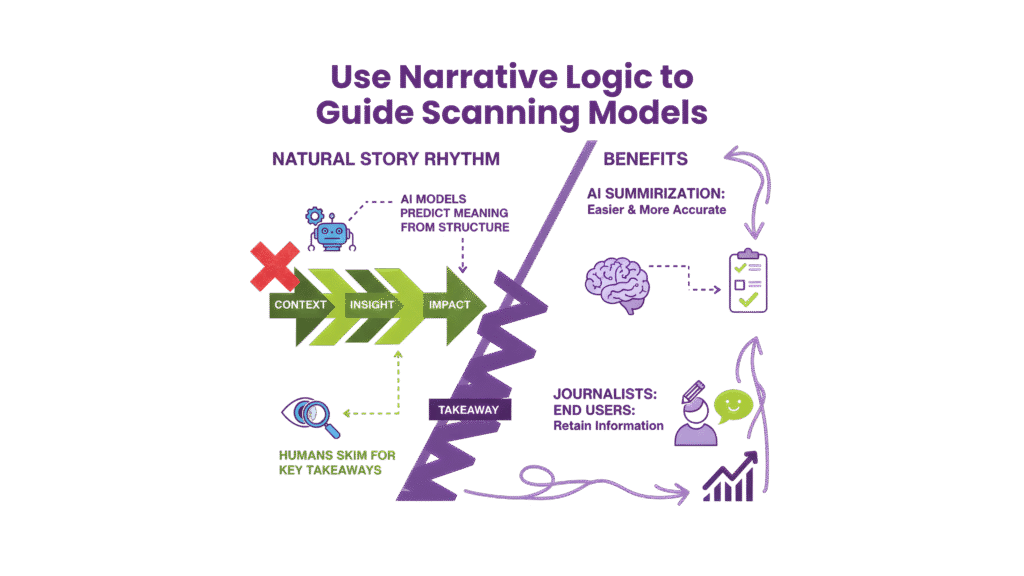
This structure makes AI summarisation easier and more accurate. It also benefits readers. Journalists and end users can easily skim for text key takeaways without losing the thread.
When brands use this consistent narrative logic across releases, their content becomes both machine-legible and emotionally cohesive.
This is an essential duality in 2025’s content ecosystem.
Press releases optimised for AI must balance substance with structure. Multimedia helps bridge that gap.
Embedded visuals, short videos, and infographics make the story tangible. They also supply machine-readable data that supports schema tagging.
This technical refinement amplifies the emotional layer. Visuals of product use or customer outcomes strengthen your connection with readers and support algorithmic comprehension.
Sustained momentum in this sector builds brand memory. Readers recognise consistency. Journalists associate your firm with credible insights. AI models identify recurring expertise.
Together, these layers establish long-term visibility in search and syndication.
Press releases that Google’s AI Overview chooses to feature aren’t lucky outliers. They’re carefully architected narratives.
They blend story, data, and authority in equal measure. The era of one-note announcements is over. Success now depends on balancing brand storytelling techniques with machine-readable intelligence.
Brands like Fastlinko understand the nuances of press release writing. When emotional resonance meets algorithmic clarity, your press release doesn’t just appear in AI summaries; it shapes them.
Overstuffing keywords, using generic headlines, and ignoring metadata weaken ranking potential. Poor link placement and lack of structure also limit visibility. Effective press release SEO depends on natural keyword integration, clean formatting, and authoritative backlinks that strengthen both discoverability and reader experience.
The best platforms combine editorial credibility, high domain authority, and strong indexing on Google News. Brands should prioritise submission sites that allow optimised formatting, multimedia support, and clear backlink policies — ensuring both visibility and compliance with Google’s guidelines for news distribution.
Storytelling improves dwell time and engagement metrics, two key SEO signals. A narrative-driven press release helps search engines identify relevance while human readers stay interested. Combining emotional appeal with factual clarity creates dual value. It facilitates ranking while building stronger audience trust and retention.
Submit during news-peak windows, format with embedded links, and attach relevant media. Use keyword-rich headlines, structured metadata, and consistent branding. Submissions should follow editorial guidelines and leverage distribution networks that integrate with Google News and AI Overview for broader algorithmic discoverability.
