How US Agencies Use Guest Posting to Build Authority for Clients
January 30, 2026




Local visibility today is built through discovery, not directories.
When your brand’s press release submission appears across local search, it raises awareness among active users nearby. Press release SEO is used to anchor trust within these PR placements.
Nowadays, even a single, well-structured local press release like this can influence Google’s map listings and local pack. It also interprets your brand’s authority within a region.
Even still, most B2B and regional service brands overlook this signal.
They still treat press release marketing as announcement tools. They don’t realise optimized press release services can convert PR into assets that build proximity, relevance, and reputation in search.
Experts at Fastlinko craft local press releases through optimized press release services. Our approach turns each press release submission into a local visibility layer. One that supports both ranking and real-world recognition.
This blog explains the concept of local press releases. Explore more about this digital asset and learn local press release tips to rank higher on Google Maps and SERPs.
Local press releases have quietly transformed.
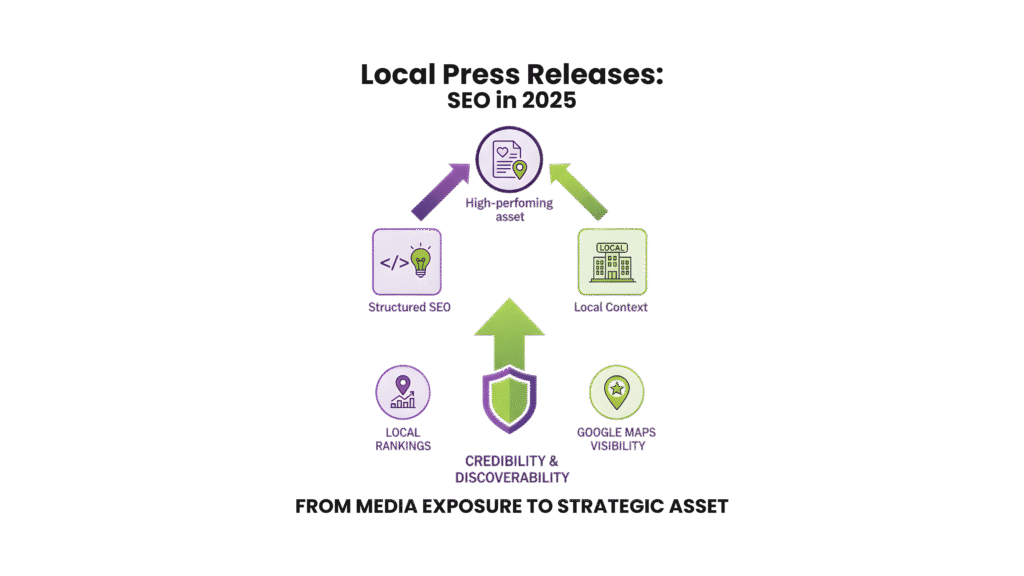
Press release submissions are among the most reliable SEO assets in 2025. Once, these formats existed purely for media exposure. But now, press release marketing plays a key role in improving local rankings, Google Maps visibility, and overall domain authority.
The modern press release SEO builds credibility and discoverability. It blends storytelling, structured SEO, and local context into a single, high-performing asset.
Press Releases as Local SEO Assets
Traditional press releases focused on announcements. Today, they’re written with intent. Their aim is to signal trust and authority within specific regions. Search engines interpret consistent signals like NAP (name, address, phone) data, structured markup, and local backlinks. These are considered as validation that a business is both credible and relevant in its geography.
By embedding geotags, schema data, and regional anchors, press releases utilise Google’s local algorithm. It connects their brand to verified areas with active viewers. This creates stronger associations for “near me” and location-specific searches.
These factors are a vital ranking metric for businesses that are targeting regional audiences.
How They Influence Google Maps and SERPs
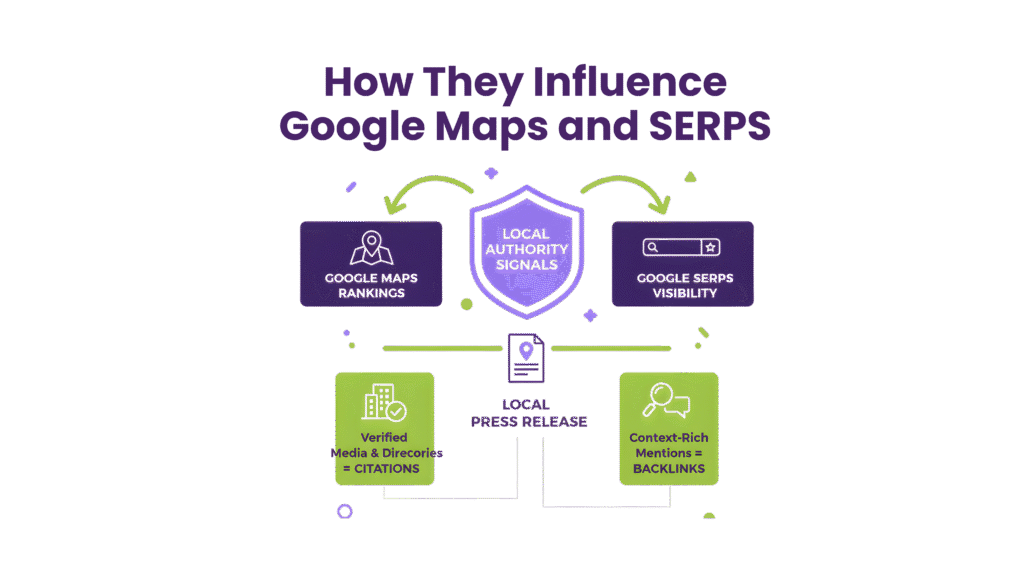
Google Maps rankings depend heavily on local authority signals.
These can include mentions, citations, and backlinks tied to a physical or service area. A well-structured press release contributes to this digital ecosystem. Such press release submissions are distributed through verified media outlets and local directories.
Local press releases generate context-rich citations. They push forth your business’s presence in any region. These PRs also influence the search engine results pages. When your content gets indexed, it offers other high-authority mentions with anchors and relevant context.
This ecosystem feeds into semantic link-building. Ultimately, press release marketing supports both organic visibility and brand authority.
Why B2B and Regional Brands Benefit Most
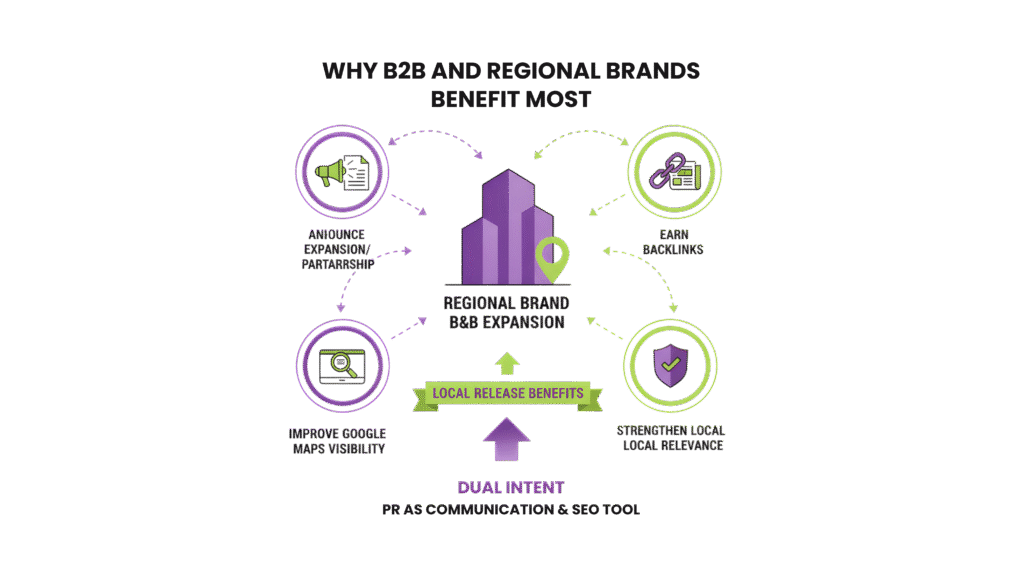
For B2B agencies, franchises, or regional service providers, local press releases are more than just news updates.
They are strategic credibility tools. A tech solutions provider expanding his business into a new city, for reference, can use a locally optimised release to:
The key advantage of local press releases lies in dual intent. Optimized press release services make a single release work as PR communication and as an SEO tool simultaneously. Thus, it builds topical and geographical authority systematically.
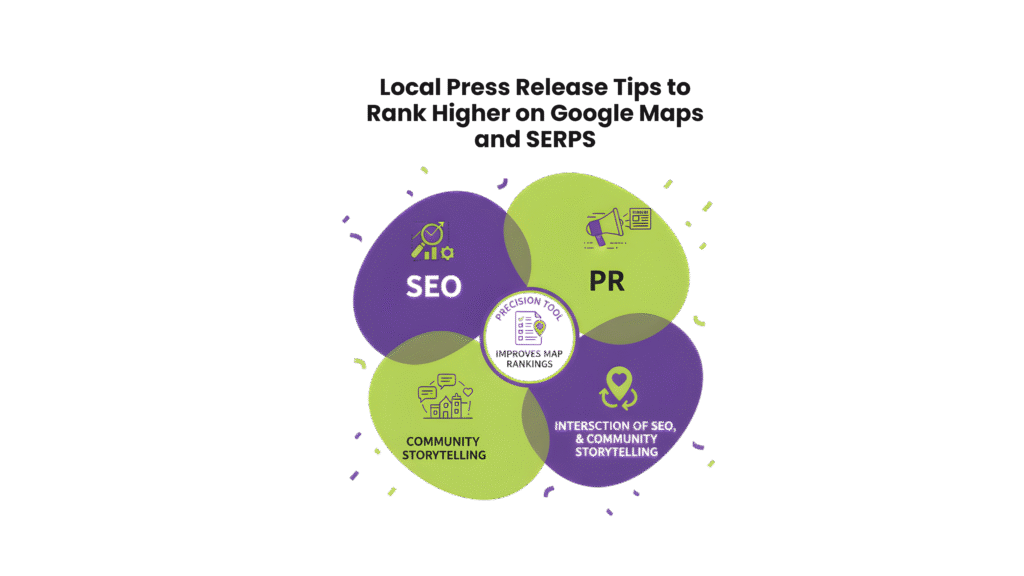
An effective press release SEO strategy doesn’t stop at keywords.
It depends on location-based anchors, structured data, and linking. B2B brands should add landmarks, local clients, and community involvement to their digital profile. An active account with consistent information adds credibility and algorithmic depth for a brand’s image.
Distribution of press release submissions is an important part of this strategy.
Optimized press release services submit your message through verified local PR networks, chambers of commerce, or niche news sites. This way, your backlinks and citations carry authentic regional weight.
The difference between ranking and getting buried often depends on the smallest things. The main question is whether your distribution map aligns with your service footprint.
But even the best optimization has limits.
In 2025, your execution and submission strategy are tested. Brands should focus on syncing their PRs with user intent, regional visibility windows, and evolving search behaviour. At that point, strategy moves from technical to tactical.
Start with Where You Publish, Not Just What You Publish
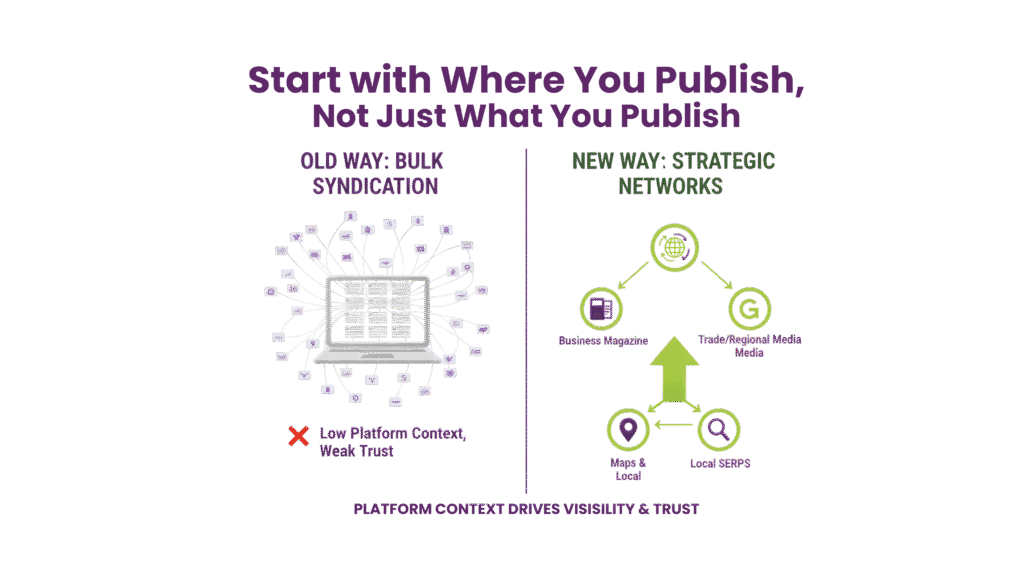
Most local press campaigns still follow the same template.
They submit their press release submissions to a list of distribution platforms and wait for the results. But that’s not how top press releases work. The difference between a visible and an invisible release is based on platform context.
B2B brands should choose networks that are locally indexed, editorially credible, and relevant to your industry.
Business magazines, trade portals, or regional media hubs indexed in Google News have stronger trust signals than multiple bulk syndication sites. Each mention on these high-intent platforms is a plus point for your brand.
It improves your geographic and industry associations. This, in turn, helps Google rank your brand higher in Maps and local SERPs.
Build a Structure That Speaks the Search Engine’s Language
Technical consistency is the foundation of every strong press release.
Optimized press release services keep your Name, Address, and Phone (NAP) identical across all your online mentions. They also add local schema markup to help crawlers find business details faster. Where possible, they also embed Google Maps links to improve location-based search results.
Search algorithms have changed their metrics, too. They think that clarity and coherence of your content reflect its reliability.
Writing press releases that sound like local stories isn’t easy. It’s also not easy to pack announcements with keywords. But there’s a cheat code! The easier it is for a human to understand, the easier it is for AI to rank.
At a B2B level, localisation isn’t about adding a pin on a map.
It’s about showing real and tangible engagement with users at grassroots level.
A release that ties your brand to local outcomes carries stronger weight. Be it with both journalists or search algorithms alike.
Track What Actually Moves the Needle
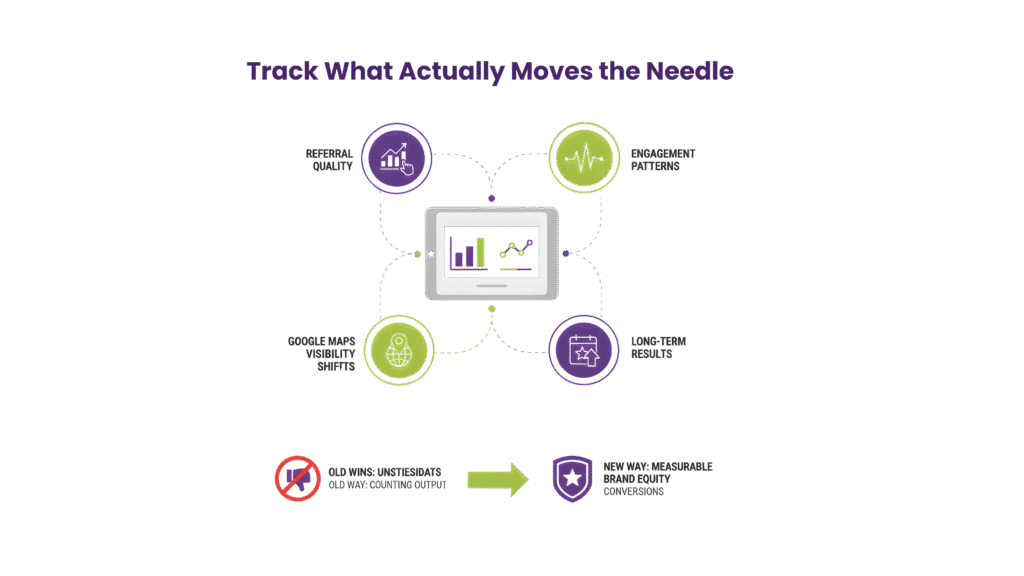
After publication, most brands stop at counting backlinks or impressions.
But high-performing teams go further. They monitor referral quality, dwell time, and engagement patterns to see which sites actually facilitate meaningful discovery.
Tracking Google Maps’ visibility shifts after each release reveals insights about your local presence. It presents your performance in local search results over time. Over multiple campaigns, this data builds a roadmap of which publishers and timing windows.
This insight helps to produce the best long-term results.
Local press releases are now built on verification. Each submission should validate your relevance. Now, they are not just announcing your presence.
If you treat every release as a local credibility asset, your brand’s online ranking can go far. Beyond distribution, it can turn communication into measurable brand equity.
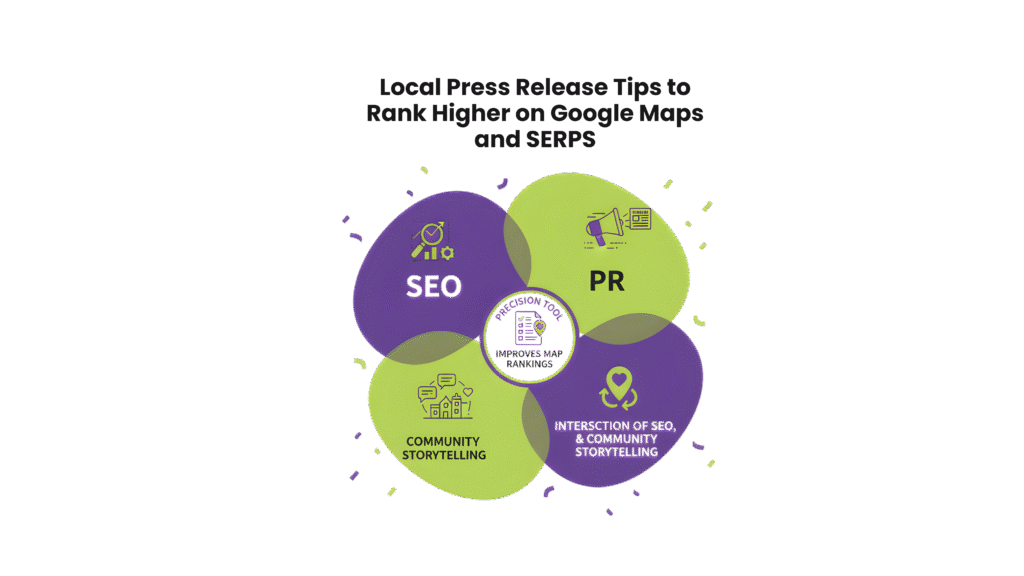
Local press releases are today’s most underused yet powerful assets for regional ranking and visibility.
For brands working across multiple cities or service areas, these press release submissions function as precision tools. Their main job is boosting credibility and improving map rankings.
In the evolved digital markets, the process of press release SEO has boomed. s
Unlike generic announcements, local press releases sit at the intersection of SEO, PR, and community storytelling. Let’s explore Local Press Release Tips to Rank Higher on Google Maps and SERPs used for press release marketing:
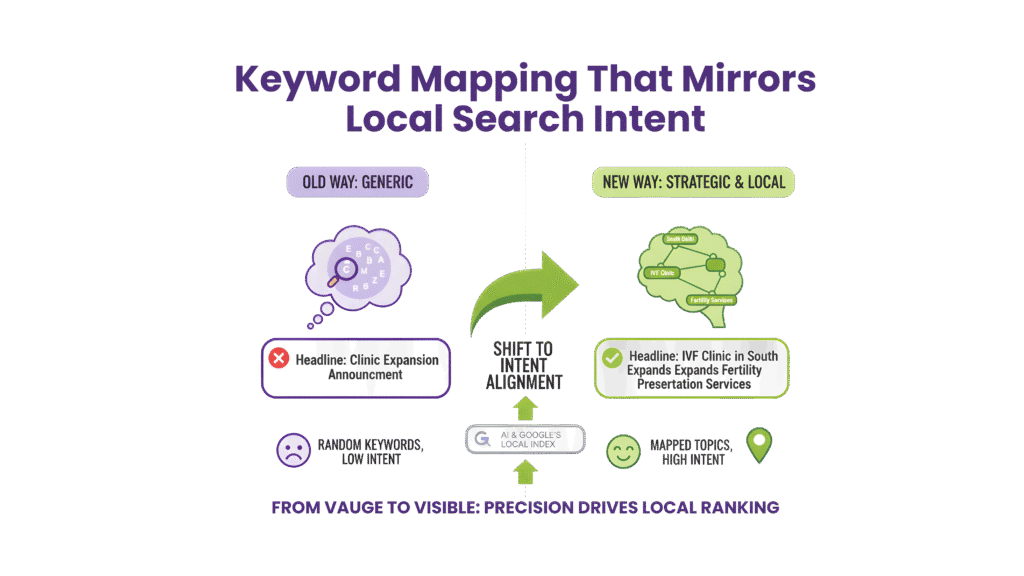
Every strong local press release begins with intent alignment.
Rather than sprinkling random city names into headlines, optimised press release services publish content strategically. First, they map your topics. Then they anchor text to the real local search behaviour in ideal spots. For eg. think about “IVF Clinic in South Delhi Expands Fertility Preservation Services” instead of “Clinic Expansion Announcement.”
This minor change of specification helps AI and Google’s local index understand who you’re planning to serve and where you operate.
When repeated over multiple releases, it builds great results centered around high-intent local service terms.
Metadata is the invisible bridge between PR visibility and map rankings.
By adding measures like geo-coordinates, location schema, and city identifiers in every release, your press release submission ranks higher. These factors allow crawlers to index your content faster. It breaks down your content as a local entity rather than a generic publication.
Press release marketing experts use schema types like LocalBusiness, Place, or Organization. These help Google link the particular announcement with your verified address or service area.
This metadata consistency across multiple outlets creates a stronger map pack recognition and NAP (Name, Address, Phone) integrity.
In short, metadata discipline equals discoverability.
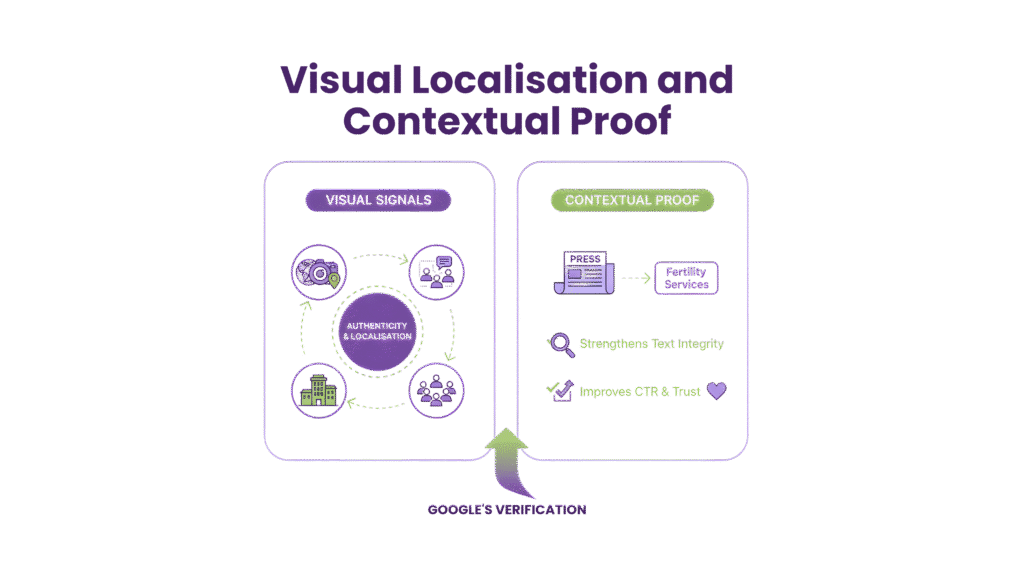
Google relies heavily on visual signals to verify your b2b brand’s authenticity.
Embedding images tagged with EXIF geodata, event photography, or even team visuals from on-ground activities validates your brand’s local presence.
A mix of authenticity and localisation improves click-through rates and trust signals. Having some visual proof also strengthens your written text’s integrity.
Backlinks in local PR are not about volume. They’re about context.
Each press release crafted for your brand should link back to digital platforms like Google Business Profiles, regional service pages, and directory listings. These are the formats that share the same geographic relevance within an area.
These interconnections form a loop:
Agencies using press release marketing and white-label link building together see exponential improvements in organic visibility.
With this approach, every citation builds a web of local trust.
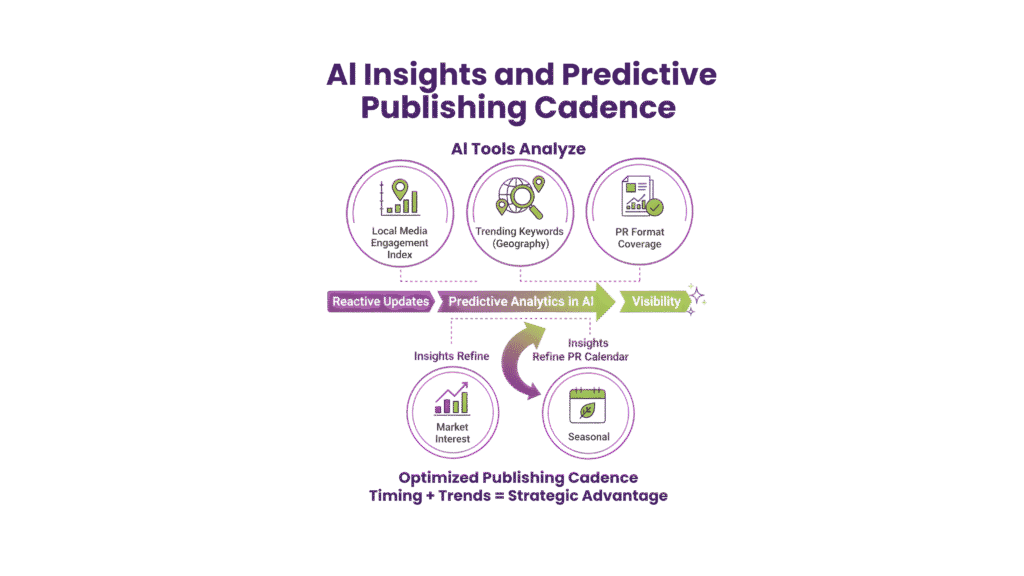
Timing and trend alignment are critical factors when it comes to press release SEO.
B2B brands should focus on separating average PR strategies from data-led campaigns.
When it comes to trends, AI tools are experts at analyzing local media engagement peaks, which keywords are trending in your geography, and what format of PR earns higher coverage.
Predictive analytics in AI transforms your local press releases from reactive updates into visibility drivers.
Over time, these insights help to refine your press release calendar. They ensure every publication syncs somehow with local market interest or seasonal demand.
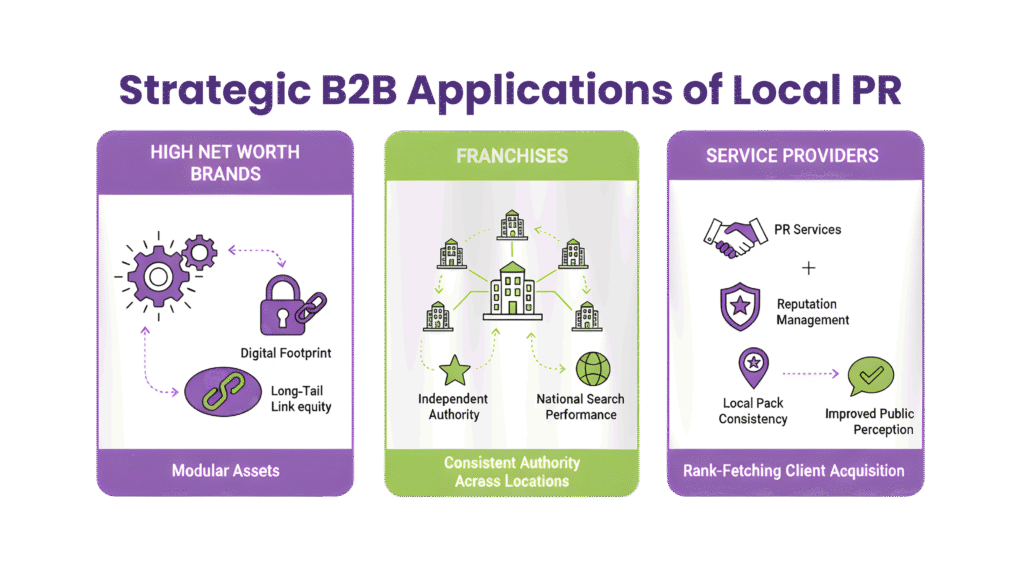
For high-net-worth brands, local press releases develop modular assets among visibility campaigns. They strengthen your client’s digital footprint while creating long-tail link equity.
For franchises, they maintain consistency across locations. This model guarantees that every branch maintains independent authority. All this while, they are feeding the master brand’s national search performance.
For service providers, coupling press release services with reputation management creates dual benefits. It attracts higher local pack consistency and improves public perception.
This approach turns PR into a rank-fetching class acquisition tool, much more than just a publicity mechanism.
When executed precisely, local press releases establish a repeating cycle of growth:
Visibility → Authority → Engagement → Ranking → Visibility.
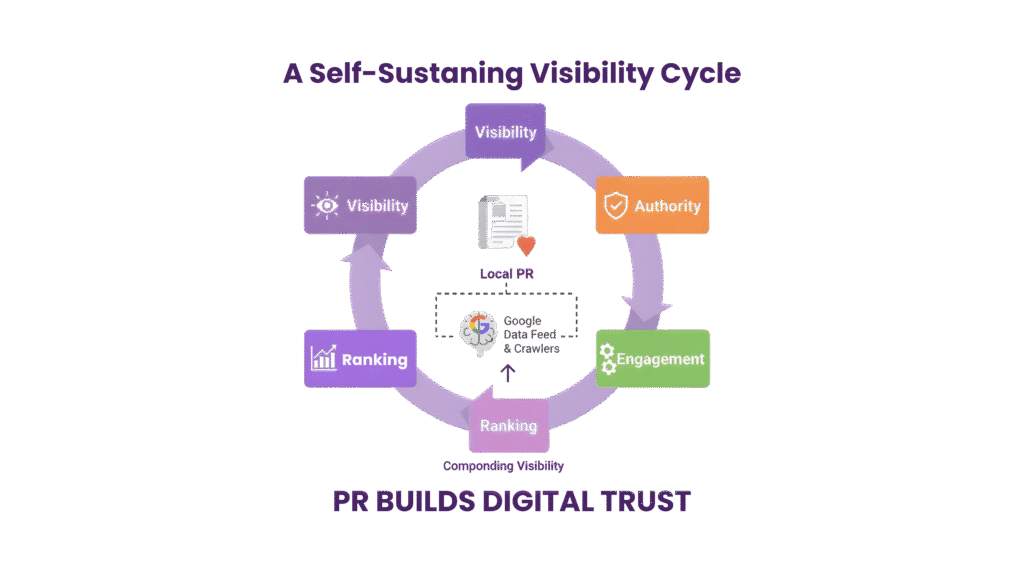
Each optimised announcement feeds data into Google. Crawlers then understand your brand’s local footprint. Over time, this creates a loop in the press release SEO circuit. Compounding visibility multiplies in cycles, not just your map positions, but for your entire organic ecosystem.
Local PR is no longer about media coverage alone.
It’s about building digital trust that translates into discoverability, engagement, and long-term brand recall.
The firms like Fastlinko that win local press releases and top ranking understand press release submission at its core.
They know how to turn every announcement into a verified local signal. Moving rankings, reach, and reputation together is the edge Fastlinko builds on.
Our approach goes beyond distribution. We trace your press release SEO, structured data, and market timing to position your brand just right. At the intersection where discovery converts fastest across Maps, SERPs, and trusted local media ecosystems.
Each release becomes a calibrated signal of relevance, credibility, and momentum.
Fastlinko isn’t built for volume. It’s built for compounding visibility. If your next growth phase demands authority where it matters most, start where local trust begins: with how your story is found.
An effective local press release includes your city or region in headlines, structured metadata, and body text. Adding NAP details (name, address, phone) ensures consistency across listings. This optimisation helps Google connect your content to real-world locations, boosting search rankings and local relevance.
Use keywords naturally in your title, introduction, and metadata. Include your business name, location, and target phrases like “local press release” or “press release SEO.” The goal is to keep it readable while reinforcing location-based relevance for both human audiences and search algorithms.
Google Maps rankings rely on consistent, verified business details across the web. A well-written local press release reinforces that data through NAP mentions and backlinks to your website or listing. This consistency signals authority to Google, helping your brand appear more prominently in map results.
AI-driven ranking systems prioritise clarity, locality, and credibility. Local press releases with structured data, precise location cues, and relevant keywords are easier for AI to contextualise. This alignment helps your content surface in both AI-generated summaries and standard search results for local intent queries.
