How US Agencies Use Guest Posting to Build Authority for Clients
January 30, 2026





Press releases marketing with static brand updates is a thing of the past.
Today, press release submissions work as living data points. They are used in moving stories across search platforms. What used to be newsroom collateral is now search currency.
The same press release SEO that lands in a journalist’s inbox can be used to train AI models to understand your brand’s authority.
In 2025, Google’s AI Overview doesn’t parse for headlines. It evaluates context, structure, and clarity signals along with perceived expertise. Yet most brands still treat press release writing as a routine task. They format, submit, and forget.
Optimized press release services like Fastlinko change that equation. They blend a journalistic tone with SEO structuring. Such content reads naturally and ranks technically. Each word is designed for dual comprehension. Press release marketing creates an intersection of human interest and algorithmic recognition.
This guide breaks down press releases and their role in a brand’s digital marketing strategy. More importantly, let’s uncover press release marketing tactics that AI and users love.
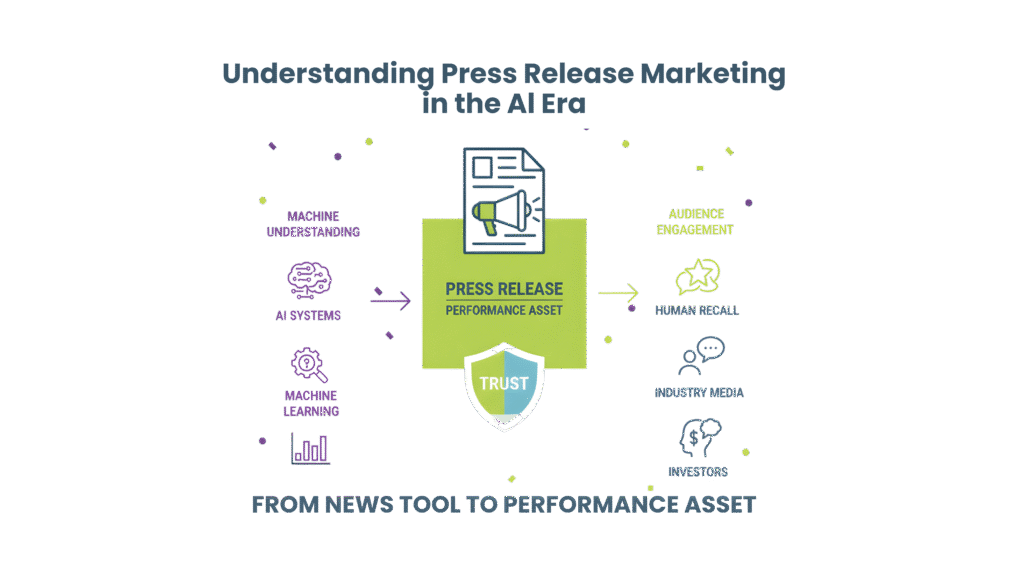
Press releases are no longer press tools. They are performance assets.
Nowadays, B2B brands can use them for more than distributing information. Press release marketing strengthens online visibility signals captured by AI systems, investors, and industry media alike.
What used to be a PR task now works as part of the SEO and brand governance stack.
AI models like Google’s Search Generative Experience (SGE) don’t treat press release submissions as news. They treat them as structured trust indicators. These models analyse your content’s depth, entity consistency, and reader engagement before assigning any visibility value to your brand.
For industry leaders, this shift in digital strategy poses one big question.
Is your communication infrastructure optimised for machine understanding and human recall at the same time?
The press release has become a digital proof of relevance.
Each press release submission can be transformed into a data node that either strengthens or dilutes your brand’s topical authority.
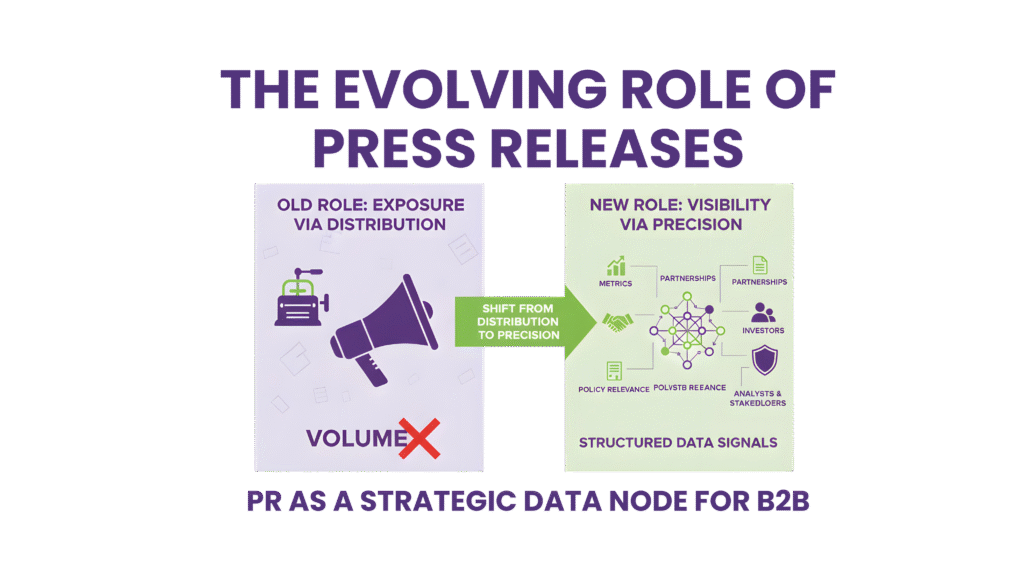
Traditionally, press releases won exposure through distribution. But modern ones achieve visibility via precision. B2B players use press release writing to align their brand positioning with industry conversations that are already gaining algorithmic traction.
Layering your PR with structured information like metrics, partnerships, and policy relevance is a strategically powerful move for B2B brands. It allows your press release SEO to feed into content ecosystems with long-term recall.
For investors, analysts, and procurement stakeholders, the publication channel itself is now a credibility layer. A well-indexed, contextually aligned press release reflects transparency and market readiness.
Such qualities in PR writing can potentially move capital and partnerships faster than advertising ever could.
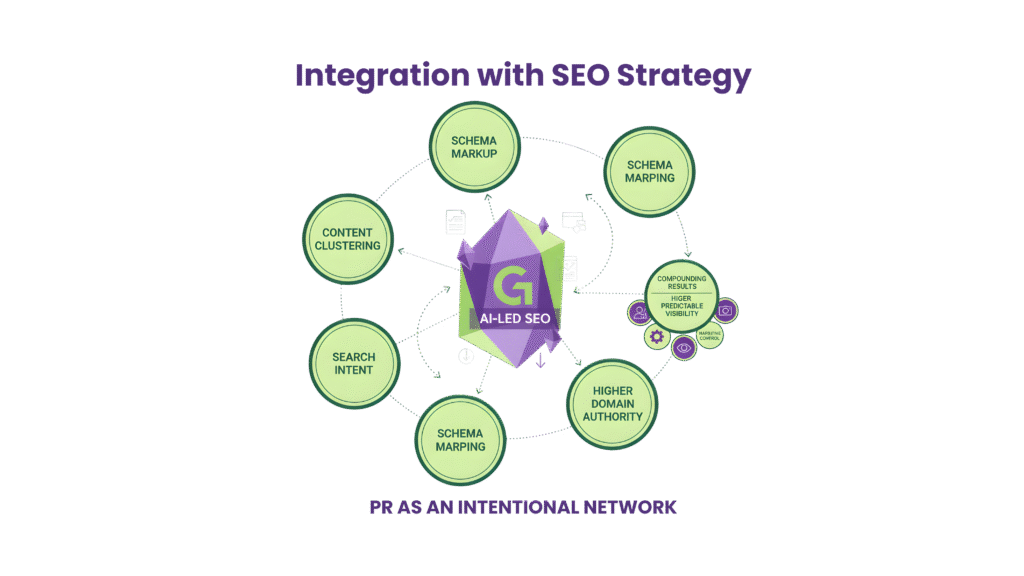
AI-led SEO has repositioned press release marketing.
It has transformed from an external activity into an internal one. Now it is a core element of modern digital strategies. Tools such as schema markup, entity mapping, and content clustering are readily integrated into PR planning.
High-value brands build their PRs around the ongoing search intent, not just news updates. They study how Google associates queries, people, and brands across locations. Then they structure press release submissions to reinforce those associations.
This integration produces compounding results. It creates higher domain authority, predictable visibility, and narrative control over brand representation.
Top-tier firms now maintain strict editorial governance frameworks for press release SEO. They maintain alignment of every announcement with pre-mapped search clusters and brand lexicons.
This way, a press release becomes part of an intentional network, not a one-off distribution.
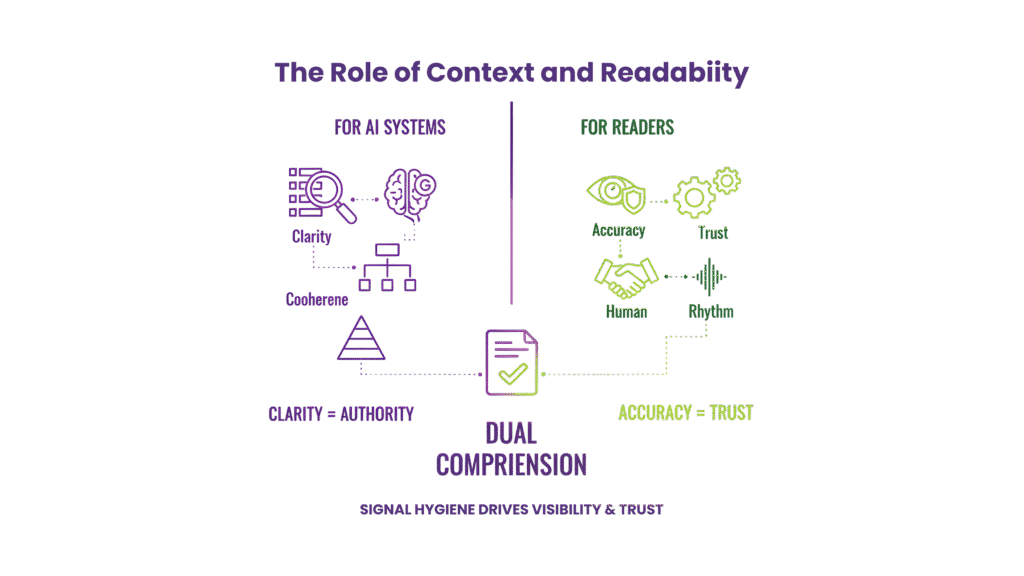
For AI systems, clarity equals authority. For readers, accuracy equals trust.
The strongest releases combine both of these approaches. They are stripped of redundant adjectives, layered with verifiable proof, and written in a human rhythm. When it comes to content quality, AI models detect coherence the same way readers do.
They reward flow, purpose, and hierarchy.
This is why AI-era readability is less about style and more about signal hygiene. Every misplaced phrase or placement confuses algorithms. It creates doubts about your topical boundaries. Every unclear claim breaks reader’s trust.
B2B brands that navigate this earn consistent surface-level visibility and deep trust simultaneously.
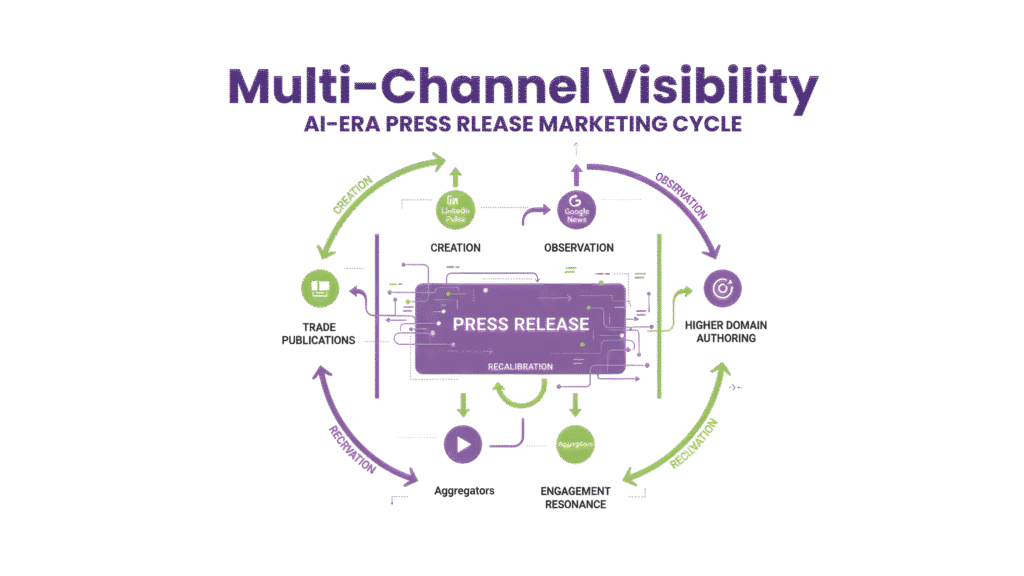
Visibility is now a supply chain.
Every single press release submission travels through owned, earned, and algorithmic search channels. Each of these carries a part of its impact.
Optimised press release services make the most of this flow across platforms. They use this opportunity to customize their press releases for aggregators, LinkedIn Pulse, Google News, and trade publications simultaneously.
Post-release, they track engagement resonance across cohorts. Then they keep refining tone and metadata with each new iteration.
This cycle is the core of AI-era press release marketing: an evolving loop of creation, observation, and recalibration. Not just a one-time output.
Modern press release marketing isn’t about reach. It’s about signal fidelity.
When it comes to brand reputation, every release now acts as a traceable, data-packed expression of credibility. Press release marketing engineers your PR to move through both markets and machines with equal precision.
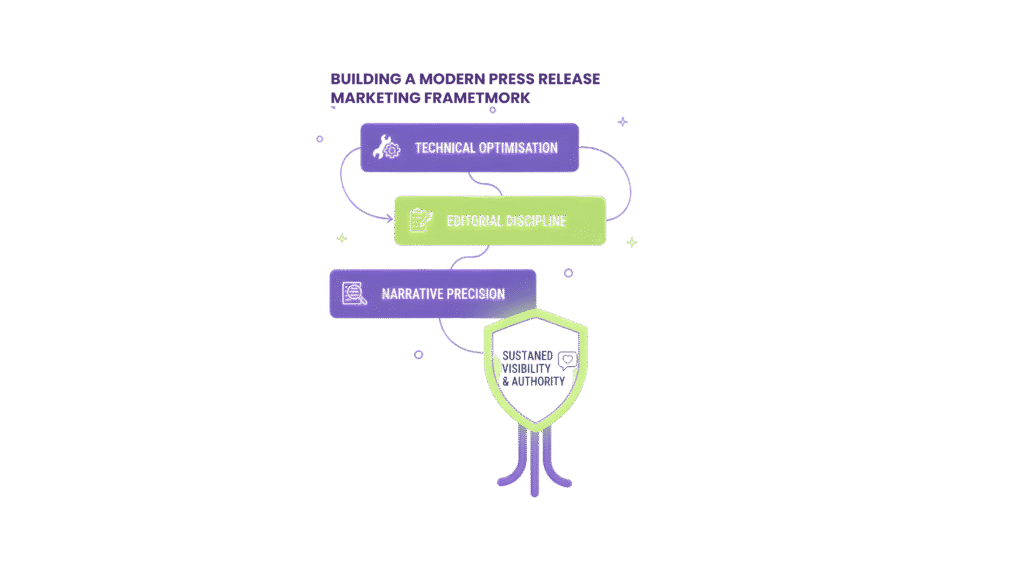
Press release writing is no longer about how far your news travels. It’s about where it lands. More importantly, how long your press release submission stays relevant.
With AI systems scanning context-rich snippets and user intent shaping search, distribution alone is obsolete. Today, a successful press release SEO framework integrates :
To earn sustained visibility and authority. In this section, let’s discover how optimised press release services are building a modern press release marketing framework, designed to succeed.
Every PR campaign must start with a clarity of purpose.
The most effective PR teams don’t write releases just to announce something. They map each release to a defined intent bucket. The 3 cores of this are:
This intent alignment determines your PR strategy, tone, keyword depth, and structure.
Press release SEO teams create content that directly matches users’ search queries. They turn every announcement into a discoverable and long-term link asset rather than a one-day headline.
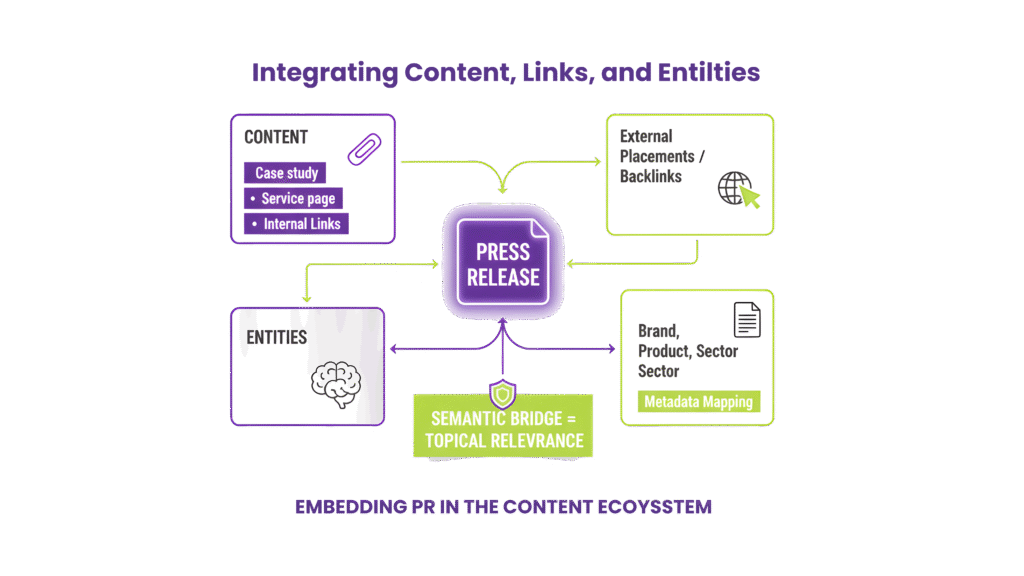
A modern press release is not an isolated brand entity. It performs best when embedded within your broader content ecosystem.
Each press release should link internally to blog articles, case studies, or service pages. Layering content with references and connections creates a semantic bridge for topical relevance.
External white-label link placements on high authority publications also push your presence and reflect editorial validation. Mapping entities like brand, product, and sector within the PR copy and metadata is an effective step. It helps search engines categorise your release contextually.
This technical grounding guarantees your announcement is absorbed as part of a brand story rather than a standalone update.
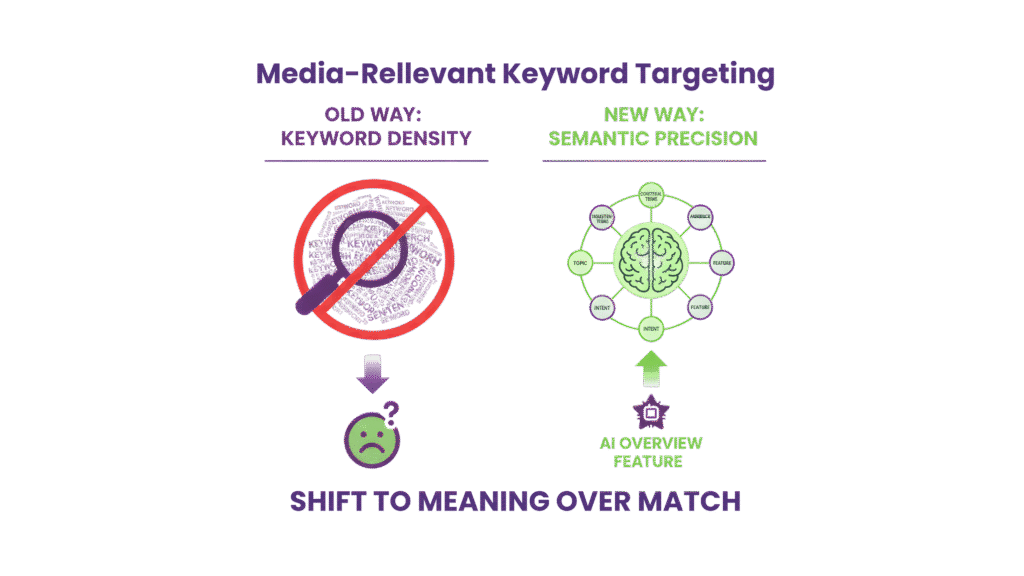
Traditional keyword tactics are outdated. Press release writing in the AI era focuses on semantic precision over repetition.
Instead of chasing exact matches, optimised press release services focus on crafting a narrative coherence using contextual terms around your topic, geography, and industry. This balanced approach signals authenticity to media editors while improving machine comprehension.
AI systems now prioritise meaning over match density. Well-structured language increases your chances of appearing in Google’s AI Overview and high-authority news carousels.
Audiences and algorithms can quickly detect self-promotion. That’s why the most effective press release submissions are written like editorial insights, not advertisements.
A press release today should prioritise clarity. It should aim to answer what’s changing, why it matters, and who extracts the benefits. Genuine quotes, human framing, and data-backed claims further establish your brand credibility.
This editorial value not only earns journalists trust but also teaches AI systems to categorise your content as original reporting.
This tag increases organic pickup and engagement longevity.
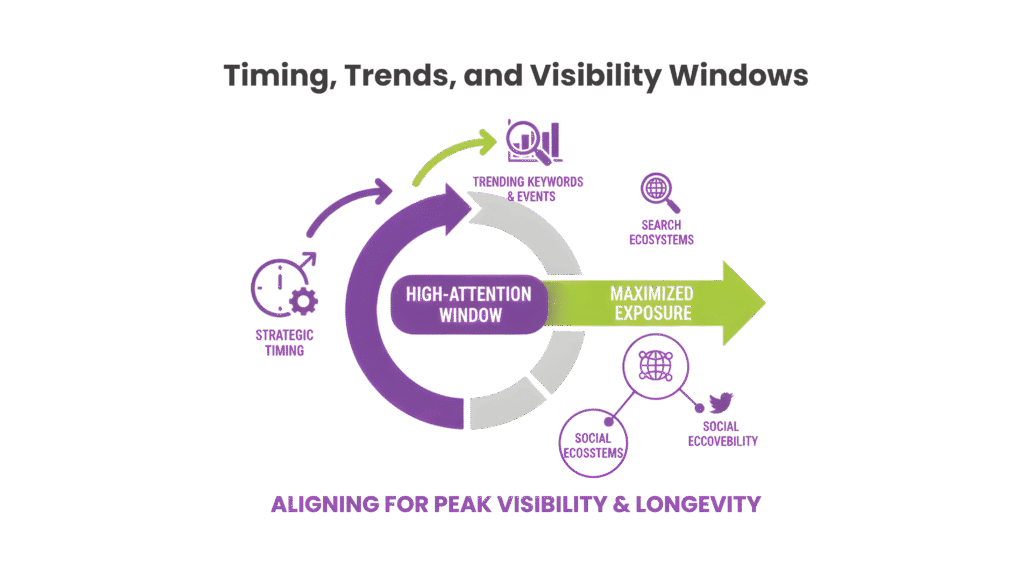
Today, visibility depends on the precision of your timing.
Smart PR teams schedule press release writing to align with trending keywords, event calendars, or industry sentiment shifts. They also coordinate search index refreshes or quarterly demand spikes to maximize exposure during high-attention windows.
Releases launched in these cycles often outperform traditional media drops. Thus, maintaining discoverability across search and social ecosystems for weeks instead of hours.
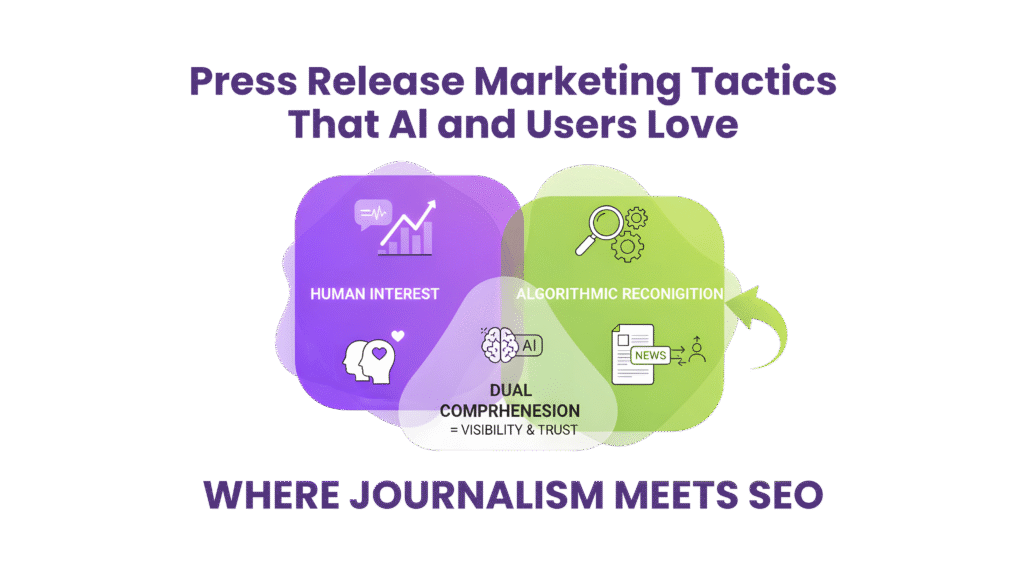
Press release marketing today is not about quick visibility. It’s about sustained discoverability.
In an AI-curated search environment, every press release must earn both media traction and algorithmic trust. The difference lies in how well your content communicates clarity, intent, and relational value.
Here are some of the most popular press release marketing tactics that AI and users love.
Search visibility now begins with structure.
Well-optimised metadata like titles, descriptions, schema, and question-based subheads give AI models context depth. They tell algorithms what your story actually means, not just what it says.
Embedding FAQs or structured takeaways also makes your press releases more likely to feature in AI Overviews.
In high-ranking sections, relevance depends on readability and semantic precision.
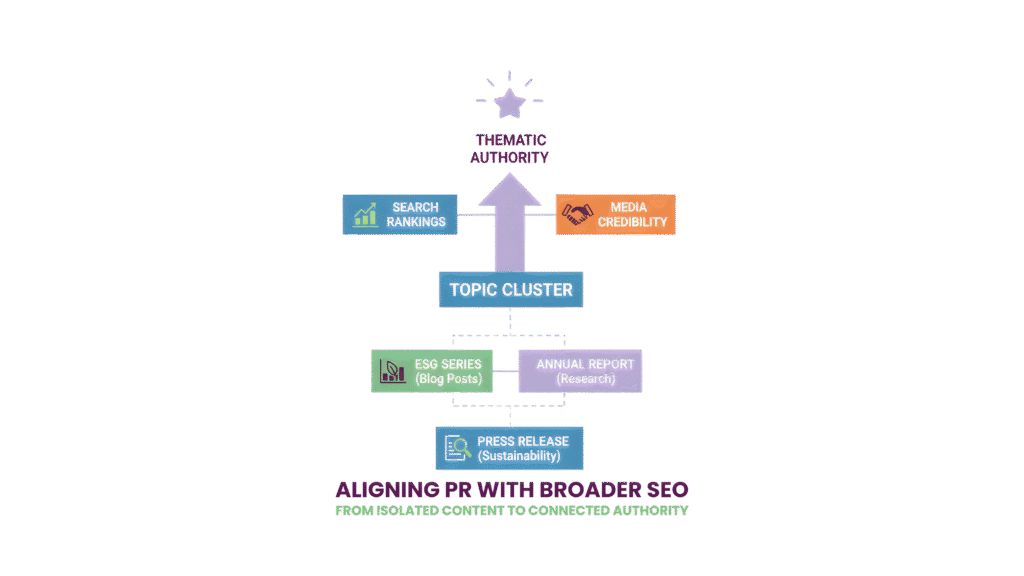
AI now scans through connections between ideas, not isolated keywords.
The best-performing press releases exist within topic clusters. These are groups of content tied by shared intent and linked entities. When a press release about sustainability ties into your ESG series or annual report, it signals thematic authority.
Over time, this positioning strengthens both search rankings and media credibility, aligning your PR with broader SEO content marketing efforts.
AI uses human response as proof of relevance.
Metrics like dwell time, scroll depth, and engagement rate are not just performance markers. They’re credibility cues. Releases that mix short quotes, compact bullet insights, or visual cues such as infographics are engaging. They tend to keep readers on-page longer.
This sustained attention reinforces and builds trust signals, rewarding algorithms.
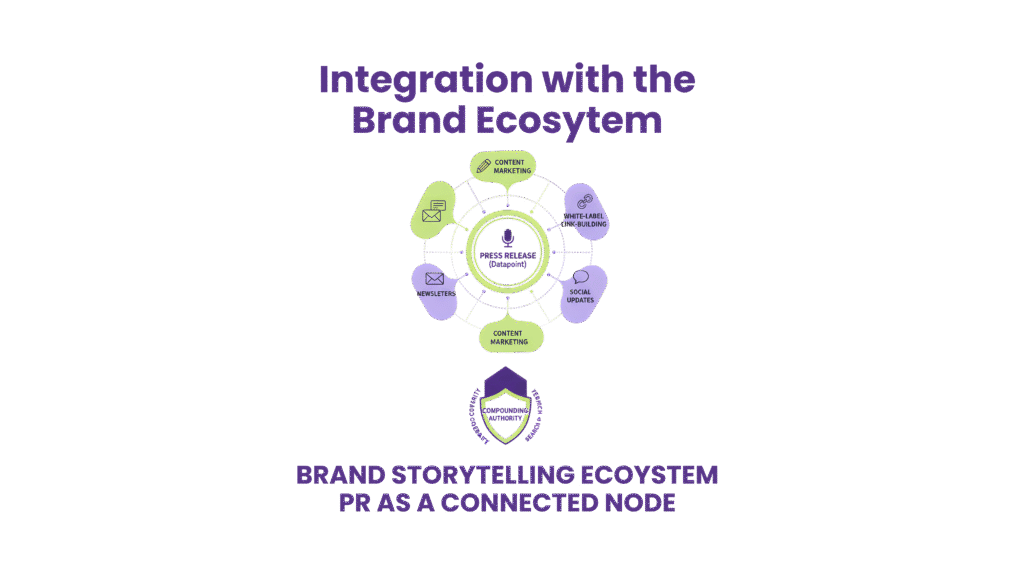
The modern press release does not live in isolation.
It’s a node within your brand storytelling ecosystem. As a datapoint, press release submissions are connected to social updates, newsletters, or even white-label link-building initiatives.
When PR works with content marketing, each mention, backlink, and reference strengthens the next. That interlinking builds a compounding authority. Thus, media coverage and search equity feed into one another.
AI models now evaluate information delivery as closely as the message being relayed.
Having consistency in your content’s tone and structure makes your PR seem professional. Further, source transparency signals that your press release is credible and verifiable.
Applying the E-E-A-T principles of Expertise, Experience, Authority, and Trust is also indispensable now to appear on major search engines like Google.
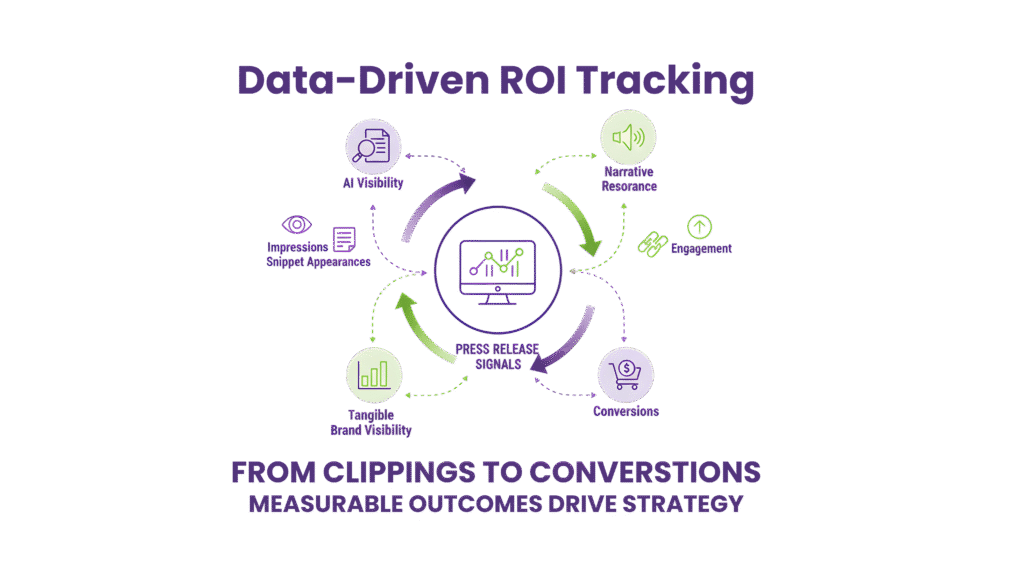
Modern press release SEO is defined by measurable outcomes, not assumptions.
High-performing PR programs now integrate analytics dashboards into press release writing. These are used to track impressions, backlinks, and snippet appearances across search platforms. These insights identify which content formats earn AI visibility. They also check where narrative resonance performs the strongest.
Press release marketing is no longer about counting media clippings. It’s about understanding how every press release signal converts into tangible brand visibility.
Brands that can express emotions with structure and clarity hold a lasting edge in the AI era.
When every line balances human rhythm with technical precision, storytelling becomes searchable and memorable simultaneously. This fluency earns engagement from audiences and recognition from AI.
This dual advantage defines modern brand communication.
In 2025, the best press release services operate less like distributors and more like interpreters of business momentum.
They translate brand updates into signals that investors, algorithms, and audiences recognise. Then PR works as credible proof of progress. What separates top PR partners from others isn’t volume or wire access. It’s their grasp of timing, tone, and the story’s market consequence.
For growth-focused brands, every release is now an opportunity to redefine brand relevance, not just gain visibility. Optimised press release services like Fastlinko align communication with business intent. They ensure each announcement contributes to your reputation architecture.
In the end, a press release written well isn’t just seen. It’s remembered, referenced, and built upon. That is what sustainable visibility looks like in today’s attention-driven market.
AI systems prioritise clarity, relevance, and authority. AI-optimised press releases are written with semantic keywords, consistent tone, and factual structure that algorithms trust. This alignment improves contextual ranking, helping your release appear in summaries, featured snippets, and AI-generated overviews for stronger digital reach.
Press release writing focuses on clarity and structure, while marketing ensures strategic timing, distribution, and keyword integration. Done together, they turn company updates into traffic-generating content. Each release supports brand awareness, search performance, and media coverage. Thus, PR is successful in combining communication and marketing for measurable impact.
To rank higher, the release must have keyword-focused titles, structured metadata, and relevant backlinks. Using press release SEO principles, such as semantic phrasing and internal linking, helps Google recognise authority. Submitting through trusted networks further increases the chance of inclusion in news and AI-driven results.
Strong headlines, a concise opening paragraph, quotes, supporting data, and an SEO-friendly boilerplate define success. Each part should guide both readers and algorithms clearly.
