
How US Agencies Use Guest Posting to Build Authority for Clients
January 30, 2026









Press release submission is the formal distribution of your company’s notices and announcements. In the US, the timing of these submissions directly affects visibility, pickup, and audience engagement.
In the past, the media was dominated by print deadlines. However, press releases have transformed today. In the US, press release submission covers all announcements from product launches, funding updates, or partnerships, to media outlets, journalists, and digital platforms.
Modern press release submission experts like Fastlinko blend it with the latest real-time digital news cycles, email digests, and platform algorithms. Editors and journalists operate in predictable work patterns, and readers engage differently across weekdays, hours, and time zones.
The impact of an optimal press release schedule rings clearly when examining US press release submission windows, newsroom routines, audience engagement rhythms, and indexing patterns.
Understanding press release distribution timings is a must to increase press release submission reach. In this blog, let’s deep dive into what are the best times of day & days of week for press release submission in the US for maximum visibility.
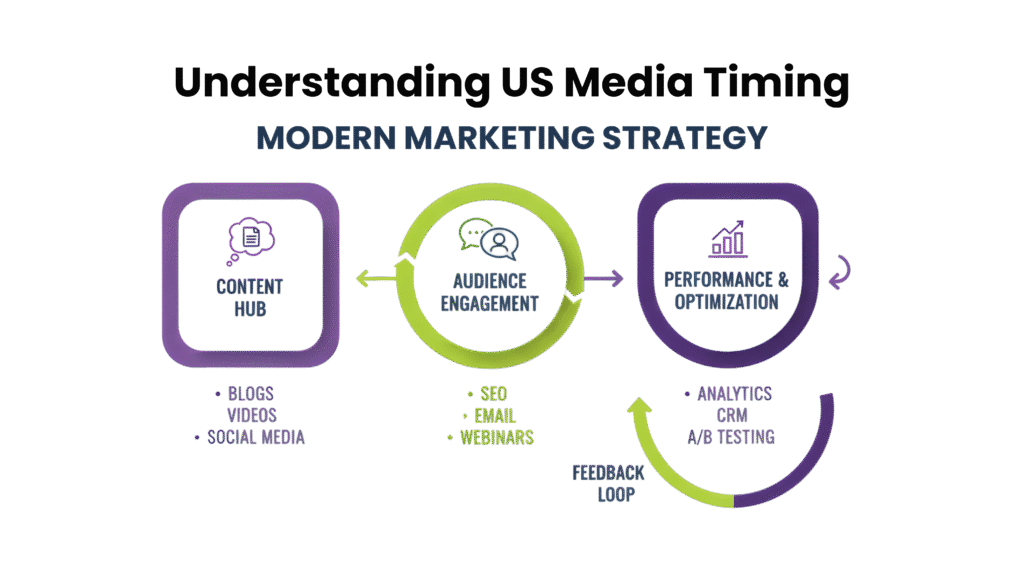
In the US, press release submission is more than just what you publish.
The secret trick? It’s all about when you publish it.
The American media ecosystem operates across multiple time zones, editorial cycles, and distribution networks. All of these factors directly influence your brand’s market positioning and the exposure it enjoys.
Understanding the patterns in press release distribution timing helps companies to perfectly align their optimal press release schedule with newsroom behaviour and audience engagement habits.
Let’s take a look at why and how timing having an optimal press release schedule weaves in benefits for your company.
The US spans across three dominant time zones. These are
Each of these time zones shapes how and when a press release gains traction, among different time zones and cultures in a country like the USA.
Now, let’s understand the concept of time zones and how they create and control the US press release submission windows
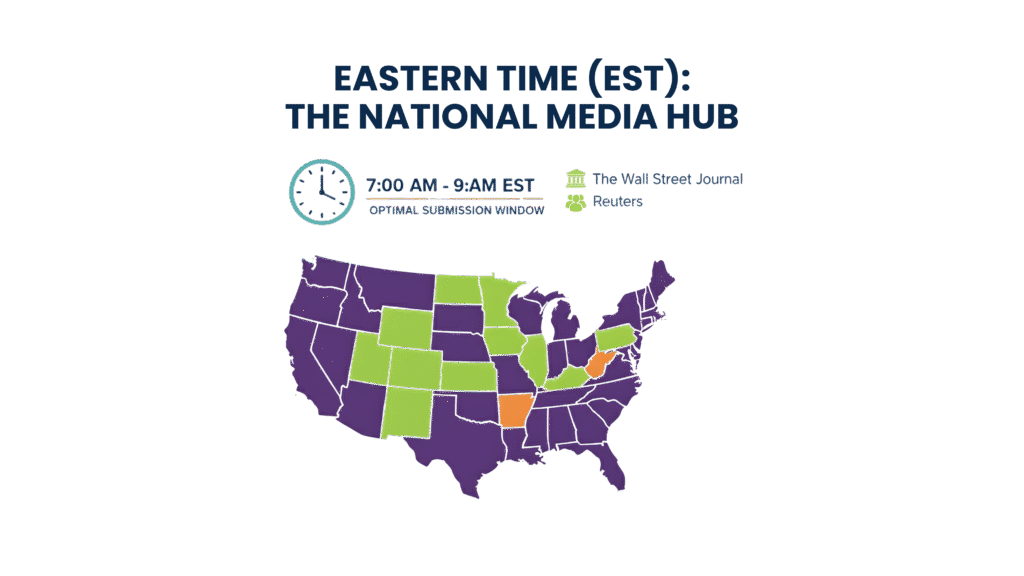
This time zone is the centre of national media operations in the US.
Major outlets that attract most press release submissions like The Wall Street Journal, Reuters, and Bloomberg follow the eastern standard schedule.
Their US press release submission window is open between 7:00 a.m. and 9:00 a.m. EST. This slot gives editors time to review their press release submissions one final time before the newsroom peaks.
This time zone is Ideal for brands who are targeting midwestern media and aiming for a national pickup.
Central time media usually accepts press release submissions only between 8:00 a.m. and 10:00 a.m. CST and sync their news with both East Coast deadlines and regional attention for maximum ground coverage.
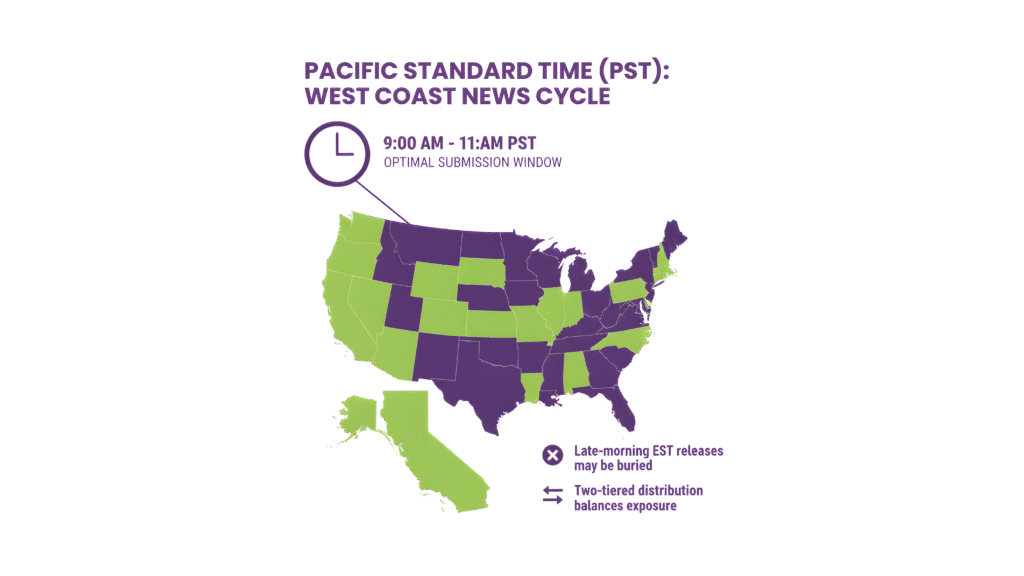
After EST and CST newsroom peaks are diffused, West Coast newsrooms start later. Their press release submissions are open around 9:00 a.m. to 11:00 a.m. PST.
This means late-morning East Coast releases may already be talked over and buried by then. Scheduling two-tiered distributions can help balance exposure across coasts.
When press releases are used as tools, queued strategically within these US press release submission windows, they maintain freshness across the country’s deep work hours. This freshness is ideal for nationwide coverage.
Mostly media activity follows predictable daily rhythms.
Some times have periods of high intent activity, user action and organic traffic, while others are totally empty, with no user conversions.
Understanding how journalists and editorial teams operate and their work cycle, helps in examining the timing distribution for maximum pickup for your press release submission.
The media cycle patterns observed and experienced by media-persons in the US are:
In the early morning slots, editors review short form releases like pitches, shortlist stories, and assign coverage to get quick user response.
Releases that are sent early, usually have the best chance to catch prospective client’s attention during these evaluation hours.
In the US press release submission windows, the afternoon is the period of approvals, drafting, and scheduling.
These afternoon releases opened between 12pm to 4pm may get delayed coverage or end up in digital-only segments based on their value and performance metrics.
While newsroom activity slows down close to evenings and weekends, online readers and social engagement increase respectively.
This time slot is ideal for consumer-focused updates, brand announcements, or product launches. These interactions with your direction gives you that extra benefit from personal touch rather than just opting for editorial coverage.
When it comes to press release submissions, timing is everything.
Understanding these media rhythms allows you to strategically time press release submissions. Along with that, it positions you in front of high-intent users and stakeholders as a strong voice.
Morning submissions capture editorial attention. Afternoons involve many approvals and scheduling, these submissions get delayed the most. Finally, press releases submitted on evenings or weekends engage audiences directly.
Thus you can channelise time as a major factor in maximizing your press release submissions visibility, pickup, and overall effectiveness of communications.
The release timing determines whether a press release submission gets noticed or ignored. Even the most newsworthy announcement can lose visibility if it lands when editors are offline or news cycles are saturated.
The US media operates in patterns that reward punctuality and penalise poor timing, even for press release distribution timings.
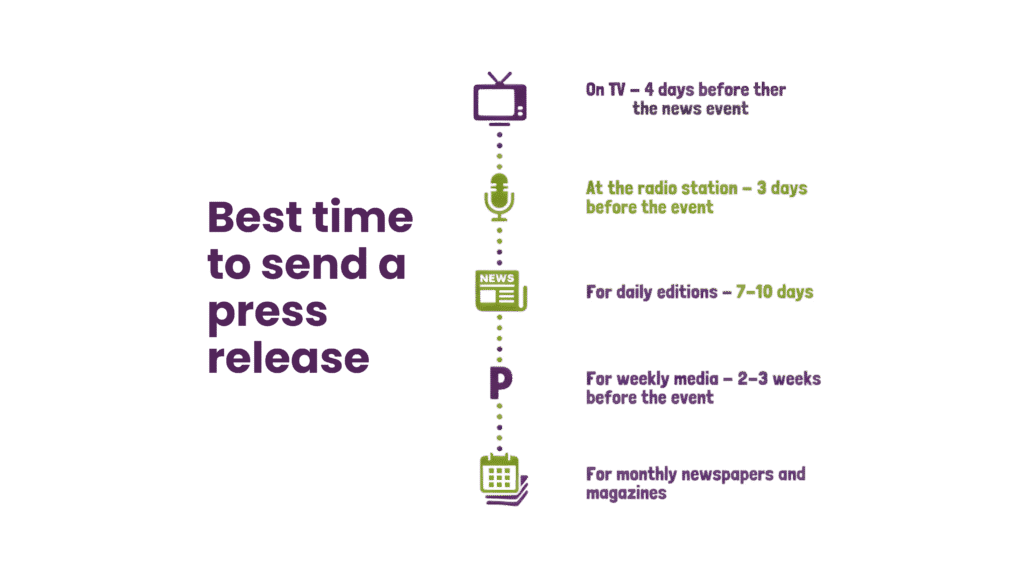
To maximise reach, every release should fall in line with factors like journalist availability, online engagement windows, and algorithmic freshness.
Let’s explore what the data and newsroom behaviour reveal about the best times and days for press release submission in the US.
When it comes to press release submissions, timing isn’t just about hours. It’s also about which day you decide to hit “send.”
Across most of the major press distribution networks, Tuesday, Wednesday, and Thursday consistently outperform other days in media pickup and open rates.
Here’s why this pattern emerges:
Midweek submissions hit the sweet spot between newsroom readiness and audience engagement. This is a twilight period when editors are looking for stories, instead of avoiding them.
When it comes to press releases, the hour you hit “send” is just as important as the day itself.
Major distribution platforms report that releases sent between 8:00 a.m. and 10:00 a.m. EST consistently perform the best across the entire US media. This timing syncs perfectly with editorial meetings and morning content planning, thus giving your press release some prime time exposure.
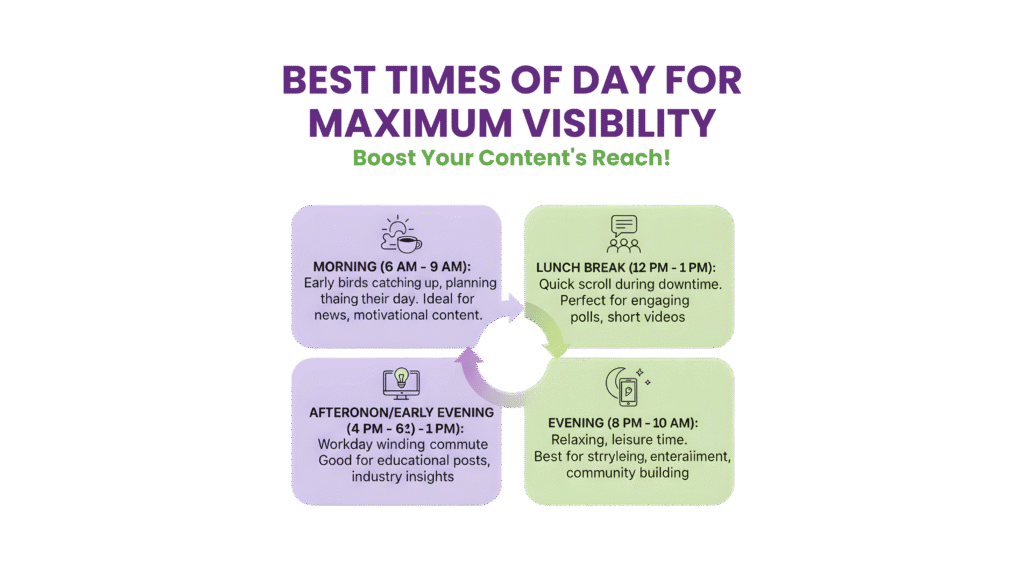
Key Timing Windows:
There are two major timing windows, which uplift content’s positioning naturally, without any extra efforts required. These are:
This is when editors review pitches, shortlist stories, and set the day’s coverage. Sending early lands your press release before inboxes get crowded, maximizing its chance of getting noticed.
Ideal for online publications, bloggers, and social channels. Afternoon freshness can trigger late-day pickups and algorithmic boosts on digital platforms.
By aligning release schedules with these US press release submission windows, brands can maximize your press release editorial visibility, improve syndication rates, and make sure your announcement lands when and where it can truly be acted on.
Every press release performs differently. Press release distribution timing depends on-
Understanding these nuances assures that your release lands when and where it’s most likely to be noticed, picked up, and acted upon.
Industry-specific timing nuances:
Aligning release timing with audience behaviour improves journalist response rates, recall, and coverage quality. The logic is simple. A well-timed release feels relevant and a mistimed one feels outdated by the time it’s read.
Publishing a press release is just the start. How it performs across search engines, media outlets, and social platforms depends on when and how it’s distributed. SEO performance and digital amplification play a huge role in press release distributions. Some top digital amplification channels and tips are:
By experimenting with timing, brands can expand coverage across regions without losing domestic reach. Smart timing ensures the same content performs better across multiple amplification layers, be it newsroom, search or social.
Press release submission timing is not just a tactical choice. It is a core part of communication strategy.
Mastering distribution windows is what separates well-timed visibility from missed opportunity. It transforms each release from a routine announcement into a calculated signal that aligns with newsroom cycles, digital rhythms, and audience behavior.
They also increase the likelihood of backlinks, citations, and broader syndication, creating ripple effects across both domestic and international media landscapes.
In a saturated content environment, understanding the interplay between day, time, and audience makes all the difference.
It guarantees that your press release doesn’t just get seen. It guarantees that your press release submissions get noticed, acted upon, and remembered.
Professional writers understand tone, structure, and timing of content requirements. They guarantee the first paragraph captures the key message, the quotes add authority, and formatting follows newsroom standards. This precision helps release brands perform better on distribution platforms and build brand recognition that lasts beyond a single announcement.
Local releases target nearby publications and community websites where potential customers already look for news. That focused exposure builds trust and name recognition in specific regions, giving small and mid-size brands a strong base before scaling national or global campaigns.
Samples show real examples of layout, tone, and pacing. Studying them helps brands understand what journalists expect and how to balance facts with brand messaging. Using proven formats increases professionalism, consistency, and the chances of getting picked up by media outlets.
Brands see higher search visibility, backlinks, referral traffic, and social mentions. Media pickups improve, leading to more brand impressions and stronger trust signals. Together these metrics prove that professionally written, optimized releases drive not only awareness but tangible growth outcomes.
